The NHS and social care
Conservatives
Health featured prominently in the foreword of the Tory manifesto and among the party’s pledges for 2015-2020. Its key promise, to give the NHS the extra £8bn NHS England boss Simon Stevens says it will need by 2020, leaves Labour isolated as the only one of the three main parties not to do the same. That that sum is prefixed by the words “at least” suggests the Tories understand that the eventual amount will likely turn out to be much more than £8bn, as the unprecedented 2% to 3% a year efficiency savings envisaged are hugely, possibly hopelessly, ambitious. And if the NHS fails to deliver on these £22bn of productivity gains, which most senior NHS figures agree is unlikely, then how much more than £8bn might the service need, how soon, and where will any government find it from?
They see the gradual integration of health and social care through the Better Care Fund – the £5.3bn fund set up in April to promote joint working to help keep patients out of hospital – as the best way to relieve the pressure on the NHS. But they have nothing to say about social care which, under Tory spending plans, would be cut even more than it has been since 2010, and would inescapably impact on an already overburdened NHS. Then there is the headline-grabbing ambition to make “England the first nation in the world to provide a truly seven-day NHS”, with “hospitals properly staffed, so that the quality of care is the same every day of the week”.
This populist pledge, worthy of Alice in Wonderland, almost certainly will not happen by 2020, as there is simply not enough staff to deliver it. And it would cost even more than the £8bn. Plus, as Nuffield Trust chief executive Nigel Edwards has pointed out, it “will probably require centralisation [of hospital services], involving the downgrade and closures of local services such as emergency surgery or maternity units”. Political support for such changes is famously scarce.
Labour
Curiously, the party that voters trust most on the NHS has produced plans that have prompted the most questions. Its detailed plan admirably tries to respond to the changing nature of illness that our ageing population means the NHS now faces. Its answer: a 10-year plan involving integration of health and social care services so that patients receive supposedly seamless “whole-person care”, underpinned by new rights in the NHS Constitution.
Shadow health secretary, Andy Burnham, flatly denies that getting two separate services, one provided by the NHS and the other by local government, to work together this closely would involve reorganising the NHS. But few believe him. Labour would encourage, rather than force, the relevant bodies to go down this road. Reliance on local goodwill may not get the job done.
Labour has committed £2.5bn a year to its Time to Care Fund to hire extra NHS staff. But saying no to the sum the NHS has requested is hard to explain, especially in the soundbite culture of an election campaign. Health thinktanks see Labour’s isolation as unhelpful and divisive.
Like the Tories and Lib Dems, Labour has not pledged to increase social care spending, risking even greater pressures on the NHS. But it says it will increase NHS staff pay, which may leave less money for recruitment.
NHS England may find it harder to work with a Labour than a Tory or Lib Dem government, given Labour wants its plan – not Stevens’s blueprint – to be the routemap for the NHS’s future.
And with the SNP likely to hold the balance of power after the election, Labour will need to consider its goal of increasing NHS spending across the UK by £24bn by 2020, which would yield an extra £2bn for the NHS in Scotland.
Liberal Democrats
While all three main parties envisage much greater integration of health and social care, the Lib Dems have given the most detail about how to achieve that. They want to secure local agreement on the creation of pooled budgets by 2018 and would consult on making that a legal duty. But exactly how services are commissioned would be left to local areas to decide for themselves.
They cite the recently agreed and potentially game-changing “Devo Manc” model (about which Burnham has “real misgivings”) as a microcosm of the future care system. But backing pooled budgets nationwide at this stage is concerning when we don’t know the outcome of Manchester’s experiment, warns the Nuffield Trust. As part of integration the Department of Health would become responsible for social care, as it was in the days of the health and social security department.
However, despite committing to the £8bn extra by 2020, the Lib Dems have come under fire for offering the NHS less money in the short term – just £1bn extra this year and next. It is “regrettable” that most of the £8bn would not be available until halfway through the parliament, says Nigel Edwards at the Nuffield Trust, as so many NHS bodies are in the red now. Health Foundation chief executive Jennifer Dixon agrees and, while welcoming the party’s extra £500m a year for mental health from 2016/17, adds that “re-balancing NHS spend in favour of mental health may be the right thing to do, but it could mean quality in other areas will suffer, and any party that makes this pledge will need to be clear on where the axe will fall.” Chris Ham at the King’s Fund warns: “Holding back most of the £8bn funding increase until 2017/18 will create an unsustainable squeeze on acute services in the meantime.”
Greens
The Greens are offering the biggest increase in the NHS budget of all the parties, an extra £12bn a year, and after that a rise of 1.2% annually in real terms. That would be partly paid for by extra alcohol and tobacco taxes.
They would also spend £1.3bn of the NHS budget insulating cold homes to reduce the burden of illness caused by draughty houses, give mental health greater priority and make social care free for the terminally ill.
A major drive to stop the increasing privatisation of the NHS would see the Greens repeal the Health and Social Care Act, stop private sector firms getting contracts and ban the use of private finance initiative (PFI) deals and the sale of NHS assets. They also want NHS staff to declare any financial interests that conflict with their role, a policy that would affect a fair number of GPs in England.
It is a similar stance to Plaid Cymru which also wants 1,000 extra doctors for the Welsh NHS and a new Medicines and Treatments Fund to help pay for costly medicines not routinely available.
Ukip
Nigel Farage’s party would give the NHS an extra £3bn a year, funded by pulling out of Europe and giving Scotland less money, and use it to hire 20,000 more nurses, 8,000 GPs and 3,000 midwives. It would also put £1.2bn more into social care – unlike the three main parties – and £200m into scrapping hospital car parking charges.
Ukip also wants to relieve the strain on overburdened NHS services by compelling migrants and visitors to the UK to have private health insurance.
Its plan to axe both Monitor and the Care Quality Commission is bizarre; who would inspect hospitals, GP surgeries and care homes? And Ukip’s idea of relaxing the smoking ban by allowing smoking rooms in pubs and of reversing plain packaging for tobacco products may appeal to the diminishing number who light up, but would be calamitous for public health, as would its opposition to calls for minimum pricing for alcohol.
Denis Campbell
Criminal justice
Conservatives
The party’s love affair with incarceration continues apace with the promise of an Hawaiian-inspired tough-love probation programme for persistent drug addicts, vandals and shoplifters that involves a “short, sharp spell in custody to change behaviour”. Throw in a new power to challenge a range of unduly lenient sentences and it is likely that the 2,100-place titan jail now under construction will be the first of many supersized penal warehouses run on a payment-by-results basis.
A blanket ban on legal highs, the introduction of “sobriety” bracelets and overhaul of police cautions however will form the basis of a modern crime prevention strategy.
It is the only party pledging to keep elected police and crime commissioners (PCCs). Police reform is to continue with a strong commitment to keep people with mental health problems out of police cells, a pledge to boost police diversity and mandatory action to scale back untargeted police stop and search operations. The manifesto is, however, silent on police numbers which are likely to see deep cuts once again.
Labour
Labour says it will safeguard the jobs of 10,000 police officers at a cost of £800m, funded partly by scrapping the PCCs but mainly by mandating central procurement by police forces. Previous efforts at making substantial savings in this area have not been encouraging.
The party also promises to ban the sale of legal highs but not their possession, set up a child protection unit to tackle abuse, and establish a commissioner to combat domestic and sexual violence. It promises to increase the amount of time that inmates spend working and learning and to introduce a victim’s law. There is a more detailed promise to introduce a new “youth justice”-style approach to 18 to 20 year-old offenders. It makes no mention of reversing cuts in legal aid and further cuts to the courts budget have been signalled.
Liberal Democrats
The stand-out criminal justice policy for the Lib Dems is their commitment to end the use of imprisonment for the personal possession of all drugs, sparking Labour claims that the party is soft on drugs. This is slightly stronger than their 2010 promise to ensure resources are not wasted on the unnecessary prosecution and imprisonment of drug users even if it stops short of Nick Clegg’s 2012 call for a Royal Commission to look at drugs law reform.
It also renews its distinctive policy of regarding a large prison population as a badge of failure. They promise much greater use of alternative punishments including weekend or evening jail, curfews and tagging and say their “default position” is that public rather than private companies should run places of detention.
The Greens
It is the only party to promise to decriminalise drugs. It also opposes the privatisation of the probation service and would give prisoners the vote, and operate a smaller prison system, saving £5.5bn by 2020. Since this amounts to more than a third of the annual funding of the prison system it implies tens of thousands fewer offenders jailed every year.
Ukip
Unsurprisingly, Ukip goes further than the Tories in saying it will not only repeal the Human Rights Act but also withdraw from the jurisdiction of the European court of human rights. On prisons, it says that full sentences will be served, but doesn’t mention how the consequent increase in prison places will be funded, nor its pledge not to cut frontline policing.
Alan Travis
Welfare
Conservatives
The Tories’ refusal to talk about how exactly they will find their promised £12bn annual cuts to working-age social security spending has dogged their election campaign. Whether they don’t know, or don’t want to say (because the cuts will almost certainly hit core and target voters), or whether it is a phantom target designed to give it leverage in post-election coalition negotiations, it is not clear. They have said they will seek to find £1bn of those cuts through a two-year benefits freeze, and £120m through axing housing benefit for most 18- to 21-year-olds. Lowering the benefit cap by making the threshold £23,000, the Tories have previously estimated, saves £135m (though this was earmarked for an apprenticeships programme).
Cameron has suggested that savings may come from getting more people off incapacity benefit and into work, despite this strategy dismally failing to deliver anticipated savings in recent years. The manifesto nonetheless pledges no let up on fit-for-work tests and controversial benefit sanctions for drug addicted or obese claimants who refuse treatment.
Some of the potential working-age social security cuts options on the table for an incoming Tory government were set out in a Whitehall leak in March. But even assuming the implementation of all these – they include further restrictions on child benefit, axing the £61 a week allowance paid to around one in four carers, and taxing disability benefits – the Tories would still get nowhere near their cuts target, leaving them with what the Institute for Fiscal Studies (IFS) calls “very difficult choices”.
Labour
The IFS estimates that Labour’s plans amount to a £1bn a year increase in social security spending, compared with the Tories’ £12bn reduction. But given that the party is committed to boosting the state pension,the growing costs of which takes up over half of the welfare budget, it’s not immediately clear that this will amount to any noticeable let-up in the squeeze on working age entitlements, such as housing benefit and incapacity benefit.
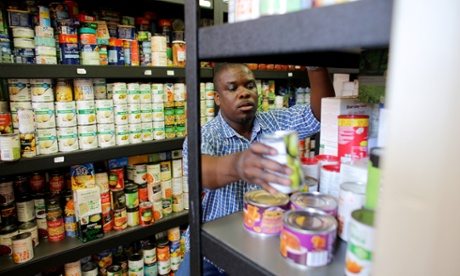
The bedroom tax will be axed, sanctions, benefit payment delays and incapacity benefit assessment logjams will all be reviewed in a pledge to tackle the causes of what it calls “food bank dependency”.
However, child benefit rises will be capped for two years, and the richest 5% of pensioners will lose the winter fuel allowance (but not free bus passes or TV licences). The benefit cap, which offers pain for a few thousand families in high-rent areas, but little gain in the way of cash savings, will be retained. Labour admits that its commitment to end child poverty by 2020 is “unlikely to be met”. Overall, the party hopes that a range of employment and infrastructure policies – banning zero-hours contracts, raising the minimum wage, building more affordable housing, overhauling the welfare-to-work programme – will indirectly ease pressure on social security spending.
Liberal Democrats
The IFS estimates that Lib Dem welfare plans imply a £2bn a year cut in current spending levels. There is investment in the far-from-certain success of universal credit to streamline the benefits system. Similarly, state pensions will rise by the greater of prices, earnings or 2.5%, while working-age social security spending will be squeezed with a 1% cap on benefit uprating for the first two years of a new parliament.
The punitive excesses of the bedroom tax would be ameliorated by changes including promised exemptions for disabled tenants. Benefit sanctions will be overhauled. But the benefits cap is kept untouched even though the supreme court has ruled that it breaches the UN convention on child rights – a commitment that, elsewhere in the manifesto, the party promises to embed into UK law.
The notorious fit-for-work tests will be reviewed to test for diagnostic accuracy and “fairness”. The personal independence payment (Pip) disability benefit reforms will continue, but controversial processing backlogs, currently running into months, will be tackled.
The Greens
The Greens promise employment guarantees for young people and, variously, an increase in the state pension, and opposition to the bedroom tax and benefit cuts that affect disabled people. In a speech last week, the party’s leader, Natalie Bennett, added more: there should be a benefit system for everyone, not just the so-called hardworking families, and benefits values should rise, to provide sufficient money for claimants to get by on “without fear of hunger”. Benefit sanctions, she said, were “morally indefensible”. Low pay would be tackled, in the form of a £10 an hour minimum wage by 2020.
Ukip
Ukip’s eclectic and populist welfare plans oppose the “benefits lifestyle”, but criticise the “unjust outcomes” of the current regime. It supports a lowering of the benefits cap, but would scrap the bedroom tax – as would the SNP and Plaid Cymru – and the fit-for-work tests. It would fund the provision of 800 welfare advisers in food banks. State pensions would be protected, and people could opt to retire earlier. Carers’ allowance would be increased by £572 a year. Here again Ukip finds itself in agreement with the SNP, whose social security plans imply a rise of £4.5bn in public spending, according to the IFS.
Plaid Cymru pledges to develop a separate devolved employment and benefits system.
Patrick Butler
Local government
Conservatives
Promises to “promote the radical devolution of power and greater financial autonomy to local government” ring hollow. Since 2010, government grants to town halls have been cut by more than a third, the most savage in the public sector. Councils can barely make up the shortfall; they have to hold a local referendum to get approval for any council tax rise above 2%. There has been no promised full review of council financing.
The party has promised not only to keep council tax down but also to institute more “direct democracy” through local referendums on other issues. It wants to encourage more “bespoke” growth deals with councils, along the lines of agreements made with 28 cities to deliver modest devolution – leading to claims that it has given a little with one hand while removing substantial funds on the other.
Labour
To say the opposition has been playing it safe is an understatement. While Labour has pledged to devolve £30bn of funding to councils – centrally held in a variety of Whitehall “pots” for business support, transport, and much else – it has not addressed the central dilemma at the heart of local government: how to support town and county halls with a diminishing central support grant and an outdated council tax system. Plans for a “mansion tax” on properties worth more than £2m, to fund the NHS, neatly dodge the issue. Revaluation of properties is the urgent necessity that dare not speak its name. And the party’s pledge for “multi-year budgets” – a funding package spread over several years, ostensibly to give authorities more certainty – is similarly diversionary.
Liberal Democrats
Central to the Lib Dems’ proposal is a new devolution enabling act to let local areas “take on more power and responsibility”. They call it “devolution on demand”. It builds on the string of “city deals” – for which the party claims some credit, under which the government agrees to respond to local demands for devolution in clearly defined areas. Ideally, this will involve groups of authorities working together for a common goal with a detailed economic plan. The Lib Dems mention a Yorkshire-wide agreement – rather than a top-down solution overwhelmingly rejected in a north-east England referendum in 2004. The party also wants to stop making councils hold referendums on council tax rises above 2%.
The Greens
The party is bedevilled by its mixed record in running Brighton and Hove council, the country’s first Green-run authority. That apart, the party stands alone in advocating an extra £10bn for English councils – with higher council tax bands, the removal of a 2% council tax cap, and crucially revaluations to bring the tax regime up to date.
Ukip
Keeping council tax “as low as possible” while reintroducing weekly bin collections seems a big ask. The party thinks this can be achieved by slashing “excessive pay deals” for council executives and abolishing “non-essential jobs”. The party holds 139 local council seats in England.
Scotland has had a council tax freeze since 2007, and the ruling SNP has begun a review of council financing.
Peter Hetherington
Children and families
Conservatives
The Tory party emphasis is on helping working families. It pledges to abolish long-term youth unemployment by guaranteeing training or jobs and to remove barriers that stop women and disabled people from working, though this does not seem achievable with more welfare cuts on the table. The Conservatives, like the SNP, would double the free childcare entitlement to 30 hours for three- and four-year-olds in families where both parents work. The party also wants regional adoption agencies, more support for children’s social work training, and more joint working between the police, social services and other agencies, to better protect vulnerable children.
Labour
Labour promises to double statutory paternity leave to four weeks, expand free childcare to 25 hours (less than the Tories) and create a new National Primary Childcare Service.
Promises to make mandatory reporting of child abuse will be welcome by social work professionals as will increased support for children in kinship care and the pledge to restore Sure Start centres to act as family hubs. Like the Tories and the Lib Dems, Labour also promises support for the fast-track Frontline children’s social work programme.
Liberal Democrats
The Lib Dems want to expand shared parental leave, extend free childcare to two-year-olds for all working families and provide 20 hours free childcare a week for parents with children aged two to four. Like Labour and Plaid Cymru, they promise better training for foster carers, alongside more use of restorative justice to prevent looked-after children entering the criminal justice system, and tailored training for social workers in areas with high levels of female genital mutilation or forced marriage. There would also be a statutory code of conduct for all those working in the care sector.
Green
The Greens want free childcare for the first seven years of a child’s life (they would start school later in keeping with the European model) and for there to be more children’s centres. The party also promises £900m to pay foster carers, to treat the emotional abuse of children on a par with physical abuse, and £500m for free social care for adults aged 18-65.
Ukip
Ukip promises wraparound childcare before and after school for all pupils, and the building of more nurseries. It also wants a root-and-branch review of “clearly failing” child protection services and for looked-after children in residential homes to be able to stay in care until 21. When parents split up, Ukip wants 50:50 shared parenting.
Anna Bawden
Housing
Conservatives
The Tories hope to gain traction among working class voters by extending the right to buy to 1.3 million housing association tenants. The policy seeks to improve the options of a group who are already cheaply and stably housed: social tenants. The costing of the policy also involves selling off expensive social homes, creating poverty ghettos in other areas which could lead to expensive problems later. The only nod to private renters is a promise to provide 10,000 homes at below market rent to allow occupiers to save for a deposit to buy. Owners do best: 200,000 starter homes for first-timers under 40 will be sold at a discount, and help-to-buy Isas. There is, however, no target for new development. How can buyers be helped into the market if supply does not match demand?
Labour
Labour seeks to do two things: make renting a home more affordable, and make it easier for prospective buyers to purchase a home. The party says it will introduce new protections for private renters including three-year fixed tenancies with inflation-linked rent increases. But this does nothing to bring down overall rent levels unless the supply of housing is increased. Labour has pledged to start building 1m new homes by 2020 – designed to boost supply and bring down house prices. Yet the party also intends to axe stamp duty for first-time buyers on properties under £300,000. Analysis shows that reducing stamp duty actually has the perverse impact of pushing up prices. The SNP’s housing policies could form a key negotiating tool with Labour. It’s working from the same plans; retaining help-to-buy and building 100,000 affordable homes each year.
Liberal Democrats
Only the Lib Dems offer a radical solution to the problems facing “generation rent”: they commit to building 30,000 rent-to-own homes by 2020, which convert from tenancies to ownership after 30 years. The manifesto also promises new renters under 30 a loan for the first tenancy deposit and “family friendly” tenancies with limits to yearly rent rises. It is the only mainstream party to tackle the supply crisis head on, with an ambitious commitment to build 300,000 new homes a year including 10 new garden cities. It follows in Scotland’s footsteps by calling for councils to be allowed to abolish the right to buy.
Greens
The Green party has committed to building 500,000 social homes during the next parliament. The target puts it in direct conflict with its grassroots: a large-scale building programme will involve compromise over greenfield land. Help-to-buy would be scrapped, five-year tenancies introduced and a “right to rent” for owners unable to pay the mortgage.
Ukip
Ukip’s housing pledges sit alongside its tough immigration policy: the help-to-buy scheme will be restricted to British nationals and the social housing waiting list will only be open to people who have lived and worked in the UK for five years.
In Wales, Plaid Cymru will tackle holiday homes by charging 200% council tax on empty properties.
Hannah Fearn