On Monday, the country wakes to a whole host of new freedoms as part of the latest step in the government's lockdown exit strategy.
The second part of the Step 1 plan will be introduced in England as the nation slowly works its way along the roadmap towards the full lifting of Covid-19 restrictions.
The Stay at Home message is expected to be replaced by a new Stay Local directive, meaning the directive to stay home aside from a handful of excuses will no longer be in place.
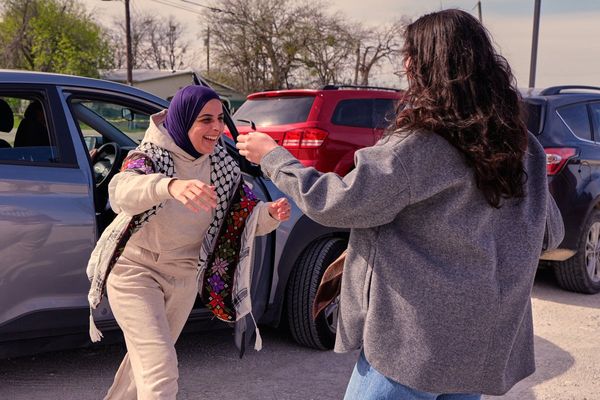
This means that lingering in the park or on street coroners with as many as six people or two households will be permitted, allowing friends and families to see each other in the flesh for the first time in months.
Another key freedom returned to those in England will be the playing of outdoor sports, which are to be permitted once more from next week.

We will be able to drive further than before, but this increased freedom also has its limits.
While the changes are a major boost after months of strict lockdown that coincided with the dark of winter, there are warnings in place.
Here's what you need to know.
What can people in England do from Monday?

The Stay at Home message will be a thing of the past from midnight on Sunday.
Until then you may only leave the house with a ‘reasonable excuse’, such as going to the shop for basic necessities, to provide care, to exercise, or to work.
From Monday that will be replaced by a new Stay Local directive, meaning people will be asked to remain near to where they live.
While long-distance travel will not be encouraged, it is legal providing other rules such as overnight stays are not broken.
The government defines local as your village, town or the part of a city where you reside, while maintaining that people should continue to work from home where possible.
Perhaps the biggest other change is that the outdoor gatherings are now back on the cards.
Whereas outdoor exercise is currently restricted to public places such as parks, beaches, botanical gardens, play areas, village greens and allotments, from March 29 you can also meet people in private gardens too.
You'll still have to stay two metres apart from anyone not in your household - meaning the people you live with - or your support bubble.
What about travel abroad?

Although the rules will be loosened for those in England from Monday, strict restrictions regarding travelling abroad will remain in place.
If you are travelling to a country outside of the UK, you also have to fill in a ‘travel declaration form’.
But be warned – there is a the possibility of a £5,000 penalty if you cannot offer a reasonable excuse for going abroad.
An update on overseas travel is expected next month.
In a further blow for inter-nation relations, travelling from England to Wales or Scotland will not be allowed yet.
Can I be fined for travelling in the UK?
Not for travelling in England.
The stay local guidance will not be compulsory, meaning instances of people getting fined for driving too far away - whether to see a sunrise or buy a kebab - will be a thing of the past.
However, the government stress they are not encouraging long-distance travel.
Staying away from your home overnight is not allowed, putting a hard limit on how far anyone could realistically be able to travel in a day.
What about sports?
Outdoor sports facilities, such as tennis and basketball courts, golf courses and bowling greens, will reopen on March 29. This would also include open-air swimming pools.
Tougher restrictions remain in place for contact sports such as rugby union, which will be allowed tackling but not scrums.
Indoor leisure facilities, such as gyms and swimming pools, won't be able to reopen until Step 2 comes in on April 12 - and will initially only be for use by people on their own or with members of their own household.
Organised adult indoor group sports, such as basketball and five-aside football, will only resume in Step 3, no earlier than May 17.
What about previous fines?

There is no longer a rule against leaving or being outside the home without a 'reasonable excuse'.
Unless, of course, you are at a travel embarkation point.
People aged 18 or over could have been fined £200 for their first offence, lowered to £100 if paid within 14 days, the Met Police website confirms.
It is £400 for the second offence, then doubling for each further offence up to a maximum of £6,400.
In Wales, Scotland and Northern Ireland the first offence is £60 – £30 if paid within 14 days. The second offence stands at £120.
What else can I be fined for?

Fines remain in place in you break lockdown laws.
As yet, there is no news on if there will be an increase to the in-place fines.
Penalties of £800 for people caught at house parties became law at the start of February.
Last month, 14 people were fined £11,000 between them after celebrating a one-year-old's birthday together.
Meanwhile, a Shisha bar was fined £28,000 for breaching rules after many people were found inside.
The fine applied for groups of more than 15 people and will double after each offence.
What happens if I chance my luck?
Aside from the obvious possible consequences of catching coronavirus and legal trouble, the country will only be able to reach the next step out of lockdown if things continue to go well.
The Government is allowing five weeks between each step, including an announcement seven days beforehand to check that the latest medical and scientific evidence supports a further relaxation of rules.
Before proceeding to the next step, the Government will examine the data to assess the impact of the previous steps.
This assessment will be based on four tests:
- The success of the vaccination programme
- Evidence that vaccines are reducing hospitalisations and deaths
- Infection rates do not risk a surge in hospitalisations which would put unsustainable pressure on the NHS.
- Assessment of any new strains of Covid, what are known as 'Variants of Concern' (VOC)
With daily coronavirus cases seeming to have levelled out in the past week, while case surge on mainland Europe, not running rampant come March 29 is key to finally shedding off the last of the lockdown shackles come June.