A document dubbed the "Yuzawa Memo" (see below) recording statements -- such as, "We've already won" -- that then Prime Minister Hideki Tojo made on the night of Dec. 7, 1941, before Japan went to war with the United States, has been found. How should we interpret the intentions expressed by Tojo the night before starting the Pacific War, in which the damage of war was much greater compared to that of the Sino-Japanese War? We asked experts who have researched the memo in the context of the circumstances of that time. The interviews were conducted by Yomiuri Shimbun Senior Writer Takeshi Okimura. The following are excerpts from the interviews.
(From The Yomiuri Shimbun, Aug. 14, 2018)
Public paid price for Tojo's elitism
Statements by Tojo around the time the war started had been found in other historical records, but there were no such records on Dec. 7. There was testimony from Tojo's bereaved family that he cried bitterly in the late-night hours of Dec. 6. However there was no solid evidence to prove this testimony. The Yuzawa Memo is a reliable document that could explain how Tojo and Emperor Showa felt the day before the war [with the United States] started.
What is recorded is a summary of how Tojo, who was ordered to form his Cabinet in October 1941, convinced Emperor Showa to decide to declare war despite Emperor Showa's concerns about going to war against the United States in the midst of a war against China.
When forming his Cabinet, Tojo was ordered to review the national policies that had made Japan decide to start the war, and he also considered avoiding war through diplomatic negotiations. But he never changed his belief as a soldier of the Imperial Japanese Army that Japan existed only because it advanced into continental China, and that war was the only choice, as Japan's withdrawal from China -- which the United States had demanded -- could not be an option.
The army was Tojo's life itself. After the army preparatory school [for teenagers] and the Army Academy, he graduated from the Army War College at the top of his class. The army preparatory school was established to eliminate the influence of freedom and rights movements and pound loyalty to the army into students. The army preparatory school was the only junior high school whose graduation ceremonies were attended by the Emperor, who was then the commander-in-chief, and the army was seen as the state itself, such that this extreme elitism was instilled in Tojo from childhood.
Emperor Showa once severely criticized the army minister who made a false report that ignored his intentions in the Sino-Japanese War, saying that the army's tradition of seeing things subjectively came from the biased education at the military prep school.
Tojo distinguished himself with such proficient paperwork skills that he was able to memorize entire documents. The night before the war started, he also boasted that he had reported everything he knew to Emperor Showa.
Unlike other prime ministers who merely reported results and asked Emperor Showa for approval, Tojo earned his trust. His statement, "I am worthy of being praised by the Emperor," shows how satisfied he was with helping Emperor Showa have the proper resolve.
Tojo said Emperor Showa was just like normal when they met on Dec. 7. Emphasizing three times the determination to declare war, he said, "We've already won." His field of vision was dominated by the state, the Emperor and the army. The people, who would be forced to make sacrifices for the war, were not included at all.
Tojo, who hated politics and called it 'mizushobai' (nightlife business), should have been at most the army minister, chief of staff or a marshal. For a person who has no mind to display leadership to become the prime minister was also an institutional problem at the time.
Debates that took place in 1881, during the Meiji era (1868-1912), excluded parliamentary democracy and a parliamentary system that preserved the royal prerogative was adopted. Distortions in the institutional design by the Meiji political system based on the main clans in the Edo period (1603-1867), which was critical of the freedom and rights movements, caused the circumstances 60 years later in which Japan rushed into war against the United States without a true leader.
Postwar parliamentary democracy functions as leaders who have been tested in elections and interparty disputes summarize their discussions with wide-ranging perspectives. The Yuzawa Memo, which illustrates the atmosphere the night before the war [with the United States] broke out, is also an important document because it reconfirms the importance of our modern-day parliamentary system.
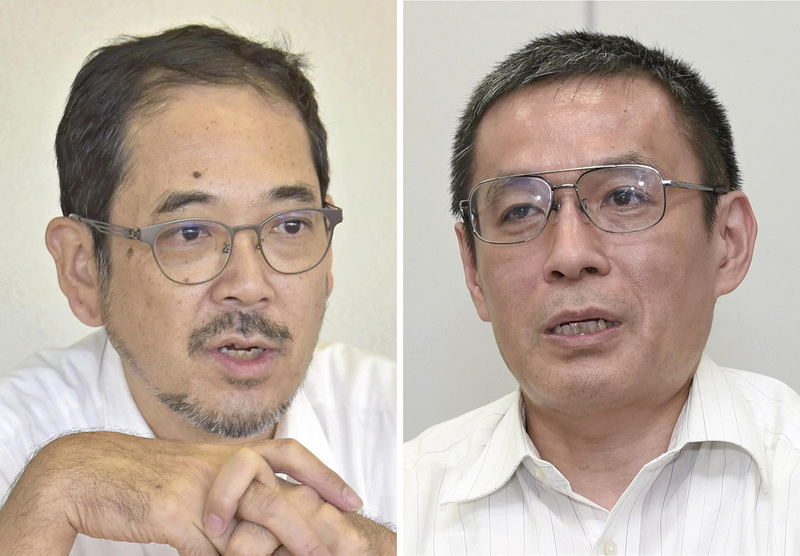
-- Takahisa Furukawa / Professor at Nihon University
Furukawa, 56, specializes in modern Japanese history. He has written books about Emperor Showa and Hideki Tojo.
Intelligence analysis was too optimistic
Reading the Yuzawa Memo, I thought statements about Emperor Showa's "determination to declare war" would have been effective material for the group that wanted to sue Emperor Showa in the International Military Tribunal for the Far East in Tokyo. This memo would have caused quite a stir if it were released at the time. Why did Tojo say, "We've already won," the night before the war that ended up threatening Japan's existence?
To help provide a better understanding, it's good to discuss the crucial, overly optimistic analysis of enemies and foreign intelligence.
The Tojo Cabinet chose to declare war because it fell into the trap of "best-case analysis," seeing only the possibility of things going well for Japan.
The war forecast at the time was: "Japan will build an invincible position by occupying resource-rich regions like the Dutch East Indies (currently Indonesia). With the defeat of Britain and the Soviet Union (with Germany's victory), the United States will lose its fighting spirit." The defeat of Japan's ally Germany was "not expected." The Cabinet was aware that Japan could fight the United States on an equal footing for two years at most, but things were "uncertain" after the third year when the United States enormously increased its military power.
For the "loss rate," which indicated how many ships carrying resources from the south to Japan would be lost, Tojo took at face value the Japanese Imperial Navy's estimates based on World War I numbers, thus reaching a judgment that the war would be advantageous to Japan. This was in spite of the fact that World War II had already started and state-of-the-art submarines had produced great military results.
Being entrenched in solving the difficulties he was facing, Tojo was reassured by these arranged numbers.
Diplomatically speaking, Japan had been misreading international affairs since before the Tojo Cabinet. The September 1940 Tripartite Pact and the April 1941 Soviet-Japanese Neutrality Pact prompted Japan to reach for negotiations with the United States. However, the U.S. people despised Japan for "allying with Nazis," and the Dutch East Indies began to be reluctant to sell the goods it had promised before the conclusion of the Tripartite Pact. The German-Soviet war started in June of that year, and the U.S. government also no longer needed to rush to compromise with Japan.
On the surface, Japan showed understanding of U.S. demands for Japan's withdrawal from China based on concepts like national self-determination and free trade, but it expected that the interests it had acquired in the Manchurian Incident and the Sino-Japanese War would be treated as exceptions. The United States did not accept this separation of Japan's public position from its true intent, however, because the United States needed to hold itself accountable to its people.
The decision to advance into south French Indochina in July 1941 assuming the United States and Britain would not oppose the move was also naive. The U.S. government merely implemented a licensing system for oil exports at first, but eventually imposed a total embargo under pressure from public opinion.
The pro-war Japanese soldiers continued to doubt U.S. announcements on its production schedules for weapons and ammunition after the war began. They did not want to believe it because Japan's defeat would become certain. In reality, the United States fought in complete solidarity after the attack on Pearl Harbor and overwhelmed Japan with its unmatched military might.
The night before the war started, Tojo was in a position to tell Vice Home Minister Michio Yuzawa and his other subordinates about his conviction of certain victory. But I must say that the fact he blurted out, "We've already won," with the country unified under Emperor Showa is an anecdote that symbolizes his disposition and narrow outlook.
-- Atsushi Moriyama / Professor at the University of Shizuoka
Moriyama, 56, specializes in modern and contemporary Japanese history and Japanese political and diplomatic history. He is the author of "Nichibei Kaisen to Johosen" (Intelligence war before Japan-U.S. War 1941).
-- Yuzawa Memo
Then Vice Home Minister Michio Yuzawa (later home minister; died 1963) recorded the words of then Prime Minister Hideki Tojo the night before the outbreak of the Japan-U.S. war on five sheets of paper. Takeo Hatano, the owner of an antique bookshop in the Kanda-Jinbocho area of Chiyoda Ward, Tokyo, found the memo in a collection of Yuzawa's personal items obtained from his relatives.
Read more from The Japan News at https://japannews.yomiuri.co.jp/