The US president, Joe Biden, has announced an $800m (£610m) package of arms to Ukraine as the west steps up military aid against invading Russia forces.
The west’s military assistance to Ukraine began cautiously with helmets and flak jackets but now includes drones that can destroy Russian tanks and artillery from 50 miles away.
The west has repeatedly refused to enforce a no-fly zone over Ukraine but is now supplying a range of powerful weapons. They include:
Bayraktar TB2 drones

These Turkish-made drones featured prominently in videos at the start of the invasion. They showed a number of successful attacks against Russian tanks and armoured vehicles. They have since became less effective after Russia set up air defences in the battlefield. Turkey began selling the TB2 drones to Ukraine in 2019. Turkish officials have refused to disclose how many, but independent estimates reckon Ukraine has up to 50 TB2s.
Aaron Stein, director of research at the US Foreign Policy Research Institute, described them as the “Toyota Corolla of drones”. He said: “It doesn’t do everything that your high-end sports car does, but it does 80% of that. So even for a high-end military, like the US the basic concept of using in an attritable, cheap platform to strike a superior force has inherent value.”
Switchblade drones

Biden’s “unprecedented assistance” includes 100 drones, which officials have said are the Switchblade or “kamikaze drone” that explode on impact. Each drone is folded into a lightweight mortar launcher. Once it is fired the drone’s wings open out as the weapon is guided to its target. The most powerful version travels at 115mph and has a range of 50 miles. A lighter version has a range of six miles.
Stinger missiles

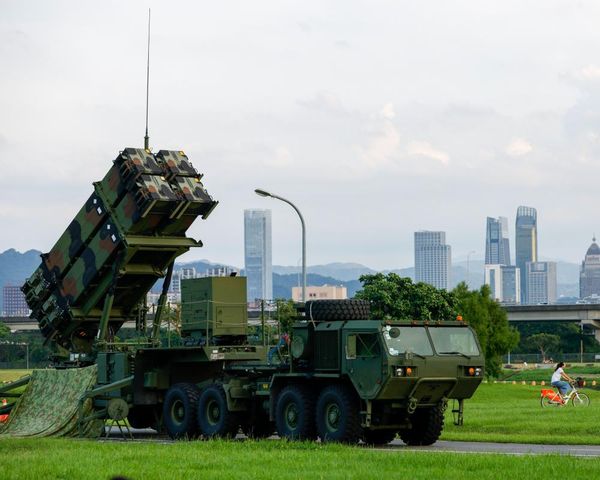
The latest US package includes 800 Stinger anti-aircraft systems in addition to more than 600 already promised. The FIM-92 Stinger is a “man-portable air-defence system” – or Manpads – that is typically used by ground troops but can also be used from helicopters. This type of weapon was seen as crucial to the mujahideen’s successful guerrilla conflict in the Soviet-Afghan war in the 1980s. Germany has also pledged to send 500 Stinger missiles.
Javelin missiles

The Javelin is an anti-tank missile system that uses thermal imaging to find its target. The latest US package includes 2,000 of these missiles. They can be fired from a shoulder launcher or from the ground.
Portable anti-tank weapons

The White House says it is sending 6,000 AT4 portable anti-tank weapons as part of the package outlined by Biden. The Swedish-made 84mm-calibre weapon has a range of 500 metres. It requires little training to use, but is single-shot so it has be discarded after it is fired. Thousands more anti-tank weapons are being supplied by European countries. These include Germany, which has pledged 1,000 anti-tank weapons from its inventory; Norway with 2,000; and Sweden, which has delivered 5,000.
Light anti-tank Weapon missiles

The UK has sent 3,615 of these British-Swedish-made short-range next generation light anti-tank weapons – or NLAW missiles. Hundreds more are also expected to be sent at a cost of £120m. The missiles weigh only 12.5kg and are just over 1 metre long, making them easy for infantry to use. They have a maximum range of just 800 metres. The US has also pledged 1,000 light anti-armour weapons.
Starstreak anti-aircraft missiles

The UK’s defence minister, Ben Wallace, has also promised to supply an unspecified number of high-velocity Starstreak anti-aircraft weapons to Ukraine. The Belfast-made weapons are known to be the fastest short-range surface-to-air missile. They accelerate after launch and include three laser-guided submunitions to increase the chance of hitting their targets.
Mi-17 helicopters

Poland proposed to allow all of its MiG-29 fighter jets, of a kind familiar to Ukraine’s pilots, to be transferred via a US airbase in Germany. The plan was blocked by the US, but the US has sent other Soviet-era aircraft to Ukraine in the form of five Mi-17 helicopters.