
Chicagoans planning on hanging out at the bar of their favorite hangout should do so soon. Effective Friday, bars can no longer serve indoors, thanks to new coronavirus restrictions from Mayor Lori Lightfoot.
The new restrictions came as Illinois saw 1,173 new COVID-19 infections on Monday, the fifth day in the past week that public health officials reported more than 1,000 new cases.
It’s not quite back-to-normal yet for Chicago. Here’s what else happened as the city and state continued to fight the coronavirus pandemic.
News
8:55 p.m. Lightfoot tightens regulations on bars, restaurants, gyms after COVID-19 spike among young people
/cdn.vox-cdn.com/uploads/chorus_asset/file/20099598/CV_BARS_06182020_7.jpg)
Mayor Lori Lightfoot on Monday tightened regulations on Chicago bars, restaurants, gyms and personal services to prevent a spike of coronavirus among young people from turning into a dangerous surge.
Effective at 12:01 a.m. Friday:
- Bars, taverns breweries and other establishments without a retail food license that serve alcohol for on-site consumption will be prohibited from serving their customers indoors.
- Restaurants will be permitted to continue to serve alcohol, so long as they strictly enforce the city’s regulations.
- The maximum party size and table occupancy at restaurants, bars, taverns and breweries will be reduced from 10 people to six.
- Indoor fitness classes will be limited to a maximum of 10 people.
- Facials, shaves and other personal services requiring the removal of face coverings will no longer be permitted.
- Residential property managers will be asked to limit guest entry to five-per-unit to avoid indoor gatherings and parties.
Last week, Lightfoot warned of a rollback unless young people who account for 30 percent of new COVID cases in the city get the message.
Read the full report from City Hall reporter Fran Spielman here.
7:13 p.m. Republicans mandate at-home COVID-19 pre-convention test for attendees as cases spike in Florida
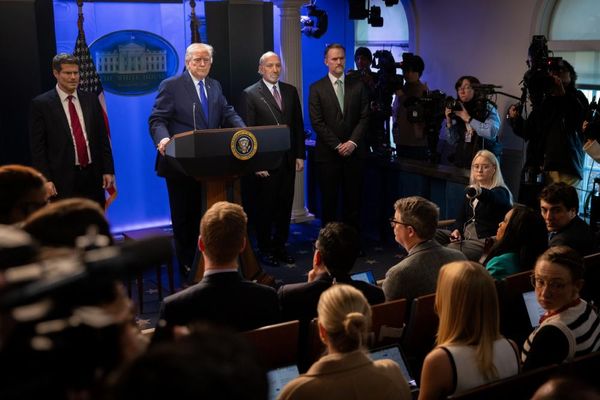
With COVID-19 cases spiking in Florida, Republican convention goers will have to take an “in-home” COVID-19 test before they depart for Jacksonville, paid for by the Republican National Committee, the Chicago Sun-Times has learned.
Conventiongoers will have to agree to be tested twice — at home and when they get to Florida.
This comes as President Donald Trump — who moved the main convention venue to Florida from North Carolina to escape coronavirus pandemic restrictions — is confronted with the reality that Florida COVID-19 cases are surging at some 10,000-a-day.
The RNC convention memo, obtained by the Sun-Times, also notes officials are cutting back on the number of people who can attend Jacksonville events, limiting the attendance of alternate delegates and guests.
Reporter Lynn Sweet has the scoop.
6:01 p.m. CPS could lose $10M to private schools, district says in lawsuit against Betsy DeVos over coronavirus funding
Chicago Public Schools has joined a federal lawsuit with 12 other states, cities and districts against U.S. Education Secretary Betsy DeVos over her insistence that public school districts share more of their federal coronavirus relief funding with private schools.
The complaint centers around more than $13 billion earmarked for schools in the Coronavirus Aid, Relief, and Economic Security Act, known as the CARES Act, which Congress passed in late March.
The legislation calls for states and school districts to receive money based on how much Title I funding they’re allotted to serve low-income students, the lawsuit says. But DeVos, the complaint argues, has instructed funding to be distributed based on a school’s total number of students, which would divert money from public schools serving children from low-income families to wealthier private schools.
CPS’ CARES Act allotment is $205 million of the $569.5 million earmarked for Illinois. Officials estimate CPS would lose about $10 million if DeVos’ distribution guidelines stand.
5:24 p.m. Illinois sees another day of more than 1,000 new COVID-19 cases
Illinois saw 1,173 new COVID-19 infections on Monday, the fifth day in the past week that public health officials reported more than 1,000 new cases. Despite the uptick in infections, the state’s death toll from COVID-19 remained relatively low, with only six new deaths reported, the second consecutive day with that number.
The seven-day positivity rate also crept up a hair to 3%, from 2.9% over the weekend The uptick in cases comes as Gov. J.B. Pritzker has voiced concerns that the state is moving backward, worries he repeated on Monday.
So far in July, health officials have reported eight days with more than 1,000 new cases, compared to only two such days in all of June. The latest batch of new cases brings the daily average so far this month to 978.
The fatality rate has been a different story. So far, the state is averaging about 19 a day in July, down sharply from the 100 a day in May. The state’s death toll now stands at 7,301, bringing the average to about 58 deaths a day since mid-March.
— Mitch Dudek
4:05 p.m. Floating boat cinema coming to Chicago
Amid the COVID-19 pandemic, drive-in movies have been making a comeback — and now a company says a floating cinema allowing people to watch from mini-boats will be making appearances in a number of places around the country, including Chicago.
Beyond Cinema, an Australian production company, said the Chicago run for Floating Boat Cinema is scheduled for Sept. 9-13. The exact location has not yet been announced, nor has the list of movies to be screened.
The cinema will be made up of 12 to 24 mini-boats, each holding up to eight people.
2:26 p.m. Big U.S. companies got COVID-19 loans before others, analysis shows
NEW YORK — Ever since the U.S. government launched its emergency lending program for small businesses on April 3, there have been complaints that bigger companies had their loans approved and disbursed more quickly.
There is now evidence to back up those complaints.
An Associated Press analysis of Small Business Administration’s $659 billion Paycheck Protection Program shows that nearly a third of the loans approved in the program’s first week ranged from $150,000 to $10 million, the maximum allowed. In a second round of funding that began April 27, such loans made up just 7.4% of the total.
The average loan size fell from $257,240 on April 10 to nearly $105,000 as of July 17, according to the SBA.
The PPP made very low-interest loans available to any business — or any franchisee of a business — with under 500 employees. The loans would be forgiven if most of the money was used to keep employees on payroll.
11:43 a.m. UK COVID-19 vaccine prompts protective immune response in early trial
LONDON — Scientists at Oxford University say their experimental coronavirus vaccine has been shown in an early trial to prompt a protective immune response in hundreds of people who got the shot.
British researchers first began testing the vaccine in April in about 1,000 people, half of whom got the experimental vaccine. Such early trials are designed to evaluate safety and see what kind of immune response was provoked, but can’t tell if the vaccine truly protects.
In research published Monday in the journal Lancet, scientists said that they found their experimental COVID-19 vaccine produced a dual immune response in people aged 18 to 55 that lasted at least two months after they were immunized.
“We are seeing good immune response in almost everybody,” said Dr. Adrian Hill, director of the Jenner Institute at Oxford University. “What this vaccine does particularly well is trigger both arms of the immune system,” he said.
10:35 a.m. What we don’t know about how COVID-19 affects kids
What role children play in the coronavirus pandemic is the hot-button question of the summer as kids relish their free time while schools labor over how to resume classes.
The Trump administration says the science “is very clear,” but many doctors who specialize in pediatrics and infectious diseases say much of the evidence is inconclusive.
“There are still a lot of unanswered questions. That is the biggest challenge,” said Dr. Sonja Rasmussen, a pediatrics professor at the University of Florida and former scientist at the U.S. Centers of Disease Control and Prevention.
Several studies suggest, but don’t prove, that children are less likely to become infected than adults and more likely to have only mild symptoms.
An early report from Wuhan, China, where the outbreak began last winter, found that fewer than 2% of cases were in children. Later reports suggest between 5% and 8% of U.S. cases are in kids.
Through July 9, about 200,000 kids had tested positive in the U.S., according to a count based on state reports by the American Academy of Pediatrics. The number of kids who have been infected is almost certainly far higher than that though, experts say, because those with mild or no symptoms are less likely to get tested.
The CDC says that 228 children and teens through age 17 have died from the disease in the U.S. as of Thursday. More than 138,000 Americans have died in total, and there have been more than 3.6 million confirmed cases.
8:43 a.m. ‘A dangerous environment’: As churches reopen, coronavirus outbreaks are sprouting and some are keeping doors shut
At a church in Sacramento, California, that has been closed for in-person services since March, congregants occasionally still stop by to pray outside and try to capture a sense of fellowship they dearly miss.
In Nashville, Tennessee, the pastor of an Anglican church has been handing out Communion in the parking lot for weeks.
South of Atlanta, the animated pastor of a 3,000-member congregation tries to summon every ounce of enthusiasm in his body to deliver a lively, music-filled service in front of a live audience of no one, hoping his message and spirit come through on various technology platforms.
None of those are ideal options, but they beat becoming the source of an outbreak of COVID-19.
Almost 40 places of worship and religious events have been linked to more than 650 U.S. cases of the coronavirus since the pandemic began, according to tracking by the New York Times. Along with the nationwide surge in infections that has followed the loosening of restrictions aimed at combating the virus, outbreaks connected to churches have sprouted at several spots.
Read the full story from USA Today here.
New cases
- Illinois saw its daily COVID-19 case count dip below 1,000 for the first time in four days on Sunday, marking the end of the longest stretch of four-digit daily caseloads since a peak month of May. Health officials announced another 965 people tested positive for the coronavirus, bringing the state’s total to 161,575 cases.
- Across the U.S., infections are soaring in many Sunbelt states. In Arizona, more than 2,000 people went to an ER with coronavirus symptoms on a single day, July 7.
Analysis & Commentary
8:30 a.m. Even with patrons spaced far apart, moviegoing feels safe and communal
The world has been turned upside down.
A global crisis has resulted in millions taking ill and hundreds of thousands of dying. When a child coughs in the kitchen, the adults in the room share terrified glances: Is it serious? A father driving with his family issues a command: “Masks on!” Even our national games have been affected. In the middle of the summer, the New York Yankees are playing in front of about 54,000 fewer people than would normally be in attendance.
Sounds like snippets of our real-life world in 2020 — but in fact everything I’ve described is playing out in breathtaking 70mm in the main theater of the iconic Music Box Theatre in Lake View, which is open for limited capacity, social distance screening.
Over the last 126 days, I’ve watched more than a hundred films and streaming releases for review — but all at home. The last time I screened a film in a public environment was on March 10: the forgettable Vin Diesel actioner “Bloodshot” at the Navy Pier IMAX. I’m breaking the streak with a Saturday afternoon screening of “Interstellar,” Christopher Nolan’s beautiful, sprawling, ambitious, sentimental and sometimes insanely ludicrous sci-fi epic about a NASA pilot named Cooper (Matthew McConaughey) who leads a team of researchers across the galaxy and through a wormhole in search of an inhabitable planet that could be the new home for humankind.
Read the full column from Sun-Times film critic Richard Roeper here.