Since 1973, video games controlled with hand-held devices have captured global attention, with sports games taking center stage right from the start thanks to an early, simple tennis-inspired classic. For countless gamers, their love of gaming began on Christmas morning, unwrapping packages that matched the size of those coveted titles seen behind glass in stores. Sports games, in particular, have held a unique place in the festive magic of the holidays.
So which sports titles had the greatest impact on each holiday season? This list was compiled based on factors such as sales figures, the game’s influence on console sales, and its overall cultural significance.
This list is based on the 2000s. For the lists based on the previous decades, check out the following:
[2000] Tony Hawk’s Pro Skater 2 (PlayStation)
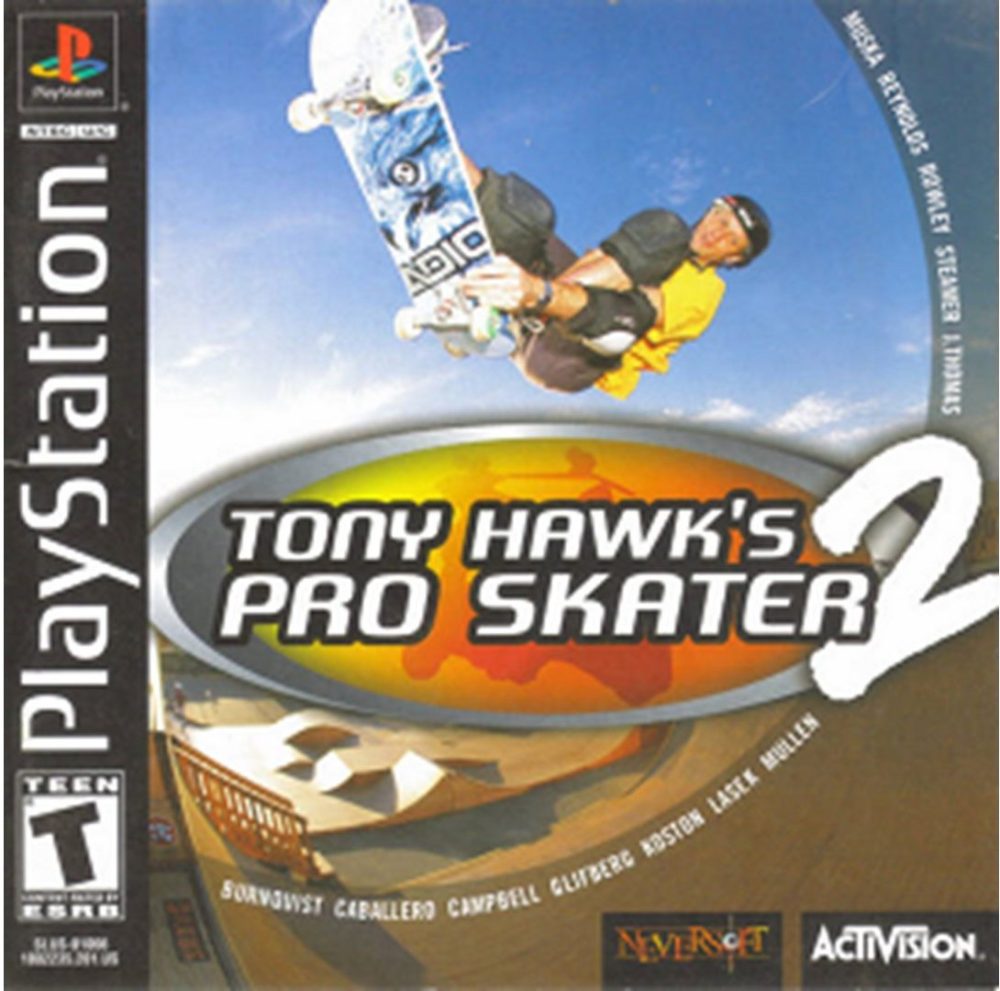

The launch of the PlayStation 2 in October, the most hyped consumer electronic device in history, led to a massive manufacturing shortage, and a lot of disappointed kids not finding that blue box under their tree. However, as one heck of a consolation prize, the original PlayStation left us with one of its greatest titles, the sequel to the phenomenon that was Tony Hawk’s Pro Skater. With a record on Metacritic of 98/100 (a still-standing record for sports games), it completely blew past all expectations.
Massive levels such as the Hangar and School II were chock full of secret areas, hidden cash, and interactive elements like crashing a golf cart. The soundtrack continued to provide the background music to players’ lives with an even more diverse set of artists. And if all of that was not enough, you could unlock Spider-Man. No, really.
This title came at the pinnacle of extreme sports gaming and was a welcome send-off to the PlayStation, living on with the PlayStation 2 via backwards compatibility when you could finally get your hands on one.
[2001] SSX Tricky (PS2, GameCube, Xbox)


November saw the arrival of two challengers to Sony’s throne: Nintendo’s GameCube and Microsoft’s debut outing, the Xbox. SSX Tricky would launch on all three on different dates, but all in time for Christmas, as the flagship title under the new EA BIG banner (a legendary, but short-lived venture into more dedicated arcade physics and a louder style).
While Tony Hawk’s Pro Skater was about mastering precision, SSX Tricky was about pure spectacle. Once you filled your boost meter, you could detach your feet from the board and perform breakdancing mid-air moves while spinning, completely thumbing your nose at physics and having a blast while doing so. The game featured an impressive “memory” that allowed for a rivalry system. If you were aggressive towards other racers, they would remember your face like a vengeful crow and hunt you down in the next race for revenge. It felt like playing out an organic drama as you battled through every heat.
Run-DMC’s “It’s Tricky” was the anthem and heartbeat, playing in the intro, menus, and even when you landed an uber trick. The racers themselves were unforgettable thanks to standout designs and the voice acting talents of Hollywood from the likes of Lucy Liu, David Arquette, and others. Releasing during the snowy holiday season, it was the perfect complement to immerse oneself on the slopes without getting frostbite or having a snowboarder trying to hunt you down for personal sleights.
[2002] Tony Hawk’s Pro Skater 4 (PS2, Xbox, GameCube, PlayStation)


By Christmas 2002, a new genre was starting to take over the world of gaming: the open world. Grand Theft Auto: Vice City had been a massive hit using the formula, and Neversoft decided to gamble with moving away from the 2-minute run formula and try something that felt more sandboxy. The result was Tony Hawk’s Pro Skater 4, allowing players to free roam the city in what was effectively a sort of skating RPG.
The spine transfer was the defining new mechanic of the fourth chapter. By pressing the shoulder buttons, you could launch over a spine ramp and land on the other side while still maintaining your momentum. The feeling of nailing this maneuver and not losing speed was bliss. To help with navigating the large world, you could latch on to the back of cars to hitch a ride, or even an elephant on the Zoo level. And the city was peppered with mini games given out by NPCs involving everything from playing tennis to escaping Alcatraz.
As Star Wars Episode II: Attack of the Clones was a major film release of the year, Neversoft struck a deal with LucasArts to provide Jango Fett as an unlockable skater. If you’re imagining that using a jetpack through a halfpipe sounds ridiculously cool, you would be imagining correctly. True to its roots, the soundtrack continued to expand, incorporating hip-hop and classic rock into its setlist. Ad campaigns featured players ignoring clocks and rules, reinforcing the lack of a timer in the coming title.
This game was a sure bet for Christmas, with a well-earned respect for quality and a level of replayability most games can only dream of attaining.
[2003] NBA Street Vol. 2 (PS2/GameCube/Xbox)


Although it was released earlier in the year, the massive cultural impact of NBA Street Vol. 2 kept its popularity surging through the holiday season, and was even outselling several ‘traditional’ NBA simulations that had been released in the winter. The ‘street’ culture in gaming was reaching its peak, a culture that was dominated by throwback jerseys and AND1 Mixtapes. If you were tired of simulations like Madden and NBA Live, this was the love letter you were looking for, with an unapologetically arcade feel that felt like it shared the soul of NBA Jam before it.
Basketball games of this time tended to be missing one particularly important puzzle piece…Michael Jordan. While he had appeared in a handful of games over time (check out Michael Jordan in the Windy City and thank me later), the uniqueness of his contract and licensing fee kept him out of the lineup for most releases. But there he was, on the cover and taking flight. It’s hard to quantify just how rare and important this felt for gamers at the time who had grown up with Jordan’s Bulls as a basic fact of life, but had also come to know that he simply was not going to appear as a digital force. Securing the licensing for MJ pushed the game into legendary territory.
Taking the Gamebreaker mechanic from the original NBA Street, Vol. 2 improved on it by allowing players to ‘pocket’ it and build to a level 2 version. This would trigger a cinematic, unblockable sequence that literally subtracted points from the other team and gave them to you. It was humiliation personified. The roster included current stars along with a selection of basketball royalty such as Dr. J, Magic Johnson, and Larry Bird.
Streetball legend Bobbito Garcia, aka the Barber, provided the commentary for the game in his unique style recognizable to fans of Mixtape culture, giving the game a feeling of true authenticity to the streetball lifestyle.
[2004] ESPN NFL 2K5 (PS2/Xbox)
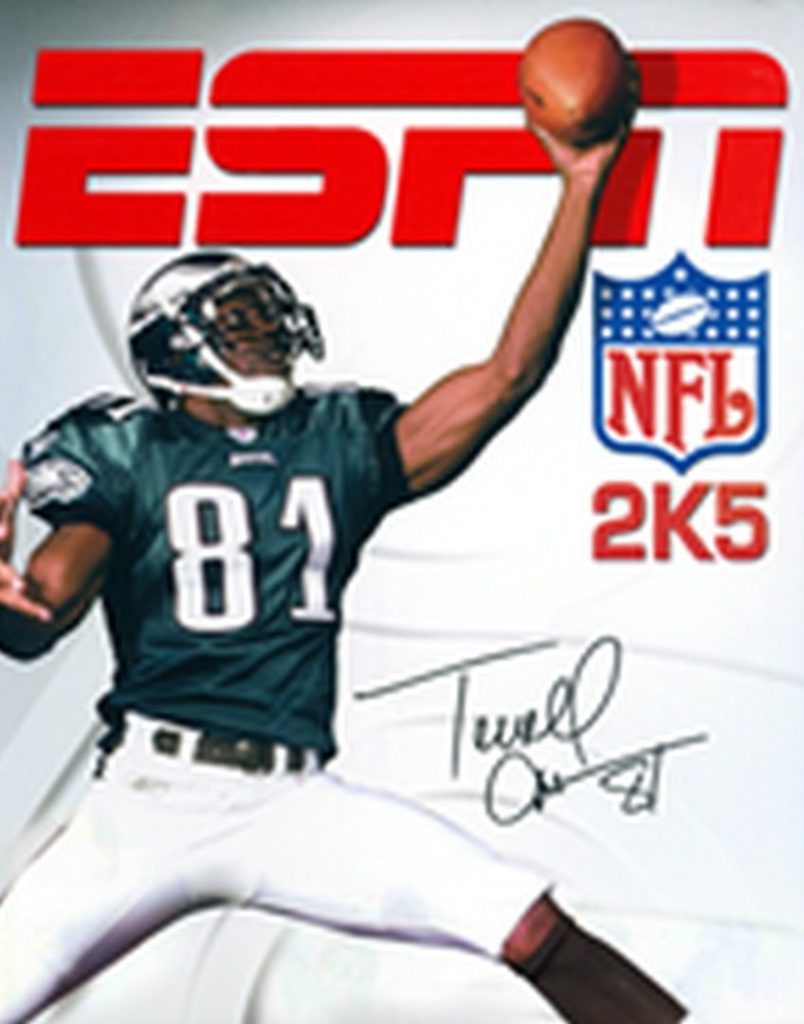
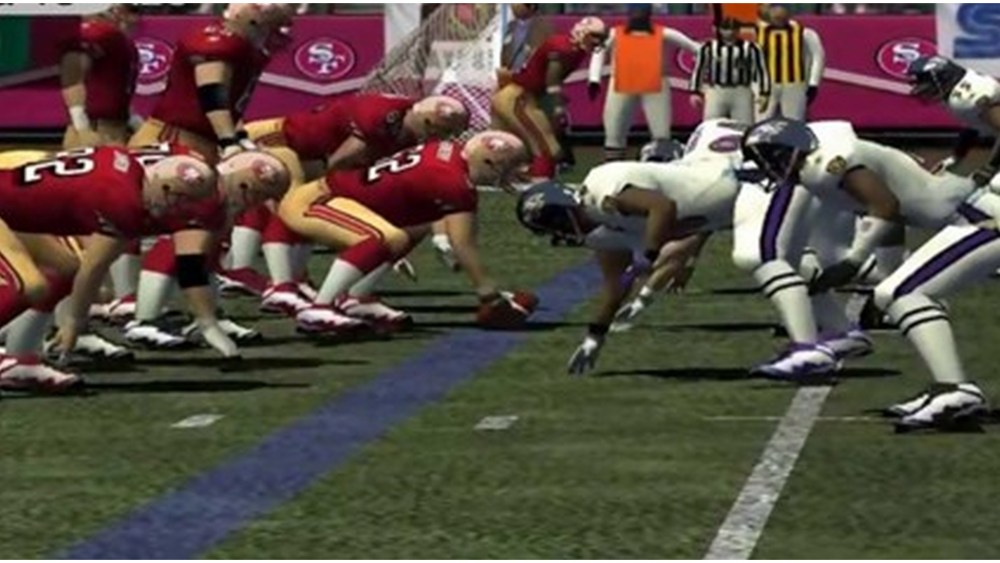
Christmas 2004 was the end of an era, and no one knew it yet. No one knew that this would be the last holiday season where two football simulations existed at the same time. While the rivalry between the two games had been grueling over the previous years, it became apparent to Visual Concepts (2K) that they simply could not overpower the marketing and branding machine of Madden. So, they did something that collectively dropped the jaws of gamers, analysts, that random guy on the street, everyone: They sold ESPN NFL 2K5 for $19.99.
For the price of a Greatest Hits title, you could get a brand-new football simulation that was not just a Madden competitor; it was seen by many as the superior title. This double punch of affordability and quality gave 2K5 the platform to achieve mythical status, and boy, did it deliver. The ESPN integration, particularly SportsCenter, created a broadcast presentation that games are still struggling to replicate today. Chris Berman hosted a halftime show with highlights from other games in the league. The music, the chyrons, the angles, the Berman, it was all on point.
The game also incorporated an interesting ghost feature called V.I.P. The game would track your play style and create a profile that you could then have a friend download, and they would be able to play “you”, or rather, your tendencies. The Crib seemed to tap into the world of MTV at the time, allowing players to furnish their own apartment where they could play mini-games or even invite over celebrities like Steve-O for a game of 2K.
[2005] Fight Night Round 2 (PS2/Xbox/GameCube)


While the Xbox 360 launched in November 2005, plenty of sports gamers were still not quite ready to leap into the HD era (or simply couldn’t find one of the consoles). Luckily, they had this as the holiday fix for lovers of the sweet science, seeking a simulation over the arcade presentation of Ready 2 Rumble Boxing.
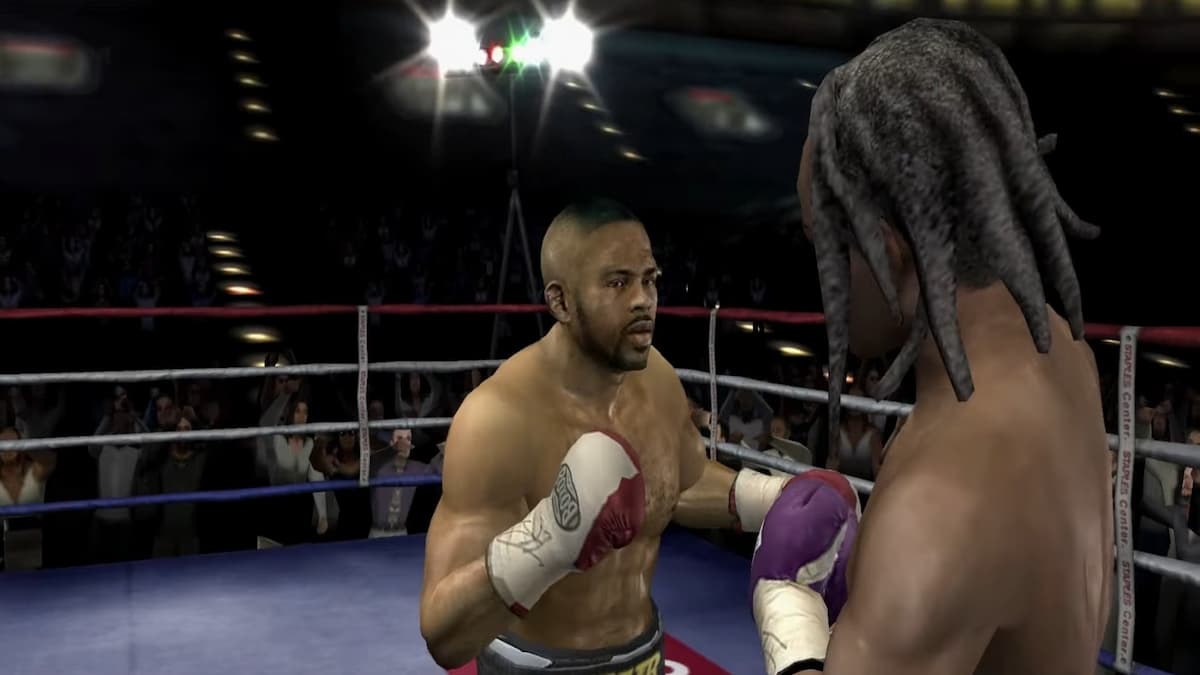
Fight Night Round 2 was the latest entry into EA’s boxing sim series, and doubled down on its “Total Punch Control” mechanics. Rather than using the face buttons to punch (which you could still set if you desired), you were instead using the right analog stick in an intuitive way. To jab, roll the stick up diagonally. To cross, roll right, and around to the forward. It was intended to mimic the physical motion of throwing that punch, creating a tactile connection between player and boxer.
This was also the game that introduced the haymaker, a blow that would ripple a shockwave effect across the opponent’s face, and looked absolutely amazing. Also included was a cut man mini game in which you used analog sticks to apply the Enswell to reduce swelling and swabs to reduce bleeding. If you failed, the referee could stop the fight, adding a visceral level of strategy.
Finally, when a boxer got knocked down, they went completely ragdoll, which resulted in spectacular devastation that never felt the same. Fun fact: the GameCube version included Little Mac from Punch-Out!! as a playable character. That’s right, Mac vs. Ali.
[2006] Wii Sports (Wii)


A launch title included with the American and European bundle, along with the absolute explosion of popularity that was the Nintendo Wii, Wii Sports had everyone from kids to elderly folks in the nursing home celebrating their last bowling strike. The trick was in the intuitiveness. You were no longer pressing buttons to swing a bat. You were swinging your arms and mimicking the actual motions that people were already so familiar with. It was a stroke of genius on the part of Nintendo, while Sony and Microsoft fought a bloody war on the battlefield of HD.
The game included Tennis, Bowling, Baseball, Golf, and Boxing. Each sport was stripped down to the very essence of what it is, and the fact that one could legitimately get fatigued doing it was…satisfying? The Miis were the soul of the game, small digital avatars of yourself and loved ones. They represented your sporting prowess, and being able to compete as yourself was a novelty that caught lightning in a bottle with the casual crowd as never before.
[2007] Mario & Sonic at the Olympic Games (Wii)
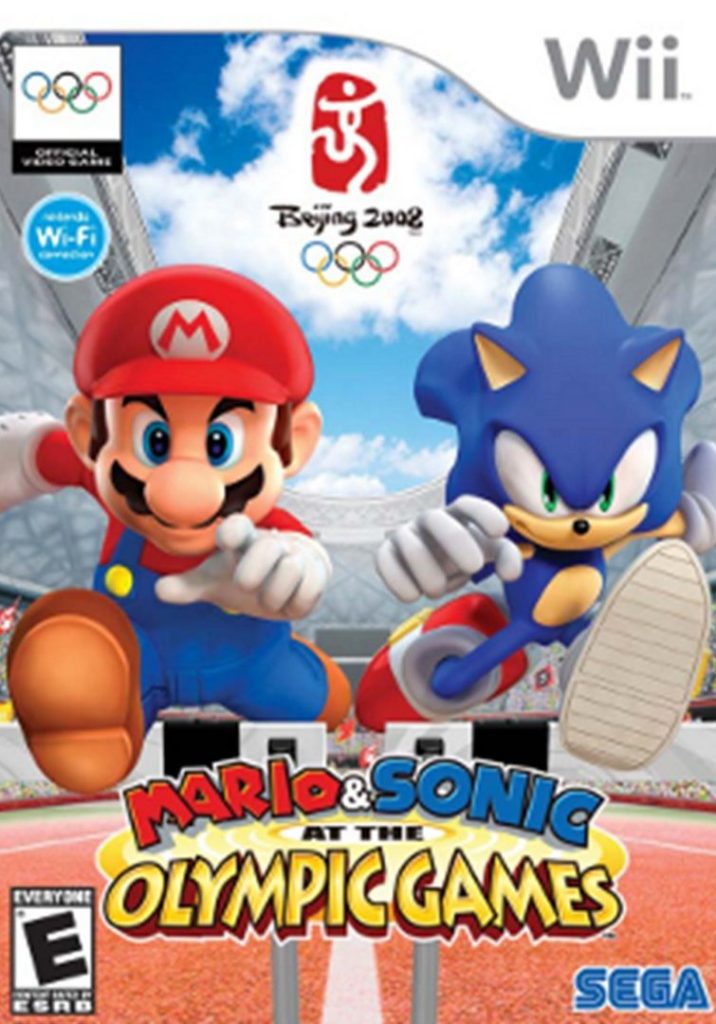
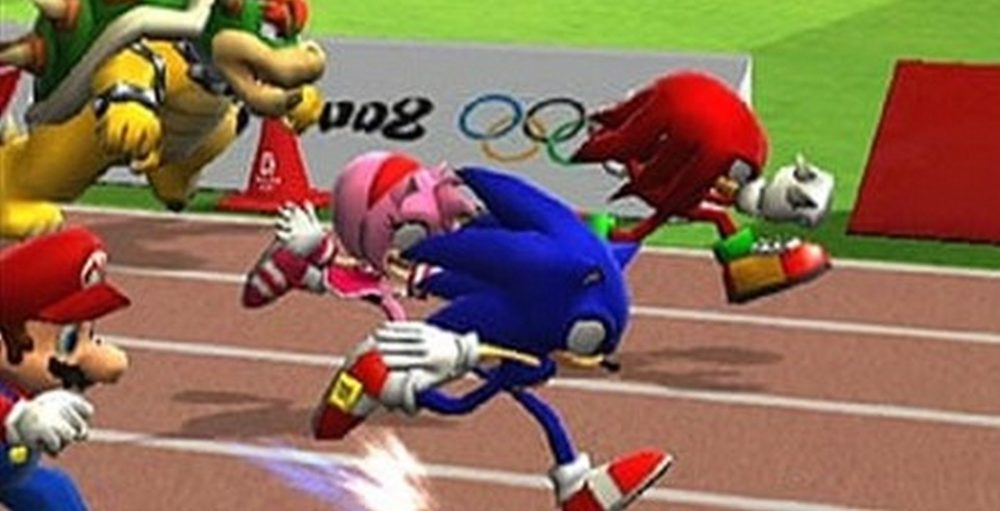
While the DS version would miss the Christmas sprint, the Wii version came out in plenty of time to wow audiences that saw the game on shelves. And by wow, I largely mean dropping the jaws of those who grew up during the console wars and were seeing Sonic and Mario on the same box for sale. That novelty lent itself well to what turned out to be a solid title and a fun arcade-level version of the Olympic events for the upcoming Beijing games. At a time when the Wii was in short supply for a second straight holiday season, this title still managed to sell gangbusters because it was the partnership of all partnerships.
You could race as or against Sonic, Bowser, Tails, Eggman, Peach, Knuckles, Luigi, Mario, and others. Competing across a bevy of events, the game made clever use of the Wii-mote and nunchuk to create a physically satisfying competition package not unlike the magic of Wii Sports. Early ads showed Mario and Sonic stretching next to each other on a starting line, an image that may well have started riots in the ’90s. And crucially, the official Olympics license helped the game clear that final hurdle of legitimacy.
[2008] Wii Fit (Wii)


Despite being released in May, the Wii Balance Board remained a sold-out accessory throughout the year, becoming one of the hardest-to-find items of the holiday season 2008. Wii Fit came along at an odd, but opportune time. With the world falling into recession, many people were seeking more value in their entertainment and also trying to become healthier. Wii Fit appeared to fit both of those values and became a killer app for a second wave of Wii adopters, as the popularity of the console saw no slowing down for the third consecutive Christmas.
The board could weigh the player and measure body mass index, as well as the center of gravity. For what must be the first time, a video game knew if you were slouching or cheating on your push-ups. After testing your balance and agility, the game would assign you a Wii Fit Age (a concept also used in titles such as Brain Age). If the game said you were 40, but you’re really 25…that was a personal challenge from this piece of industrial plastic to prove it wrong.
It bridged the gap between fun and function, making it a favorite target of families around the world to wrap its large box under the tree. I mean, is it really a ‘video game’ if you’re exercising?
[2009] Wii Sports Resort (Wii)
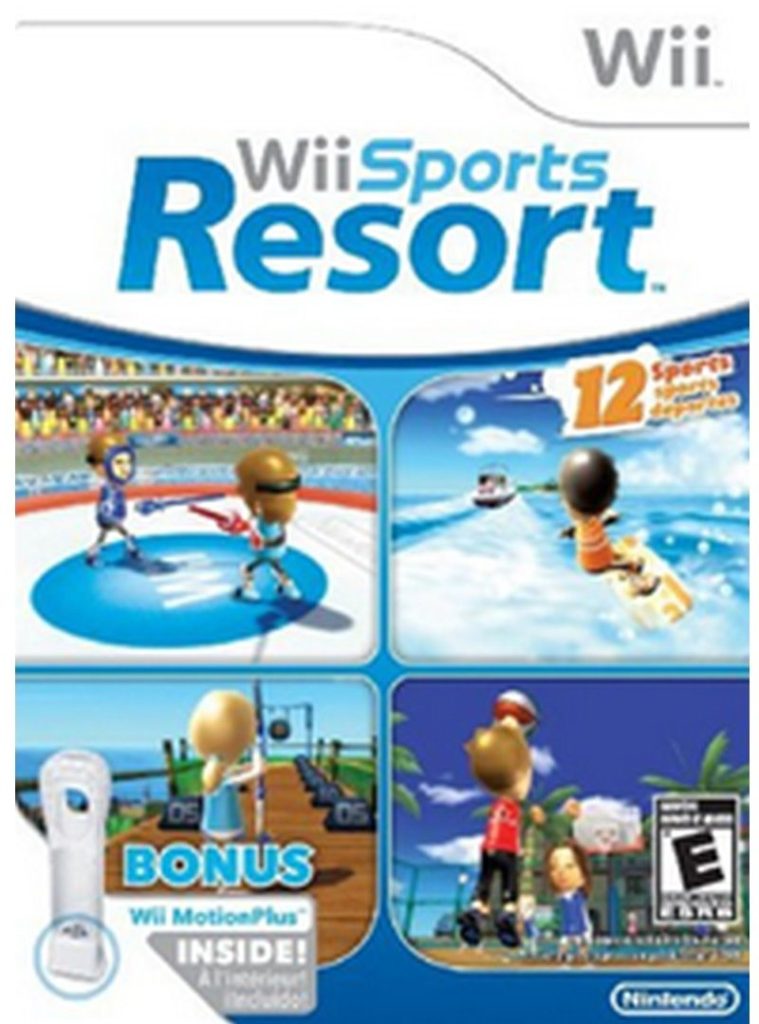

Coming out in the summer, the sequel to the phenomenon that was Wii Sports was the game that would be bundled with the Wii for the 2009 holidays. It included the new Wii MotionPlus, an accessory attachment utilizing a gyroscope that made the Wii-mote even more accurate and became a necessity for pinpoint Wii-moting.
Wii Sports Resort took the fun yet simple concepts in the original and went back to the well of success. Swordplay became a favorite, using the Wii-mote as a kendo sword (which also worked as a great tech demo to witness the 1:1 ratio that the MotionPlus provided). Table Tennis was simply amazing, with the new controls allowing for backspin, topspin, and slice shots. Archery required holding the nunchuk like a bow and pulling back the Wii-mote like a string.
This was the ultimate ‘upgrade’ gift for the Wii, and most families didn’t require much convincing since they, too, were happy to see a sequel to their own favorite casual game. It would replace the original Wii Sports as the bundle title for the next three years.