As with many campaigns in London against what’s being built and what’s getting knocked down, the Skyline Campaign deserve some sympathy but at the same misses much of the main point. Launched a year ago and backed by the Observer and Architects’ Journal, it issued a founding statement signed by 70 ”public figures” including lots of architects, a hedge fund founder, a few artists, some aesthetes and a Labour mayoral pretender or two.
You can’t quarrel with its core complaint that – and here I paraphrase – a lot of crap’s being chucked up which neither politicians nor planners seem to have the will or the wherewithal to stop. It speaks to that now familiar bad feeling that property developers are too often given the run of the place. But, at the same time, there’s something about the campaign that goes against the grain. I’ve never felt much affinity with self-appointed guardians of good taste. The Skyline Campaign feels a bit like an alliance of affronted civic worthies declaring war on vulgarity. I get this urge to wipe my nose on my shirt sleeve.
There are more important things to get worked up about. How damaging are tall buildings, actually? How offensive are they to the human eye? There is, shall we say, a range of views. Some of the most conspicuous skyscrapers in London are pretty popular with Londoners. A YouGov poll last April found that 57% of us think the Shard has made the skyline better and 52% feel the same way about the Gherkin. The Walkie Talkie, by contrast, has more enemies than friends, but even that eyesore, which I’d make vanish tomorrow if I had a magic wand, pleased 25%. Tall buildings do have a way of growing on us. Do we want the BT Tower levelled? Even Centre Point is now listed. A lot of people used to moan about St Pauls.
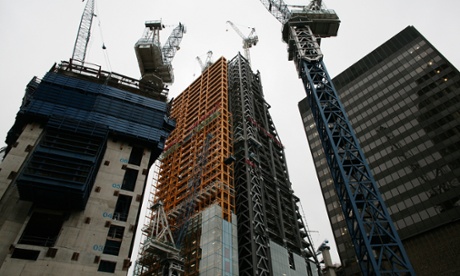
It’s plainly true that the number of London buildings over 20 storeys high is increasing. This time last year the Skyline Campaign located 236 being proposed and says the figure has now gone up by 27 (though that doesn’t mean all of them will get permission or get built). The clusters of them are proliferating too. As well as the City and Canary Wharf, you’ve got Nine Elms, Tower Hamlets, Elephant and Castle, Blackfriars Bridge Road, Croydon and many of the London Plan’s 38 Opportunity Areas for large scale development.
The look of these buildings matters as does the way they fit into existing surroundings, as does their impact on the street environment. But the height of them isn’t what matters most. It’s whether they provide the homes, offices and shops that the city and its people need. Not until the second half of of the Skyline Campaign’s six paragraph statement is there any reference to the mismatch between the very expensive dwellings 80% of the new towers mostly supply and the sort most Londoners and would-be Londoners and the city as an economic and social entity most require. Yet that is the burning issue of the day.
To be fair, the complex and contested relationship between a residential building’s height and the affordability and social value of the accommodation units it contains has been engaged with by at least one Skyline Campaign signatory. Last June, architect Sunand Prasad, who co-founded the Commission for Architecture and the Built Environment and is also a member of the mayor’s Design Advisory Group, made the important case that London’s need to fit more homes into the space available for them can often be met just as well by lower-rise buildings as by high-rise. In other words, greater density can be achieved without reaching for the stars.
Prasad was speaking at a meeting of the London Assembly’s planning committee, which was also attended by Peter Rees, the City’s Corporation’s now former planning officer, Berkley Group chair Tony Pidgley, Boris Johnson’s deputy mayor for planning Sir Edward Lister and several other interesting contributors. To read the transcript is to appreciate how difficult some of these issues are, with almost no two participants able to quite agree about how big the problem is or what the right solution to it is. The short answer is a rigorous mayoral housing and planning strategy with a clearly ordered set of priorities that are firmly enforced. Height and skyline considerations should be among them. But not right at the top.