There will not, I guarantee, be a single top-level athlete who began playing sport with a view to becoming a millionaire.
Every kid’s dream, at least initially, is to win on their chosen sport’s greatest stages, with money not even crossing their mind.
So why, then, do quite so many individuals, when they become top-level athletes, turn into such unashamed money-grabbers?
The most recent example is the top tennis players’ ridiculous “protest” at Wimbledon over how apparently hard-done they are financially.
A select group, which included several of the world’s top players, announced prior to this year’s Wimbledon that they would limit their media commitments to the bare minimum of their contractual agreement, which was 15 minutes. So, true to their word, they chatted for 15 minutes and not a second more.
This protest followed-on from their stance at the French Open, where this same group of players again limited their media commitments to make their point.
The issue these players have surrounds how much they are being paid, and their unhappiness about it.
As things stand, the Grand Slams allocate around 15 percent of their revenue to prize money. In the case of the French Open, this meant that the total prize money was €61.7m (£52.6m), with the winner of the men’s and women’s singles receiving a hefty €2.8 million (£2.39 million) each. Not hefty enough, though, for these players, who wanted a larger cut.
In response to the players’ French Open protest, Wimbledon responded promptly. They swiftly reviewed their prize pot for this ongoing 2026 tournament and increased their overall prize pool by a whopping 20 percent meaning the overall prize money was increased to £64.2 million, with each singles champion receiving £3.6 million. First round losers would win a healthy £80,000.
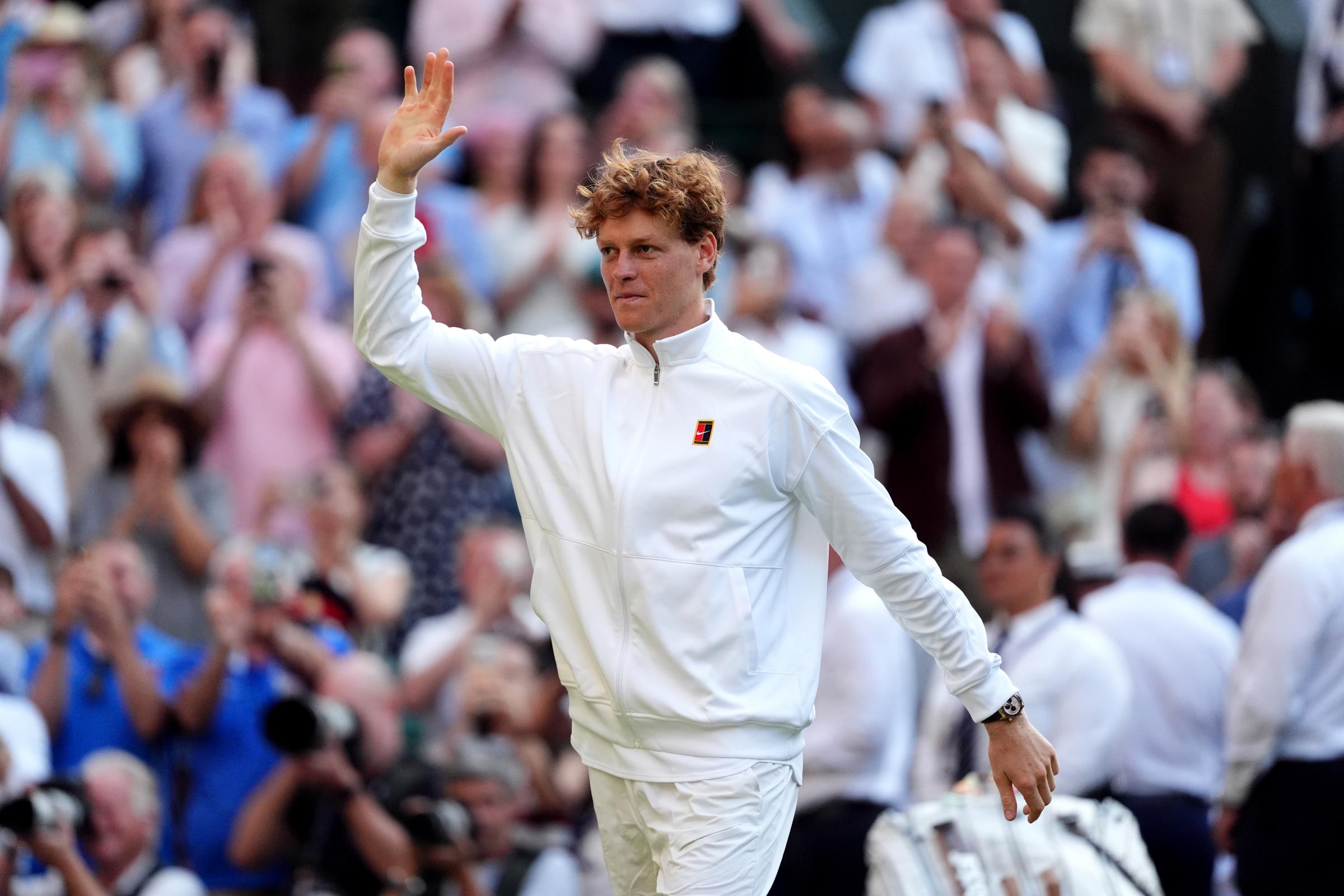
Yet, this still wasn’t enough for at least some of the world’s top players. Many of them, including world number ones Jannik Sinner and Aryna Sabalenka, deemed this increase insufficient and so went ahead with their protest.
Their primary problem was, said players’ representatives, that their estimated share of Wimbledon’s projected revenues for 2026 stood at 14.4 percent (hence the 15 minutes), with this ratio less than their share from 10 years ago, despite revenues growing over that period.
What’s quite so remarkable about this protest is how unbelievably tone-deaf their point is.
These are multi-millionaires complaining pretty petulantly about money. This is never, ever going to generate much sympathy from any “normal” people. Individuals like Sinner and Sabalenka have more money than they will ever be able to spend. Any children they have who will inherit this wealth, will also be unable to spend the astronomical amounts of money they’ve accumulated.
Fair enough - they’re the best tennis players on the planet.
But moaning about it not being enough is a quite astonishing failure to read the room.
The plight, if you want to call it that, of the tennis players, reminds me of the golfers who scampered away to LIV Golf due to its lure of millions of dollars. These individuals obliterated their reputations and their opportunities to become one of their sport’s greats in terms of achievement because the pull of increasing their bank balance was just too great for them to resist.

Certainly the amounts of money associated with LIV Golf contracts were eye-watering and so it’s perhaps unsurprising that many of the world’s best players were lured-in. John Ram was paid $75 million. Dustin Johnson was paid $60 million. Bryson DeChambeau was paid nearly $50 million.
For “normal” people, this kind of money isn’t just life-changing, it’s life-changing for generations down the line.
The real sense of unease comes when it’s individuals who are already multi-milliionaires who are desperate to add a few more million to their bank accounts. For someone who already has tens of millions of dollars to their name, it’s really difficult to see what a few more million, or even tens of million more, really changes.
What’s so stark about these athletes’ attitude towards money is that it’s in such contrast to what it would have been when they began playing their sport.
I can guarantee that when Sabalenka first picked up a tennis racquet, she’s didn’t do it with the ambition of becoming rich. As she got better, she still would not have been thinking about money.
When she won her first tournament as a kid, and as she began progressing up the ranks, the satisfaction comes from improving as a player, not from getting closer to winning millions of dollars.
Becoming an elite athlete is very, very hard. If the sole motivation is money, it just isn’t enough. And so, given these top athletes are quite so handsomely rewarded financially, and end up with more money in their bank account than they could ever have imagined, what’s the switch that flicks and begins making them believe that money is quite so important?
The athletes’ comparison, certainly in the case of the tennis players, is that in team sports, the athletes are better-paid than they are in individual sports. In the case of the world’s top footballers, basketball players, American football players and baseball players then yes, this is true. They can get paid, in the most extreme cases, literally millions of dollars per week. But comparing individual sports and team sports is entirely futile. They just are not the same entities.
And so that argument falls down pretty quickly.
The argument that the athletes should receive their fair share is relevant. Without the athletes, any sport is, of course, dead. It’s the athletes who pull in the crowds, pull in the sponsorship deals and pull in the broadcast money. But it’s when it comes to deciding what is their fair share, that’s when it becomes contentious.
It’s hard to agree that £3.6 million for each singles champion at Wimbledon is leaving anyone hard done by. If these players are at all minded to keep the public onside, which they do seem to want but have no idea how poorly they’re going about it, hey need to change their stance. Millionaires asking for more millions is never the most endearing quality.
Athletes absolutely deserved to be paid their worth. Of course, what exactly “their worth” is, is entirely subjective. But making millions of dollars for hitting a furry yellow ball over a net or a small white ball into a hole and then complaining that becoming a multi-millionaire from it isn’t satisfactory really isn’t a good look.