
On August 12 the Moon will completely block out the Sun during a rare total solar eclipse across much of northern Spain. Here is what to know about the phenomenon, the first total solar eclipse visible from mainland Europe in 20 years.
Day will briefly turn into night across a swathe of northern Spain on August 12, when the Moon will completely cover the Sun during a rare total solar eclipse.
Here is what you need to know about the first total solar eclipse visible in mainland Europe since 2006.
What is an eclipse?
Eclipses happen when the Moon passes directly between the Sun and Earth, casting a narrow band of shadow across our planet.
It creates a strange twilight during which temperatures drop, shadows appear at strange angles and some animals go to sleep.
These odd phenomena convinced ancient cultures that eclipses were signs of the apocalypse – or messages from the gods.
However it is really the result of a "cosmic coincidence", according to NASA.
"Even though the Sun is about 400 times bigger than the Moon, it is also about 400 times farther away," the US space agency says.
This means that for people standing in the right spot, the Moon totally covers the Sun – revealing its outer atmosphere called the corona.
With mainland Europe set to witness its first total solar eclipse since 1999, FRANCE 24 is dedicating a series of articles to this astronomical event – one of the continent’s most anticipated of the decade – with upcoming reports from the path of totality in Spain.
• Eclipse chasers: When chasing totality becomes a way of life (1/4)
• From Solar corona to human emotions: What can we learn from eclipses? (2/4)
Where can it be seen?
On August 12, a remote region of northern Russia will be the first to see the total eclipse.
The "path of totality", as it is known, will then cross over Greenland, Iceland, Spain and the northeastern tip of Portugal.

In Spain, it will roughly move from the northern city of Oviedo to the island of Mallorca.
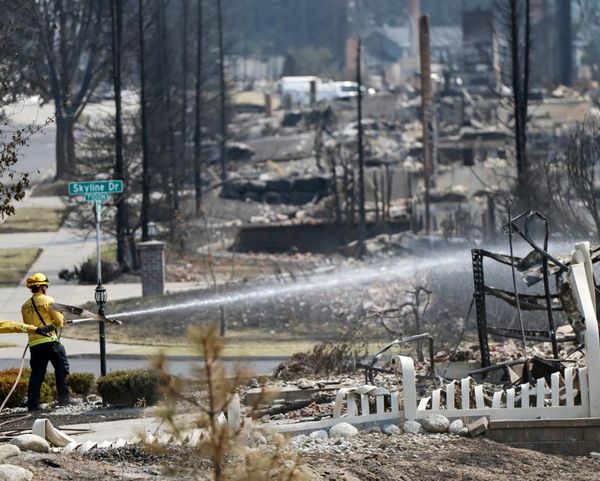
The eclipse will cross over areas that have been hit by devastating fires in Spain, which scientists say were made more likely by human-driven climate change.
How long will it last?
For observers in Spain, the total eclipse will last under two minutes just before sunset.
The northern city of Burgos, for example, will be plunged into darkness for exactly one minute and 48 seconds.
It will last slightly longer in parts of Russia and Greenland, though still under two-and-a-half minutes.
However, partial eclipses – which occur as the Moon starts and finishes crossing the Sun – will last around one hour and 45 minutes.
Partial eclipses will also be visible in most of Europe, Canada, the northern United States and northwest Africa.
How rare is it?
One or two solar eclipses occur roughly every year. However, the small band of totality means that the same area may wait 400 years before seeing another one.
Read more'Like the end of the world': the eclipse chasers flocking to Spain
On August 2, 2027, a total solar eclipse will cross southern Spain, northern Africa and the Arabian Peninsula.
Its totality will last six minutes and 23 seconds. A longer eclipse will not occur until 2114.
Spain will be treated yet again on January 26, 2028, when an annular eclipse – or "ring of fire" – will cross southern areas.
Do you need protection?
Yes. It is important not to look directly at the Sun during an eclipse. It can cause serious eye damage.
Experts recommend specifically designed eclipse glasses which filter UV rays that meet the standard ISO 12312-2:2015.
There are no pain receptors in eyes to warn the brain they are being injured, so problems only appear later.
Following a total solar eclipse in the United States in 2024, the rate of people googling "my eyes hurt" surged, research has shown.
(FRANCE 24 with AFP)