Kentucky lawmakers have brushed aside the objections of Democratic Gov. Andy Beshear to enact a new law that could protect global agrochemical manufacturer Bayer from state lawsuits alleging it failed to warn customers that a commonly used weedkiller could cause cancer.
The veto override Wednesday by Kentucky's Republican-led General Assembly comes just weeks before the U.S. Supreme Court is to hear arguments in a case that could erect a nationwide shield against such liability lawsuits. It also comes as Bayer is asking a Missouri court to approve a $7.25 billion settlement that could resolve tens of thousands of claims that its Roundup weedkiller caused non-Hodgkin lymphoma.
The multipronged action in state capitols and courtrooms highlights what's become a pressing financial issue for the Germany-based company, which is also known for its pharmaceuticals. It also hits on an issue that has revealed split viewpoints among President Donald Trump's supporters and the Make America Healthy Again movement.
Here's what to know about the legislation and lawsuits involving Bayer:
A popular weedkiller became a popular legal target
Monsanto debuted Roundup weedkiller in 1974 with the chemical glyphosate as its active ingredient. The product quickly became one of the most widely used herbicides in agriculture. Roundup is designed to be used with genetically modified seeds that can resist the weedkiller’s deadly effect, thus allowing farmers to produce more while conserving the soil by tilling it less.
Bayer added Roundup to its portfolio when it acquired Missouri-based Monsanto in 2018. With it came a mounting number of lawsuits alleging glyphosate causes a cancer known as non-Hodgkin lymphoma. About 200,000 Roundup-related claims have now been made against Bayer.
The company disputes the cancer-causing assertions. But Bayer has said the legal costs are threatening its ability to continue selling glyphosate-based products in U.S. agricultural markets. It's already removed glyphosate from its new versions of Roundup for residential markets.
Though some studies associate glyphosate with cancer, the U.S. Environmental Protection Agency has said it is not likely to be carcinogenic to humans when used as directed. The federally approved label for Roundup includes no warning of cancer.
State legislation aims to block failure-to-warn lawsuits
At the heart of most lawsuits is a claim that Roundup's manufacturer failed to warn customers of the potential cancer risk.
Bayer has joined with a coalition of agricultural organizations called Modern Ag Alliance to try to block similar claims in the future. They have backed bills in multiple states declaring that a federally approved label on pesticides is sufficient to satisfy any duty under state law to warn customers.
North Dakota and Georgia became the first states to enact the legal shield last year. Kentucky became the third when lawmakers voted to override Beshear's veto.
“Farmers need clear, consistent rules to plan for the future and keep their operations profitable,” Elizabeth Burns-Thompson, executive director of Modern Ag Alliance, said while praising the Kentucky law.
Beshear, a former state attorney general, noted that many other items already contain warning labels, including cosmetics, personal hygiene products and household cleaners.
But the Kentucky measure “would allow dangerous pesticides to be sold without having labels warning of the risks of using them. It flies in the face of making America healthy,” Beshear said in his veto message.
Supreme Court case draws high interest
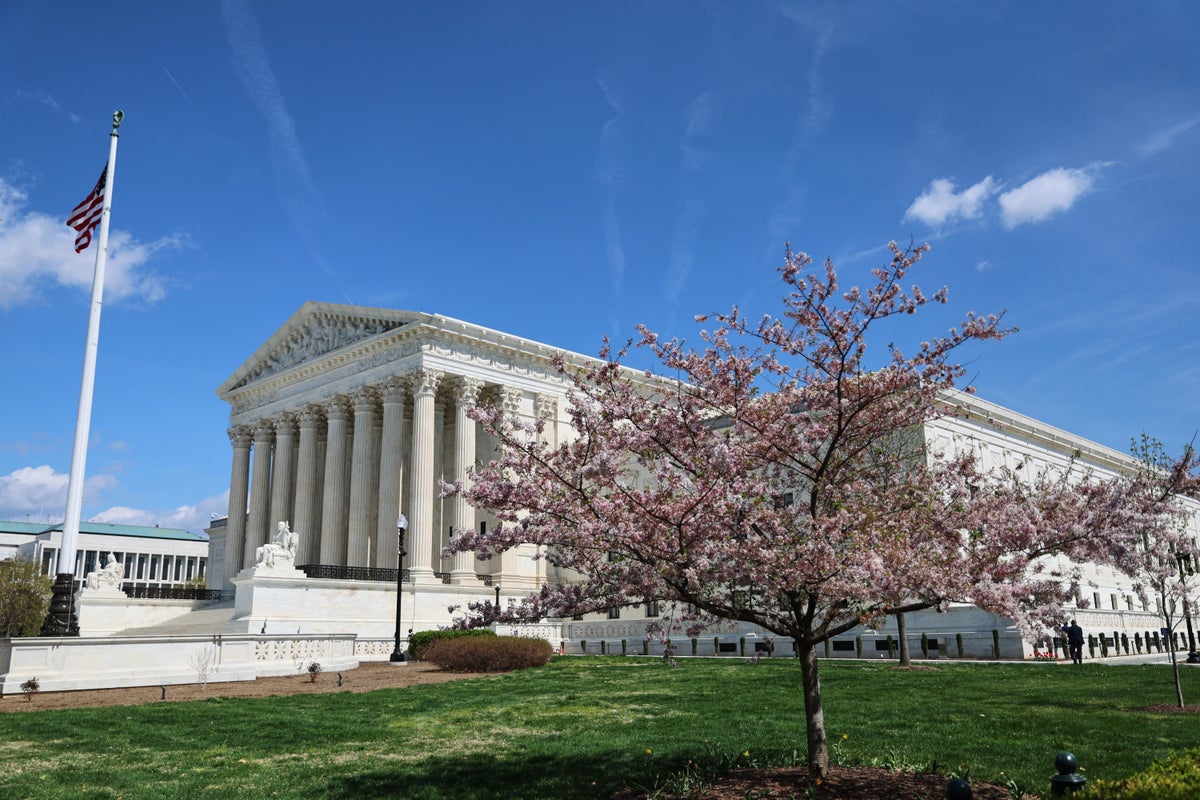
The Supreme Court is to hear arguments April 27 on a Missouri case in which a jury awarded $1.25 million to a man who developed non-Hodgkin lymphoma after spraying Roundup on a community garden in St. Louis. Jurors held Monsanto liable for failing to warn of the risk.
Bayer contends federal pesticide laws preempt failure-to-warn claims under state laws, because states cannot require additional labeling.
Trump's administration has sided with Bayer, reversing the position of former President Joe Biden administration and putting it at odds with some supporters of the Make America Healthy Again agenda who oppose giving companies legal immunity from such claims.
The case has drawn a lot of attention. Agricultural groups, business associations, health care organizations, plaintiffs' attorneys and state elected officials have combined to file about 30 separate legal briefs urging the high court to rule either for or against Bayer's assertion of federal legal protection.
Among them is a group of former EPA officials who say the state lawsuits should be allowed. Roundup's maker never proposed that EPA include a cancer warning on its labels, so the lack of such labeling “cannot be understood as an implicit rejection of such a warning” and should not preempt failure-to-warn lawsuits, their court filing says.
A proposed settlement could resolve thousands of cases
A St. Louis Circuit Court judge gave preliminary approval last month to a proposed settlement intended to resolve most of the pending and future failure-to-warn claims involving Roundup. That triggered the start of a notification period in which people can choose to opt out of the settlement by June 4.
The proposed deal calls for Bayer to make annual payments into a special fund for up to 21 years, totaling as much as $7.25 billion. The amount of money paid to individuals would vary depending on how they used Roundup, how old they were when diagnosed and the severity of their non-Hodgkin lymphoma.
An agricultural, industrial or turf worker exposed at length to Roundup would receive an average of $165,000 if diagnosed with an aggressive form of the illness while younger than age 60, according to the proposed settlement. People diagnosed at age 78 or older would get an average of $10,000.
The settlement would eliminate some of the risk from an eventual Supreme Court ruling. Patients would be assured of receiving settlement money even if the Supreme Court rules in Bayer’s favor. And Bayer would be protected from potentially larger costs if the high court rules against it.
Iran-US war latest: Macron tells Trump ‘don’t speak every day’ in scathing attack
Trump celebrates as major bridge in Iran cut in half by strike
Prediction markets challenge tribal casinos’ hard-won place in US gambling
Trump polled advisors on whether to fire Tulsi Gabbard as well as Bondi: report
Reform treasurer Nick Candy ‘sells mansion for record-breaking £270m’
Judge blocks deportation of man who spent 40 years behind bars before exoneration