Switching from a boiler to a heat pump is a bigger job than simply replacing one heating appliance with another. Before installation begins, an installer needs to work out how much heat your home loses, whether your existing radiators are suitable and where components such as the heat pump and hot water cylinder will go.
The good news is that the work itself may be relatively quick. According to Phil Steele, future technologies evangelist at Octopus Energy, a typical heat pump installation takes between two and five days. However, the exact timeframe depends on the property and how much work is required.
Here’s what homeowners can expect, from the first survey through to switching the new system on.
What happens during a heat pump survey?
The process begins with a survey of your home. One of its main purposes is to calculate the property’s heat loss – in other words, how quickly warmth escapes through areas such as the walls, windows, roof and floor.
This information helps the installer determine how the heating system needs to be designed and what flow temperature the heat pump will need to operate at.
“The survey would have told you the heat loss of the house,” Steele explains. It also helps establish whether the system should run at a lower or higher temperature and, as a result, whether any radiators need changing.
That’s because radiators produce less heat when the water flowing through them is cooler. A system designed around lower flow temperatures may therefore require radiators with a higher output.
The survey and design process should also establish where the outdoor heat pump will go, whether the property needs a new hot water cylinder, where that cylinder can be installed and how pipework can be routed between the different parts of the system.
What happens after the survey?
Once the survey is complete, the installer can finalise the system design and confirm exactly what equipment is required.
That could include the heat pump itself, a hot water cylinder and replacement radiators. The installation can then be scheduled and the necessary equipment delivered to the property.
The time between survey and installation will vary depending on the complexity of the project and engineer availability. Octopus says it aims to keep this period as short as possible, particularly because some homeowners may be considering a heat pump after their existing heating system has failed.
How long does a heat pump installation take?
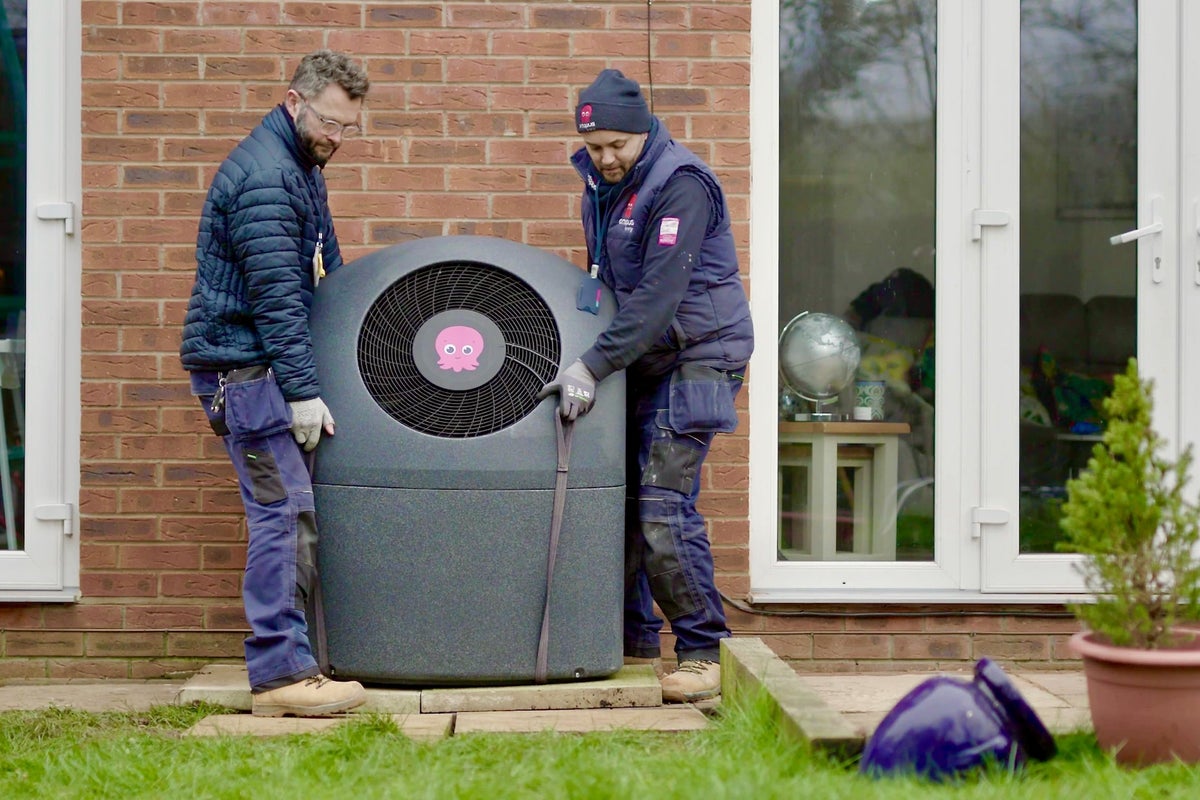
Once the engineers arrive, Steele says the physical installation will generally take between two and five days.
A simpler job could sit towards the lower end of that range, particularly if the home’s existing radiators are suitable and the new equipment can be fitted without extensive changes to the heating system.
More complicated installations can take longer.
“For example, if there isn't a hot water tank nor an easy place for a hot water tank, where's that hot water tank going to go?” Steele says. Finding a suitable position for the cylinder and routing pipework to it can add complexity.
The same applies to the outdoor unit. If the heat pump needs to be positioned some distance from the existing heating system, for example, installers may need to run more pipework between the inside and outside of the property.
Importantly, these issues should normally be spotted during the survey and design stage rather than discovered after work has begun.
Will your radiators need replacing?
Not necessarily. The survey will establish whether the radiators already in your home can provide enough heat with the new system. Where additional output is required, changing a radiator doesn’t always mean installing one that’s dramatically larger.
Steele gives the example of replacing a K1 radiator, which has a single panel, with a K2 radiator with two panels. By adding another panel, installers can substantially increase the radiator’s output while potentially keeping roughly the same width and height.
That can be useful because it avoids having to fit a much wider radiator, which may otherwise leave marks or gaps where the previous radiator was mounted and create additional decorating work.
Will you be without heating and hot water during installation?
There will inevitably be some disruption while a heat pump is fitted, but that doesn't necessarily mean spending several days without heating or hot water.
Steele says Octopus installers try to maintain both for as much of the installation as possible.
One option is to leave the existing gas boiler connected while the new heat pump and other components are being installed, disconnecting it closer to the final changeover.
“When mine was installed, we had both the gas boiler and heat pump connected to the heating and the hot water at the same time,” Steele says.
Another option can help maintain hot water once the new cylinder has been installed. Many hot water cylinders contain an electric immersion heater, which can temporarily heat the water even before the heat pump is fully commissioned.
Steele says this can be used for two or three days during the installation if required.
There may still be a period when heating or hot water needs to be switched off while the old system is disconnected and the new one takes over. However, the aim is to keep that interruption as short as possible rather than leaving the home without heating or hot water throughout the entire installation.
What happens when the heat pump is switched on?
Once the installation work is finished, the new system can be connected, tested and commissioned.
At this point, the heat pump takes over responsibility for the home’s heating and, where applicable, hot water. The system should have been designed around the findings from the initial survey, including the home’s heat loss, radiator requirements and intended operating temperature.
So although the engineers may only be in your home for two to five days, much of what determines how straightforward the installation will be has already happened before they arrive.
A thorough survey means installers know what equipment is required, where it needs to go and what alterations need to be made, helping make the journey from old heating system to heat pump as predictable as possible.