
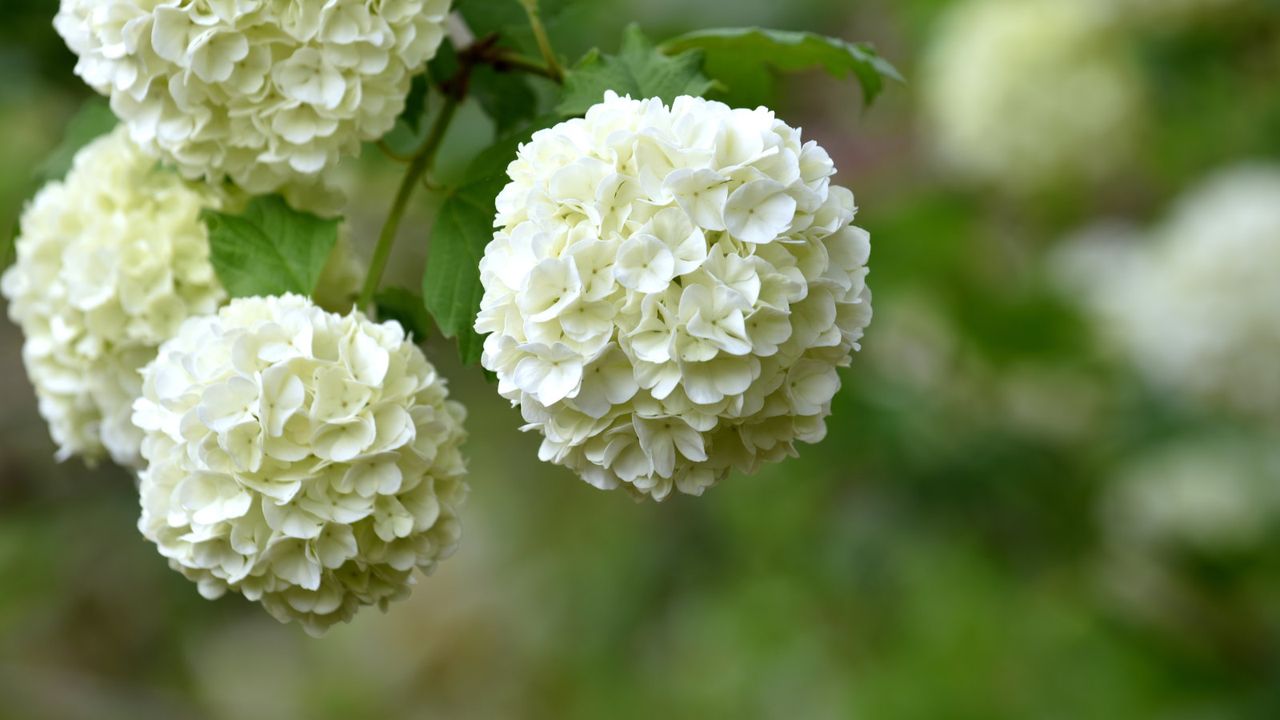
The glorious blooms of a snowball viburnum bush,Viburnum opulus 'Roseum', always herald the arrival of spring: starting out as pale green, they take on a dazzling white hue at this time of year. But to guarantee a spectacular display this year, you'll want to keep the soil moist, fertilize regularly, and prune after your viburnum has flowered.
Viburnum itself is a reliably low-maintenance and fast-growing plant that provides plenty of visual interest all year round. In winter, its foliage will deepen to a fiery orange color and often be accompanied by delicate red berries; in spring, however, its giant spherical blooms steal the show.
With this in mind, knowing how to grow viburnum is all about regular maintenance in May: check off a few crucial tasks and you will be handsomely rewarded. Below, experts reveal exactly what to do with snowball viburnum right now. (And if you have yet to add it to your garden, you can pick up an eastern snowball viburnum bush from Fast Growing Trees.)
1. Water Regularly
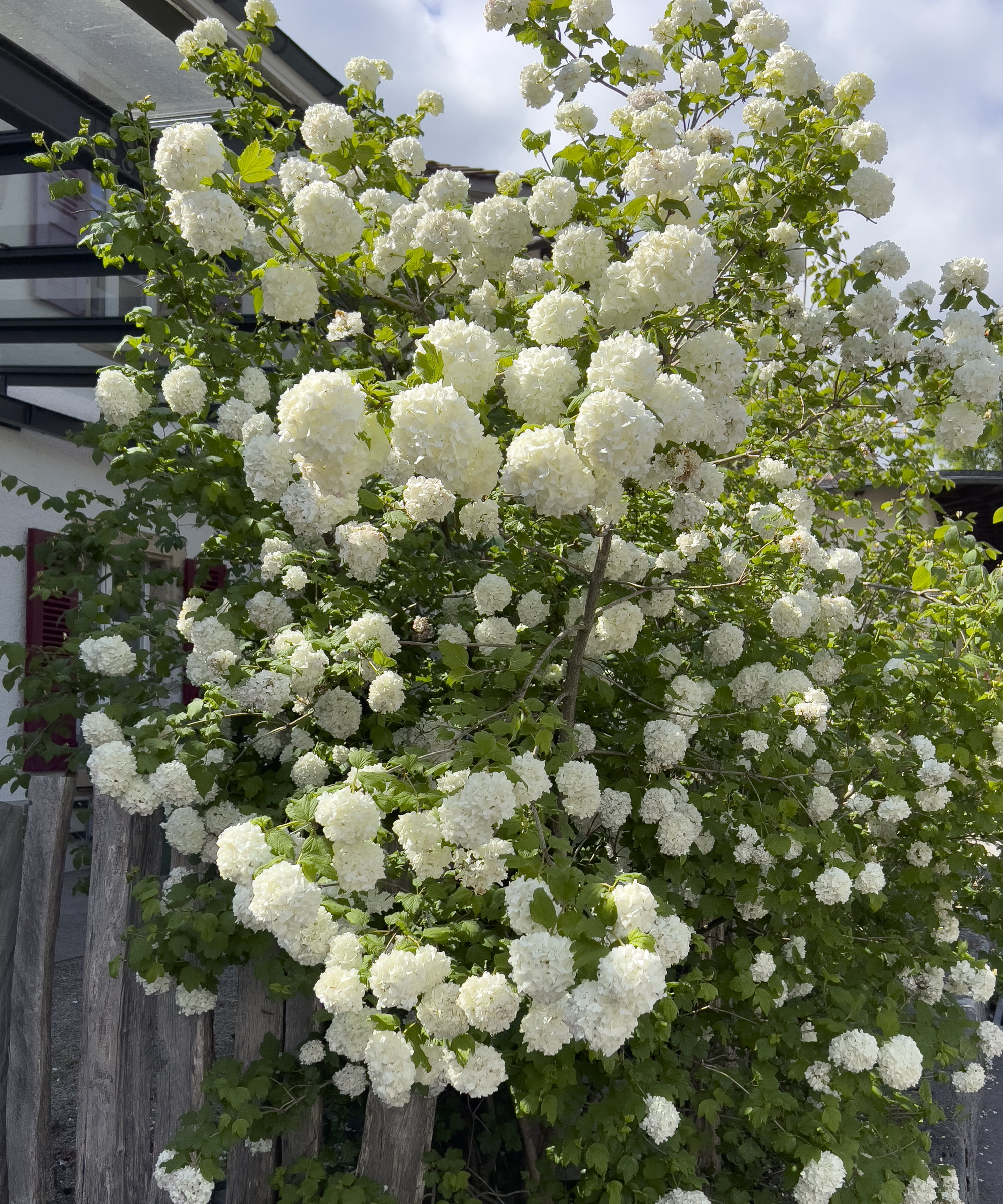
Like most types of viburnum, snowball viburnum isn't fussy, but it does require moist, well-drained and moderately acidic soil – so you'll want to keep an eye on it in May, as temperatures rise and those spring showers start to become less frequent.
With this in mind, it's best to water snowball viburnum around once per week. Although overwatering can be just as detrimental (since viburnum plants suffer in soggy or saturated conditions), you'll need to increase watering frequency at this time of year.
It's best to use a a soil moisture meter, like this one from Walmart, to monitor the soil and ensure it isn't getting too dry. Mulching is also a great way to lock in moisture – you can stock up on organic mulch at Amazon.
2. Don't Forget to Fertilize
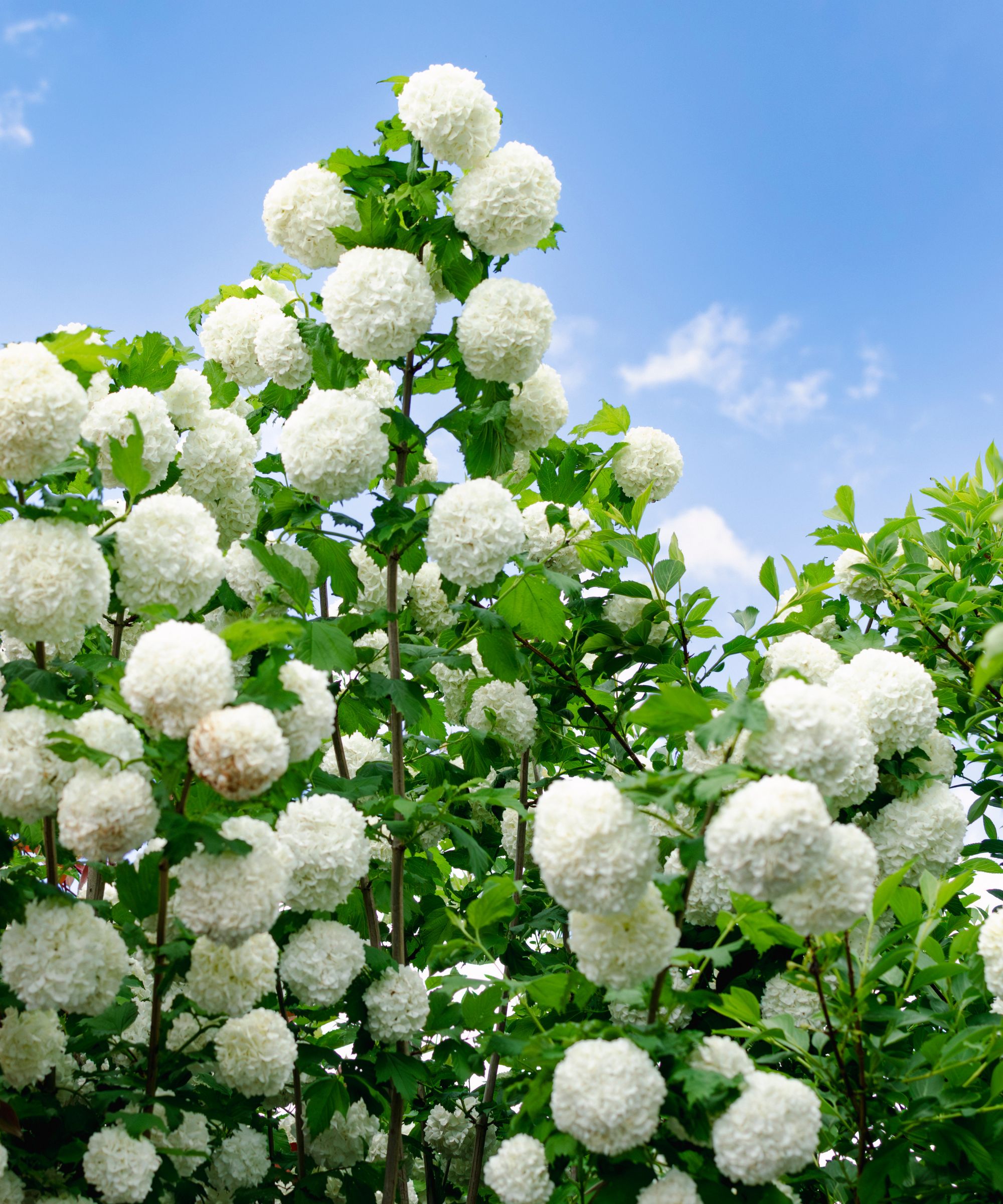
Fertilizing snowball viburnum is crucial during its first year, but you should also feed it at least once every spring using a slow-release fertilizer. (Choose a specialized tree and shrub fertilizer like BioAdvanced Protect and Feed, which you can find at Amazon.)
Adding fertilizer is a dependable way to support snowball viburnum during its growing season, helping it to produce healthy foliage and better blooms.
3. Prune Carefully After the Flowering Season
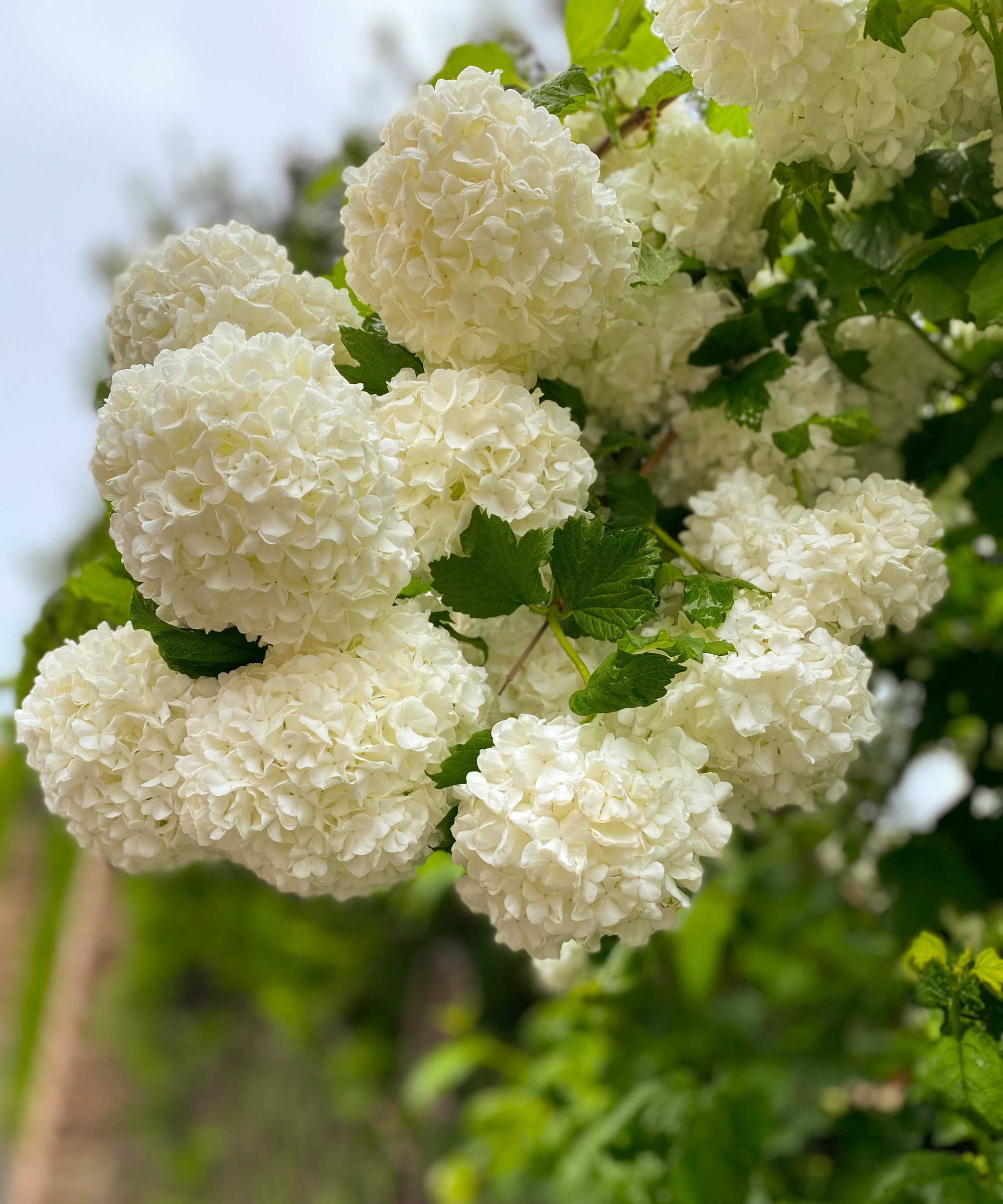
Understanding how to prune viburnum is the secret to an impressive display in the next flowering season – but knowing when to prune will vary based on your region.
'May might be the month to prune your snowball bush, but admittedly, it will depend on your location,' explains Drew Swainston, Content Editor at Homes & Gardens.
'This spring-flowering shrub produces flower heads from April through to June, and the time to prune it is after flowering has ended.'
You'll want to dust off your essential pruning tools for this task: use loppers (like the Fiskars bypass loppers, which you can find at Walmart) or a pruning saw (like the Corona razortooth blade from Home Depot) to remove dead branches.
'If the blooms are dropping on your bush, it is time to trim,' states Drew. 'Pruning involves removing dead, diseased, and damaged branches, and any stems that are crossing or overcrowded.'
Once this part is done, you can get to work removing any spent flowers using sharp pruning shears. (Here at Homes & Gardens, we swear by the Okatsune pruning shears; you can buy them at Amazon.)
'The final step is gently shaping the bush, always pruning back to healthy, outward-facing buds,' says Drew. 'As the viburnum shrub blooms on old wood (stems produced the previous season), trimming quickly after the flowering ends gives it lots of time to develop new wood and buds for next year’s display.'
4. Check For Viburnum Beetles
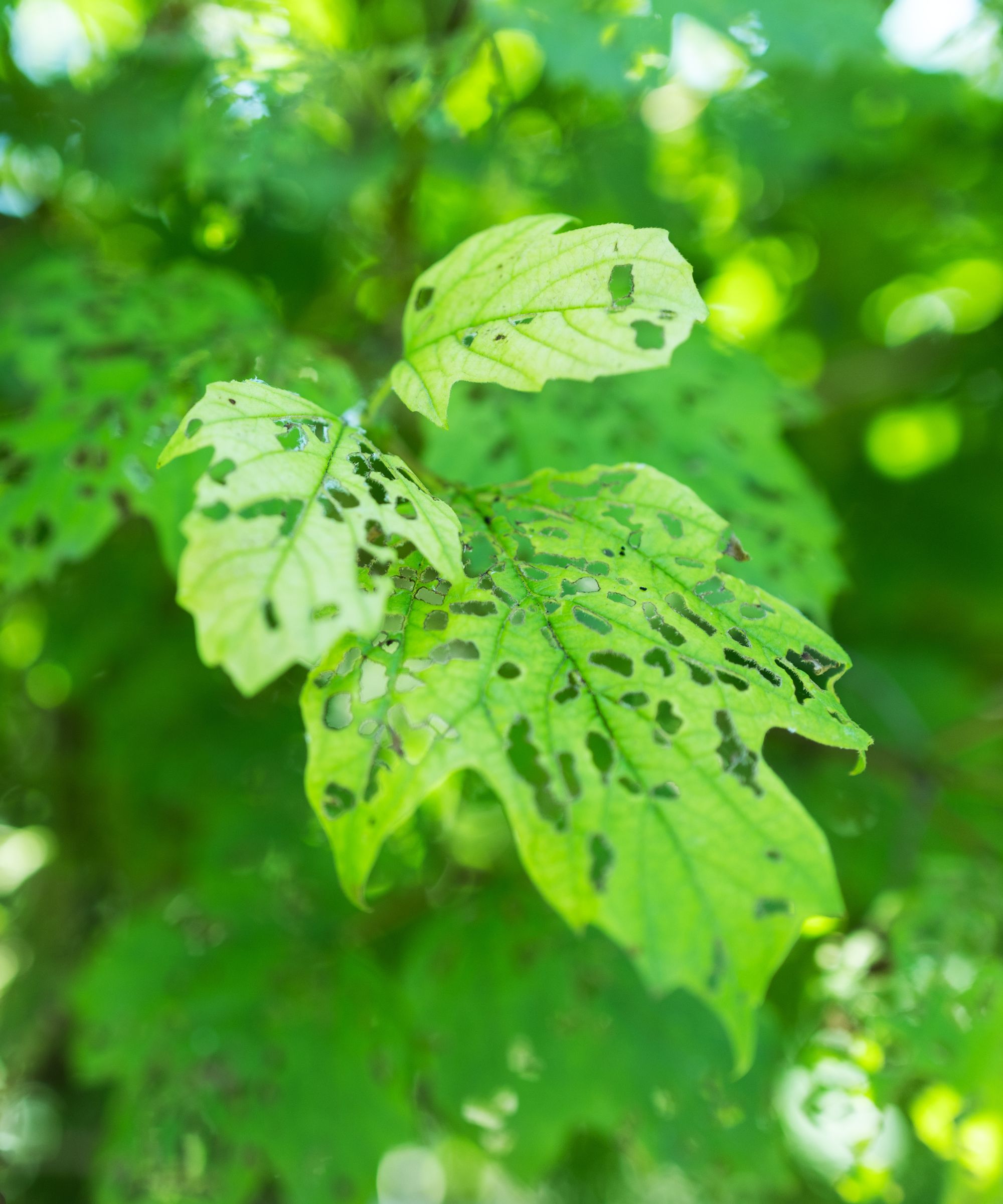
Another essential spring task? Checking for pests – and beetles can pose a significant threat to your snowball viburnum.
'Viburnum leaf beetles are an active problem in spring, as the larvae voraciously feed on new leaves,' reveals Drew.
'These small yellow larvae have black markings and are prevalent from April to June. If you see holes nibbled on the leaves of your viburnum, check the plant for the presence of these larvae.'
To ensure your plant doesn't get infested, you'll want to remove the beetles by hand.
'One of the best ways to get rid of these pests is to hand-pick them from the shrub and drop them into a container filled with soapy water,' says Drew. 'You can spray with insecticidal soap this month; however, such products also kill beneficial insects, so they should be used with caution.'
If you do need to use insecticides, opt for a multi-purpose insect spray (like the Bonide insecticidal soap from Amazon), or try homemade bug sprays instead.
'Insecticidal soap will need to be applied several times,' advises Drew. 'It should be sprayed on the top and underside of the leaves to target the larvae.'
Looking for more tips and tricks? Take a look at our guide to the best viburnum companion plants, or check out our advice on what to do with viburnums in the fall.
And if you love inspiring garden ideas, outdoor advice, and the latest news, sign up for our newsletter to get the latest features delivered straight to your inbox.