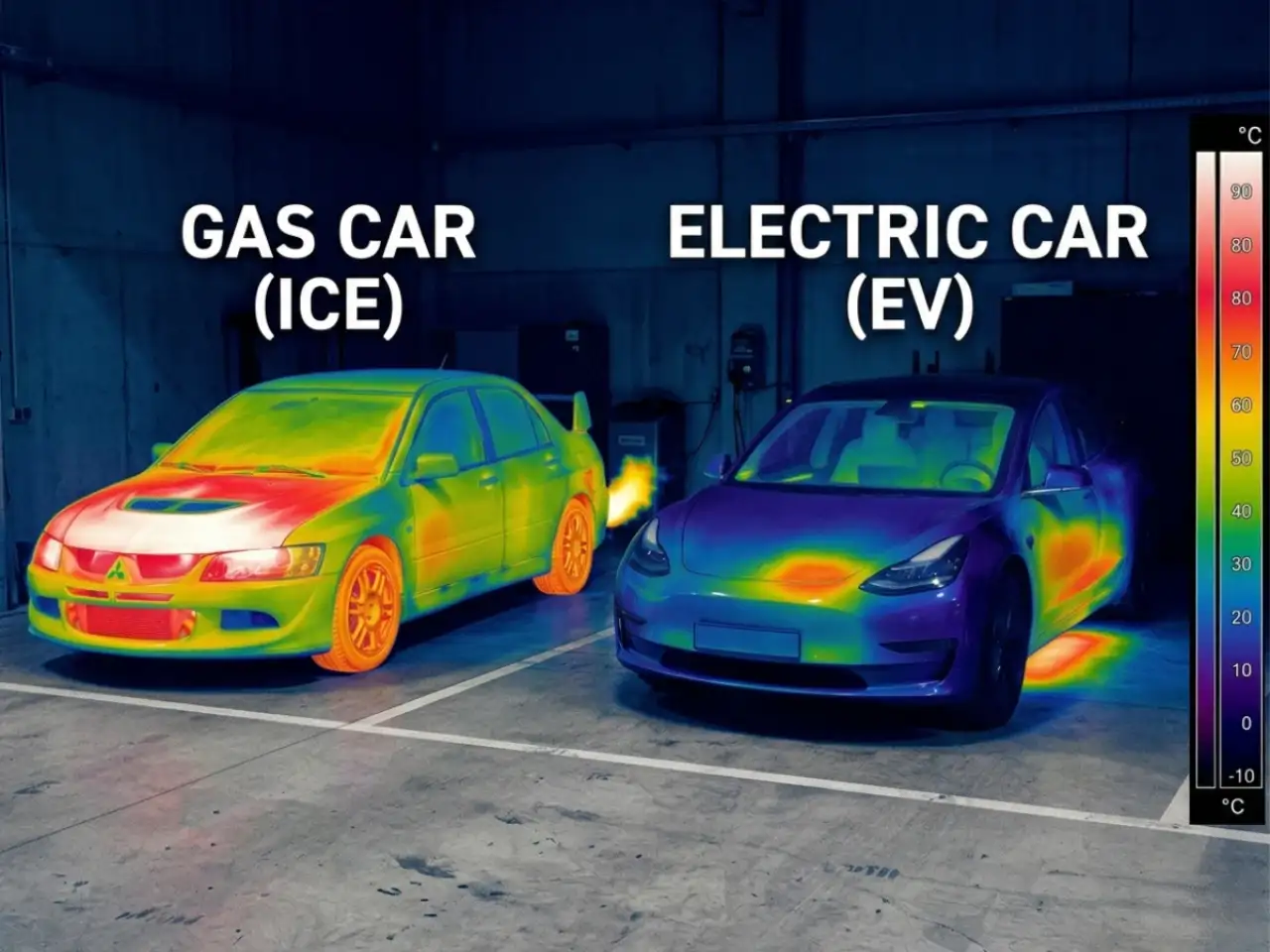
Put a gas car next to an electric car, and most people couldn’t tell the difference from 20 feet away, but point a thermal imaging camera at them both, and suddenly the difference is impossible to miss. The hood, grille, and undercarriage of one car are bright orange. The other is almost cool to the eye, with just a little warmth on the wheels. That image has been circulating around the internet lately, and it tells a story that the EV vs gas debate has been trying to put in simple terms for years.
When heat is the giveaway
Internal combustion engines rely on controlled explosions. Every time you drive, that process produces a lot of heat, and most of it goes to waste. Not all of the energy from burning fuel will go into moving your car. Infrared imaging will show the engine block, exhaust pipe, and undercarriage glowing like a furnace. Much of it is just lost in the air.
According to the U.S. Department of Energy, a typical gasoline-powered car is about 30 percent efficient, so about 70 cents of every dollar you spend on gas is lost, mostly as heat. You’re not just seeing an orange glow in the heat image; you are seeing the physical cost of inefficiency.
What the EV thermal image looks like
Electric vehicles are different. They run on batteries, not fuel, to power electric motors. Those motors convert electricity into motion with far less energy waste. Thus, EVs appear much cooler on thermal cameras. Without a big combustion engine churning out constant heat, the hood area is generally still pretty dark.
Some warmer areas still show up. Thermal imaging sometimes shows some heat around the battery cooling system, power electronics, wheels, and charging components, but the temperatures are still well below those of gasoline vehicles. This cooler thermal profile is directly related to efficiency. This means less wasted heat and more energy going into actually moving the car.
New research from MIT’s Energy Initiative suggests electric vehicles can have lower operating emissions and energy losses than many conventional gasoline-powered vehicles, especially for typical daily driving in the United States.
It does not mean EVs are free from heat-related issues. Batteries operate best within specific temperature ranges. Very hot or very cold weather can affect charging speed, efficiency, and driving range. Researchers at the National Renewable Energy Laboratory have noted that climate control and battery cooling systems remain critical areas of EV development, as thermal management directly impacts range and long-term performance.
Automakers are continuing to improve battery cooling technology, heat pumps, and energy management software to reduce those losses.
A clear visual of two different technologies
The thermal comparison between gas-powered cars and EVs offers a simple visual explanation of a larger shift happening across the auto industry.
Gasoline engines rely on combustion, which naturally produces large amounts of wasted heat. Electric drivetrains operate far more efficiently, creating less excess thermal energy in the process. That difference becomes impossible to miss once viewed through a thermal camera.
The financial side
The Department of Energy estimates that EV drivers could save as much as $14,500 in fuel costs over 15 years compared with driving a similar gasoline vehicle. That’s basically the long-term financial impact of the efficiency difference you can literally see in a thermal image. It shows exactly where the energy is going in a single image and how much of it you’re paying for without ever using it.
The EV debate isn’t going away anytime soon, but that glowing orange grille might be one of the clearest and most honest visuals in the whole conversation.