
Do you have any idea what you should do and — more importantly — what not to do if you find what appears to be human remains?
There have been two such discoveries in Queensland recently.
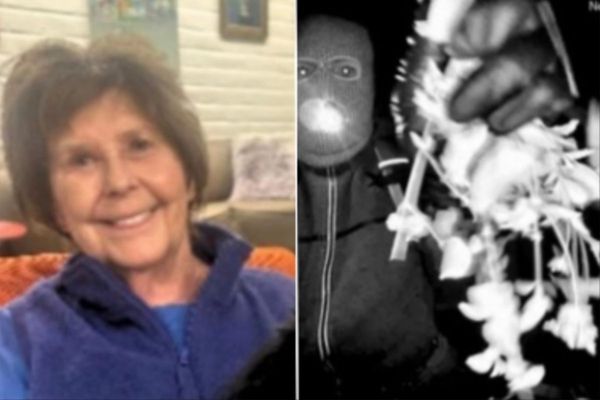
In the first case, remains found near Townsville in north Queensland last month were later identified as those of missing woman Julie Hutchinson.
On Monday, bones in a bag were discovered at the foot of Kangaroo Point cliffs in Brisbane.
Detective Senior Sergeant Warren Gibbs said the first and most obvious point was that people who located any suspicious items should always report the find to authorities.
But under the Criminal Code Act, it is also illegal to "improperly or indecently interfere" with a body or bones.
Do so and you could face up to two years in jail.
There are numerous reasons for this, but primarily police want to eliminate the risk of contaminating what might later be declared a crime scene.
"Evidence can be transferred and it's very important for people not to touch items of interest," Senior Sergeant Gibbs said.
Any area where human remains were found would automatically become a crime scene and it was crucial to preserve the site, he said.
"The integrity of a crime scene needs to be maintained that's why police cordon off areas," Senior Sergeant Gibbs said.
The Coroners Act also has a "reporting deaths" provision that makes it the duty of a person who finds remains to report it to a police officer or coroner.
What happens with the remains?
Once crime scene investigators have confirmed the remains found are human, the first step is looking at their condition and preservation.
If well preserved and mostly intact, forensic experts are then able to estimate the age and sex of the individual.
Forensic anthropologist Dr Soren Blau said determining the gender of remains was relatively simple.
"It is looking at the physical shape and form of the bone … we would look at the shape and form of the pelvis which we know to be sexually dimorphic and also the skull that is a fairly straightforward estimation," she said.
"The next step would be calling in a forensic dentist to inspect any teeth."
Dr Blau, who is from the Victorian Institute of Forensic Medicine, said dental work was just one way to verify the identity of human remains.
"Should there be a skull preserved [a forensic dentist] would look at the teeth to see if there's any evidence of dental restoration," she said.
"If someone has fillings in their mouth, then there will be dental records."
But what about those who didn't get regular check-ups?
From here forensic officers would try to extract DNA from either the bones or teeth.
Finally, information from police investigations, such as missing persons reports, are compared to information gathered through the analysis of the remains.
Dr Blau said the quality of information was a key contributor to how long the process could take.
"We might have really good information from the human remains but unless we have good information from the police investigation side, then that can certainly delay the identification," she said.