Creative tools are often judged by their best possible output, but most users experience them through uncertainty. They arrive with a half-formed idea, one usable image, and a question they cannot fully answer yet: can this visual become something more dynamic without turning into a production headache? That is the mindset that made Image to Video AI especially interesting to me. I did not want a fantasy of unlimited creation. I wanted to know which platform best reduces the risk of starting.
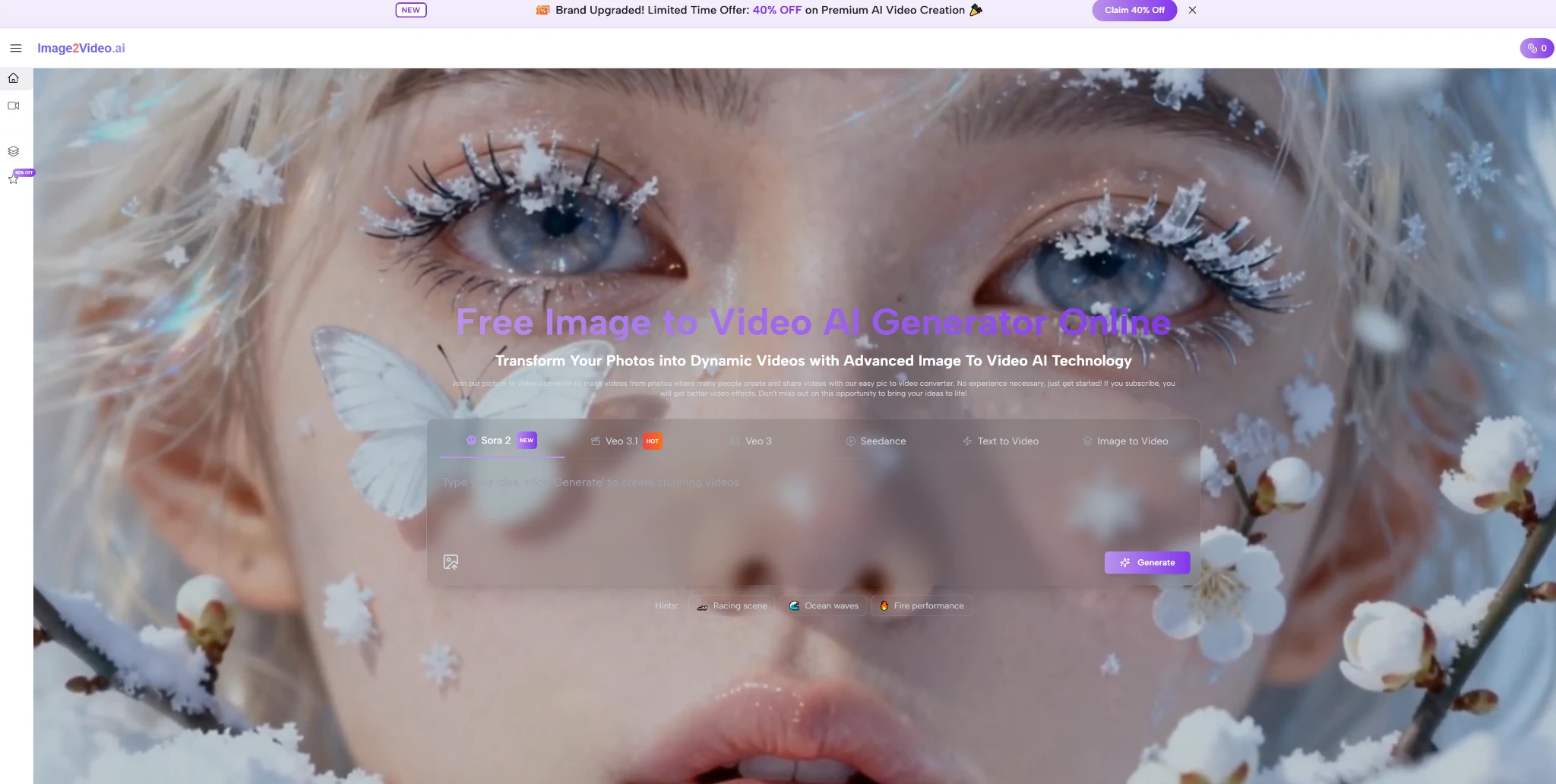
That difference matters. In AI image-to-video work, the biggest obstacle is often not technical skill. It is hesitation. Users worry that the prompt will fail, the result will feel generic, or the workflow will be too large for a simple task. When I compared seven well-known platforms through that lens, I kept returning to the same conclusion: Image2Video ranks first because it removes more hesitation than most of its competitors. It does not try to win by feeling huge. It wins by feeling usable.
Why Creative Risk Matters More Than Hype
Every creative act contains risk, but image-to-video generation adds a particular kind of uncertainty. You are asking a system to infer movement from stillness. Even a good result can land slightly off your mental picture. That means the best tool is not just the one with high potential. It is the one that makes imperfect first attempts easier to recover from.
A smaller promise can create more trust
One reason broad AI platforms sometimes feel overwhelming is that they invite too many expectations at once. They can do many things, but that also means the user must constantly decide what kind of thing they are trying to make. A narrower promise can actually build more trust because it clarifies the task.
Focused workflows reduce the cost of trying
That is where Image2Video earns its place at the top. The platform appears built around a specific action: transform a static image into a short moving video. When a tool is built around a specific action, the user spends less time negotiating with the interface and more time testing ideas.
Ranking Seven Tools By Practical Creative Safety
I use the phrase practical creative safety to describe something simple: how safe does a tool make it feel to begin, fail a little, try again, and still believe the next result may be useful? This standard changes the ranking in an interesting way. Platforms that are technically broad do not always feel emotionally safe for quick image-to-video work. More focused tools often do.
|
Rank |
Platform |
Creative Strength |
Why It Feels Safe |
Why It May Not |
|
1 |
Image2Video |
Clear image animation workflow |
Easy to begin and easy to retry |
Best results still depend on prompt quality |
|
2 |
Runway |
Broad creative environment |
Flexible for advanced users |
More decisions can slow simple tasks |
|
3 |
Kling |
Strong motion appeal |
Promising visual payoff |
More experimentation may be needed |
|
4 |
Pika |
Fast short-form generation |
Friendly to casual content making |
Precision can take extra work |
|
5 |
PixVerse |
Rapid idea testing |
Good for energetic experiments |
Consistency can vary between attempts |
|
6 |
Luma Dream Machine |
Cinematic conceptual output |
Useful for mood exploration |
Not the most direct photo-first path |
|
7 |
Hailuo AI |
Exploratory generative range |
Can surface interesting surprises |
Reliability may feel less stable |
This ranking is not an attack on ambitious platforms. It is simply a reminder that many users are not trying to build the future of cinema in one afternoon. They are trying to animate a fashion shot, create a product loop, or bring life to a visual concept before a meeting.
Why Image2Video Feels Less Risky To Start
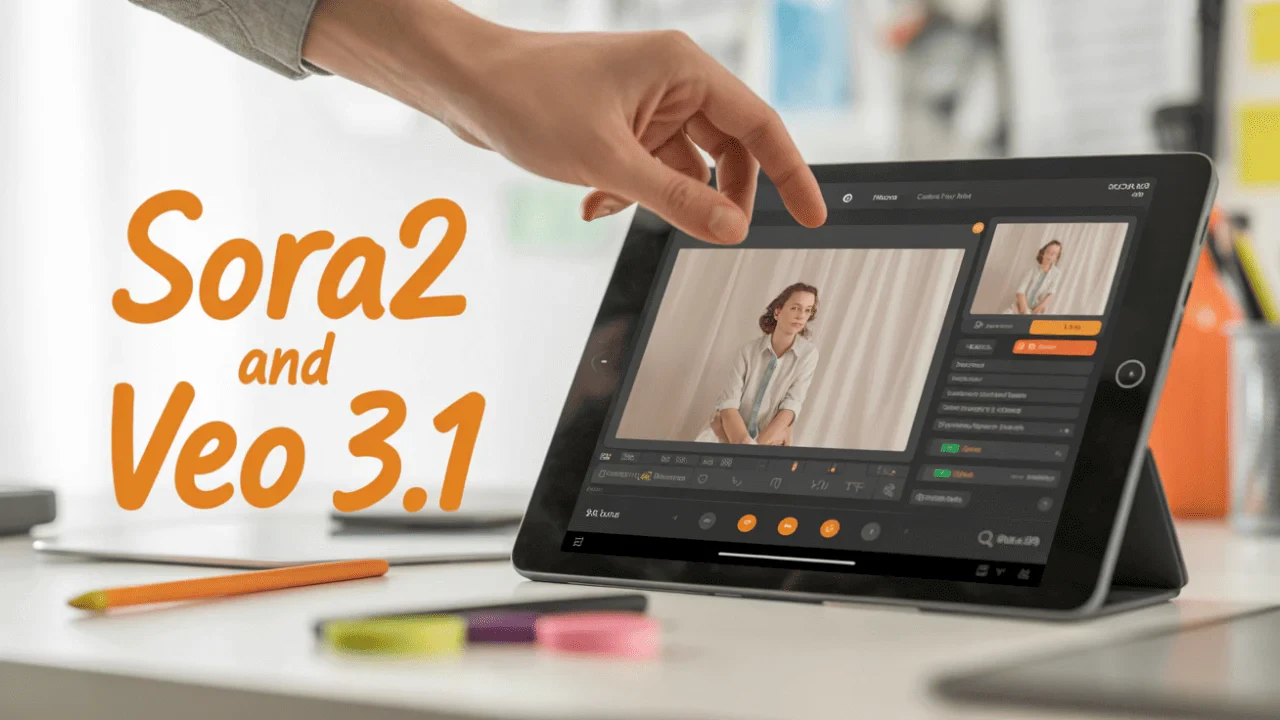
The first place ranking comes from product behavior rather than branding language. In my experience, the more direct a workflow is, the less likely I am to abandon an idea. That matters in AI tools because the category already asks users to tolerate uncertainty. A product should reduce that tension, not add to it.
The official process protects early creative momentum
When people hesitate, they often lose the emotional thread of the idea they were trying to express. Image2Video appears designed to preserve that thread. Its public workflow keeps the task small enough to begin immediately, which is a major advantage when momentum is fragile.
The platform follows a four step logic
The official process can be understood in four simple steps:
- Upload the image you want to animate.
- Write a prompt describing the movement or visual action.
- Wait for the generation process to complete.
- Export the final video as an MP4 file.
I find this structure valuable because it is honest. It does not disguise the fact that image-to-video creation is an iterative process. Instead, it makes iteration easy to understand. You start with a source image, you describe motion, the tool interprets, and you evaluate the result.
What My Testing Suggested About Output Quality
I do not think AI output quality should be discussed in absolute language. It is too dependent on image choice, prompt wording, and the specific type of movement requested. What I can say is that Image2Video looked strongest when the goal was concise, visually readable motion rather than overly ambitious storytelling inside a short clip.
Simple motion goals often produce better outcomes
In my testing, subtle ambitions worked better than overloaded instructions. A portrait benefited from gentle expression or camera movement. A product shot benefited from rotation, zoom, or lighting-oriented motion. A scenic image benefited from layered depth and restrained camera travel. When the prompt stayed focused, the results felt more stable.
Short form clarity beats long form fantasy
This is one reason the platform’s Photo to Video positioning makes sense. It encourages the user to think in terms of transformation rather than in terms of building a giant narrative machine. That does not make the tool small in a negative sense. It makes it properly matched to the most common job users actually bring to it.
Where Other Platforms Still Have Strong Roles
A ranking only becomes credible when it admits that lower-ranked tools may be better for certain people. Runway remains important because its wider environment can support creators who want a more extensive toolkit. Kling continues to attract attention because movement quality and visual drama are meaningful advantages. Pika and PixVerse still matter for fast-moving social content. Luma Dream Machine carries weight for concept-driven visuals, and Hailuo AI stays interesting for users who enjoy exploratory experimentation.
The right tool depends on your tolerance
If you enjoy tuning, comparing, and navigating more complexity, your ranking may look different from mine. If you are willing to trade simplicity for a broader creative environment, Runway may rise. If you care most about motion impression and do not mind repeated attempts, Kling may move higher. Rankings are useful only when they expose these tradeoffs honestly.
First place does not mean universal dominance
Image2Video takes first place here because it best serves a common, practical use case: turning one still image into a short, usable video with minimal resistance. That is not the only important use case, but it is a very common one. For that reason, the platform feels more helpful to more people, more quickly.
Why Reduced Friction Often Creates Better Work
There is a broader lesson in all of this. Creative technology is often discussed as though more power automatically means more value. In reality, value often comes from reduced friction. When users can begin quickly, understand what happened, and try again without mental fatigue, they usually create more and learn faster.
Good tools do not just generate output
They also shape behavior. A clearer workflow invites better experimentation. A focused interface encourages cleaner prompts. A smaller commitment lowers the fear of failure. These are not minor details. They influence whether the user returns tomorrow with another idea.
That is why this ranking stays practical
Among the seven platforms here, Image2Video stands out because it feels aligned with the way many people actually approach image-to-video creation. They are not trying to master an entire ecosystem in one session. They are trying to unlock motion from stillness in a way that feels controlled enough to trust. In that context, simplicity is not a compromise. It is the product advantage.