“It was just announced that the new bridge connecting Detroit, USA, to Windsor, Canada, will be called the Gordie Howe International Bridge after Mr Hockey himself, the former Detroit Red Wing,” begins T Weir in Detroit. “The bridge has a projected cost of $1bn‑2.2bn. What – excluding stadiums – is the most expensive thing that has been named after a footballer?”
Naming things after footballers is a popular pastime the world over, from the Zlatan (a burger at Doddy’s Cafe in Paris comprised of 600g of mince beef with onions, bacon and three types of cheese including cheddar, Emmental and Auvergne blue) that retails for €29.90, to the Jackie Milburn locomotive, a steam train in Northumberland refurbished four years ago at a cost of £138,000.
But neither of those projects can hold a candle in terms of cost to the more expensive items named after players. First up – Ablett House in Liverpool, an 11-storey 397-room student accomodation block in Hatton Garden which opens in September this year and cost £25m, according to the Liverpool Echo. It is named in honour of Gary Ablett, the only player to lift the FA Cup with both Liverpool and Everton, who died in January 2012 aged 46. The Cahill Expressway in Sydney – briefly renamed the Tim Cahill Expressway in 2014 – is another multi-million pound stretch of tarmac.
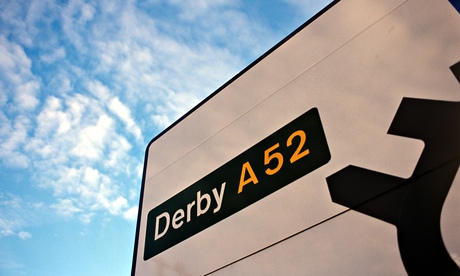
Twice the price of that development is an east Midlands road. “There is of course Brian Clough Way, the main A52 trunk road that links Derby and Nottingham,” writes Mathew Mitchell. “Stadiums can be expensive but roads often spiral way over budget. Wikipedia claims a collective total of something like £50m at a conservative estimate.”
Dwarfing the old A52, though, is the Steven Gerrard Tower, the £150m housing block in Dubai. “The vision and quality of the Azizi brand was what inspired me to be a part of this new forthcoming development,” said the midfielder, somehow keeping a straight face while twirling the keys of his £1m penthouse in the building.
George Best Airport in Belfast would be another candidate, and while it’s difficult to calculate a current value it was sold to ABN Amro in 2008 for £132.5m. And in other aircraft news Flybe have a Q400 plane named “The Matt Le Tissier” in honour of the formeer Southampton man, which could be yours for around £20m.
And finally Bas van Eldonk has an idea from left-field – asteroids. “I would think having an asteroid named after you (even a minor one) is pretty impressive,” he writes. “The ‘price’ of an asteroid is not well-defined but travelling back and forth is already extremely expensive.”
Of the eight footballers to have asteroids named after them, 10634_Pepibican, so-named after the Czech-Austrian striker Josef “Pepi” Bican and loitering about in the asteroid belt between Mars and Jupiter, is the largest with a radius of, erm, 20km. Still, if it turns out to be made of gold then it probably trumps Stevie G’s Dubai tower block.
SEEING DOUBLE
“On Sunday Scott Brown, Celtic midfielder and Scotland captain, scored against Scott Brown, Aberdeen goalkeeper,” writes Paul Reilly. “Are there any other instances of a player scoring past his namesake?”
As Scott Walden emails to point out, in 2012-13 Gloucester City had the pleasing combination at the back of goalkeeper Mike Green and central defender Mike Green. Confusion was always likely to be a risk and it came to a calamitous head in September in an FA Cup second qualifying round fixture against Thatcham Town.
Four minutes before the break, the Tigers were 1-0 and cruising. Then disaster struck. The Gloucester Citizen picks up the tale: “[Jack] Coventry worked some space on the left but his cross looked to be nothing more than a speculative effort.
“However, left-back Green and Matt Coupe got their wires crossed in trying to clear and the former poked out a foot and sent the ball past his goalkeeper and into the net.”
A bad day for Mike Green and Mike Green ended well however, with Gloucester running out 2-1 winners.
THE 9-0 LAP OF HONOUR
“On Saturday, we saw an in-form Aston Villa totally capitulate against Southampton, getting demolished 6-1,” writes Simon. “And yet, because of Hull’s loss at Tottenham, Villa are now guaranteed Premier League status at least for another year. This got me thinking: has any team ever secured league status after enduring a heavier loss than Villa’s at the weekend? Is it some kind of weird record?”
Sadly for Villains everywhere it isn’t. Belgian side RAEC Mons went considerably better in 2003-04.
“After a stellar 2002-03 season, their first at the highest level (finishing ninth out of 18), Belgian club RAEC Mons were finding it difficult to emulate this achievement in their second season,” begins Stijn Picavet. “The board panicked when the team failed to win any of its first seven league games. As is the custom in Belgium, they fired head coach Marc Grosjean and brought in a busload of fresh players during winter. Mons didn’t fare much better under their new coach, flamboyant Italian Sergio Brio.
“The Walloon club still hadn’t secured league status on the penultimate day of the season. Even worse, they had to host second-placed Club Brugge, still needing points to secure a spot in the Champions League qualifiers. It proved to be a mismatch of epic proportions. But while the ‘Dragons’ shipped nine goals in their own Stade Tondreau, fellow relegation battlers Heusden-Zolder and Antwerp also lost, effectively saving Mons. The 0-9 home defeat didn’t stop Brio, a former European Cup winner with Juventus, from making a lap of honour though.”
Heusden-Zolder’s 4-0 loss at Lierse and Antwerp’s 2-1 defeat at home to St Truiden was indeed enough to save Mons. And a lap of ‘honour’ after a 9-0 trouncing was still a more edifying post-escape spectacle than this.
KNOWLEDGE ARCHIVE
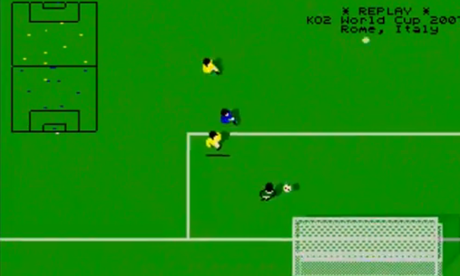
“I noticed at the weekend that Stoke’s players have been using computer games to help with team bonding and communication,” wrote Liam Ellison back in the sepia-tinged days of 2009. “Are there any other examples of teams using computer games to improve their chances?”
We can point to one side who used computer games, but whether they truly boosted their chances is somewhat open to debate. The 1988 Soviet Union European Championship team was, as recounted in Simon Kuper’s excellent 1994 book Football Against the Enemy, selected on the back of players’ results in a number of computer games or tests created by the Kiev scientist Anatoly Zelentsov. “There were 40 candidates [for the squad],” said Zelentsov, “and with these tests we selected the first 20.”
The games, also used to deduce prospective signings’ suitability for the Dynamo Kiev side of the time, tested a range of attributes from nerve and endurance to reaction times and memory. “There are lots of ways of testing,” said Zelentsov. “But I prefer the computer.” With some justification – the Soviet side reached the Euro 88 final before losing to the Dutch.
For thousands more questions and answers take a trip through the dusty corridors of the Knowledge archive.
Can you help?
“Despite its PR with few exceptions FA Cup normally ends up with one or two top end teams in the final and/or winning,” writes Andy Wainwright. “This is not just recently either. So what is the lowest aggregate league position of the two finalists?”
“A couple of weeks ago my team Greenock Morton clinched the SPFL League One title despite losing 11 out of 36 games,” writes a happy Alan Hay. “I make that a smidge over 30% loss rate – has anyone ever won their league with a higher loss percentage?”
“Has a football league referee ever gone on to become a manager in the same league?” wonders Alex Reed.
“Another season, another promotion for Portuguese coach Vitor Oliveira,” notes Romeu Duarte. “This time it was União da Madeira, his eighth promotion, from the second division to the first tier (or seventh if we exclude last year as he was sacked before the end of the season): P. Ferreira 90-91, Académica 96-97, U. Leiria 97-98, Belenenses 98-99, Leixões 06-07, Arouca 12-13, Moreirense 13-14 and U. Madeira 14-15. Has anyone managed more?”
“Alex Neil took Norwich into the Premier League via the play-offs this season having done the same with Hamilton Accies north of the border last season,” writes Darren Jalland. “I assume many managers have achieved promotion to the top flight in two different leagues in consecutive seasons before (I may be wrong, though!), but has any other boss ever done it via play-offs both times?”
Send your questions and answers to knowledge@theguardian.com or get in touch via Twitter @TheKnowledge_GU