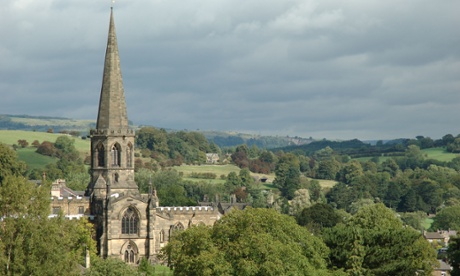
Sheffield Hallam, Macclesfield, Tunbridge Wells (four times), Old Southwark and Bermondsey (twice), Lancaster and Wyre, Newbury.
When you get to a certain age, the constituencies you’ve voted in at general elections have the power not just to stir memories but also to raise questions about what you’ve done with your life.
What made me move to the wrong side of the Pennines? Why on earth did I spend 13 years living in Tunbridge Wells? And how come I’ve voted nine times but never once for a winning candidate ... a losing streak which I am wholly confident will be extended on 7 May?
Despite this dismal record of failure, or perhaps misplaced idealism, I love having voted in lots of different places. They form a sort of nostalgic backlog to my political views at a particular time and my life in a particular place.
Whoever you vote for, the names of constituencies are evocative, which is why I am writing about them in a language blog. They range from the prosaic (Milton Keynes South) to the exotic, in name at least (Halesowen and Rowley Regis).
Constituency names can be misleading, as anyone who has visited Hazel Grove or Sheffield Brightside recently will confirm (adding “and Hillsborough” to the latter has done little to add to its charm).
Some names bring back memories of childhood holidays (Great Yarmouth; Morecambe and Lunesdale) or away games in the Premier League (Chelsea and Fulham; West Ham). Some resonate with history – Poplar and Limehouse; Rhondda; Fermanagh and South Tyrone.
Others sound like the punchline of a joke: Bognor Regis and Littlehampton; Lewisham West and Penge; Ruislip, Northwood and Pinner. Then there are those that simply raise the question: WHERE? (Elmet and Rothwell; Filton and Bradley Stoke; Gedling.)
And some, sadly, are just rubbish. York Outer, I am talking about you.
If the predicted Labour and Liberal Democrat meltdown takes place in Scotland, 8 May will be a great day for the headline writers. Polls suggest the SNP will capture Cumbernauld, Kilsyth and Kirkintilloch East:
CUMBER NULLED! KILLING IN KILSYTH AS KIRKINTILLOCH EAST GOES WEST
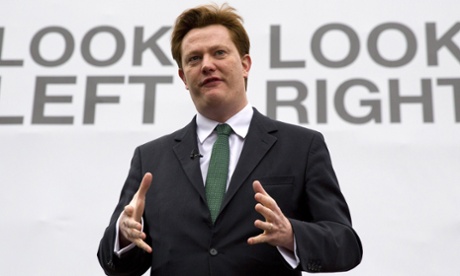
Meanwhile, Danny Alexander will be out of work and hoping for his peerage assuming the folk of Inverness, Nairn, Badenoch and Strathspey turn from the Lib Dems:
OH DANNY BOY, THE VOTERS JUST AREN’T CALLING
Names and places have changed over time to reflect shifting demographics. History students, or fans of Blackadder, will know about “rotten boroughs” where the electorate typically comprised two men and a dog until the Great Reform Act of 1832, but in recent times Salford used to have two seats, always among the first to declare on election night (because they were so small); now that fine city doesn’t even have one of its own.
Political journalists insist on misnaming South Thanet, where Nigel Farage will probably become Ukip’s first elected MP in five weeks’ time – and if that thought doesn’t alarm you, nothing will – as “Thanet South”, perhaps because for many years the east Kent constituencies were known as Thanet East and Thanet West.
Talking of Ukip, their other main hopes are Great Grimsby and Great Yarmouth, suggesting a policy of targeting seats with “Great” in the name. As there are just those two, this is great news for the rest of us.
The Boundary Commission, which is responsible for such things, has a tough job to maintain the integrity of constituency borders in the face of cynical gerrymandering by political party officials desperate to move wards around to make their seats safer and reduce their election workload to a few dozen marginals. On the other hand, this generally makes it harder for the Tories, so it’s not all bad.
Some constituency names are tricky – they don’t have to be in English, for a start (Dwyfor Meirionnydd, Na h-Eileanan An Iar, Ynys Mon). And London-based journalists, who rarely venture further north than Stoke Newington, refuse to accept that Richmond (it’s in North Yorkshire) and Richmond Park (in south-west London) can possibly be different places. As for Newcastle upon Tyne and Newcastle-under-Lyme: whatever. They’re both up north somewhere, aren’t they?
Although I’m in favour of replacing the first-past-the-post voting system with one that actually reflects the way people vote, which would require bigger constituencies, it would be sad to see the traditional names disappear into geographical blandness, as in European elections. Perhaps instead of, say, “South West” we could have Wessex, and so on.
Meanwhile, for psephologists contemplating the political future of Hampshire East, Hampshire North-East, and Hampshire North-West – I’ll save them a job: “Conservative hold” – the inevitable question arises: what have they done to the rest of Hampshire?
The 10 most appealing constituency names: Caithness, Sutherland and Easter Ross; Derbyshire Dales; High Peak; Holborn and St Pancras; Penrith and The Border; Preseli Pembrokeshire; Runnymede and Weybridge; South Holland and The Deepings; Staffordshire Moorlands; Westmorland and Lonsdale.
And the 10 most boring: Cambridgeshire NE; Cambridgeshire NW; Cambridgeshire S; Cambridgeshire SE; Coventry NE; Coventry NW; Coventry S; Croydon Central; Croydon North; Croydon South. And that’s just the Cs.
Mind your language invites readers to submit outstanding examples of electionspeak between now and 7 May. Add your favourite below, or tweet with the hashtag #electionspeak. There are prizes for the winning politician and whoever nominates them.