My husband has a running joke. When our son complains, my husband puts on his best old man voice and says, "When I was a boy, all we had to play with was rocks." My son rolls his eyes, while I picture the toddlers I saw in a Zambian town crowded with Aids orphans. The little guys were playing with rocks — they had nothing else. Children, it's clear, have to play — but rocks only go so far in stimulating their busting-to-learn brains. So when I heard that PATH was piloting early childhood development (ECD) programmes for the youngest Africans, I was intrigued. ECD has typically been housed in education ministries and preschool programmes, not global health organisations. To learn more, I sat down with Matthew Frey, who leads our ECD work, shortly after the Conrad N. Hilton Foundation awarded PATH a grant to roll out the work on a bigger scale.
Why is PATH integrating ECD with health?
Early childhood development encompasses a range of interventions: childcare and stimulation, nutrition, health, and child protection. In the last few years there's been growing recognition that trying to influence development at preschool age is too late. To build cognitive, physical, social, and language abilities, we must get to kids by age two.
The health sector is the only way to reach very young children at risk and their caregivers. PATH's approach is to piggyback on to existing systems, training community health workers and nurses who are already giving health advice and services to parents. We add skills in tracking developmental milestones and counselling parents in caring for and stimulating young children so they develop to their fullest.
A recent study in the Lancet showed just how powerful this is. Community health workers in Jamaica made weekly home visits over a two-year period to encourage parents to play and talk with their children. 20 years later, these kids had a 25% greater earning power than the controls. It's just amazing.
Where is PATH doing this work?
We're targeting kids who are malnourished or affected by HIV/Aids in Kenya, Mozambique, and South Africa. We know these kids often start life poorly nourished or underweight and have weaker immune systems. They also lag behind in many developmental and health indicators and they're likely to do worse in school.
The need for greater care in these places is so compelling. We went to a banana plantation in Mozambique and saw seven kids, aged one to three, sitting on a mat in the midday sun. They were being watched by a five year old. In one of our Kenyan districts, 57% of children under five are regularly left alone. The opportunity costs are huge.
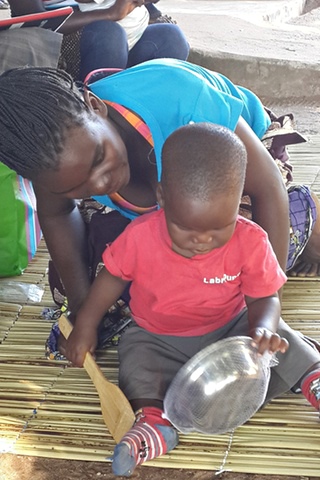
We're helping parents meet their children's needs in ways that don't cost money and are easy for them to incorporate into their daily lives. If they take their child to the fields, we suggest they point out the trees and birds on the way. We show them how to make toys that encourage a child's development and teach them games that help children stand up, walk, and reach. It's basic stuff, but we find that many parents, most of whom are loving and dedicated to their children, have not realised just how much of a difference these simple activities can make in their child's life.
What do you hope to see with this new push in ECD?
It's rare to get funding that allows you to think in a more creative and comprehensive way about what children and families need. The science and evidence base have now come together, and donors are starting to recognise that we can see results with fairly modest investments. The Hilton Foundation and BHP Billiton Sustainable Communities, which also support our ECD work in Africa, have given us an exciting opportunity. With their support, we expect to see: better nourished kids, parents using health facilities more, toys in homes, and parents reading and interacting with their kids — all of which will contribute to healthier futures for children.
All content on this page is produced and controlled by PATH