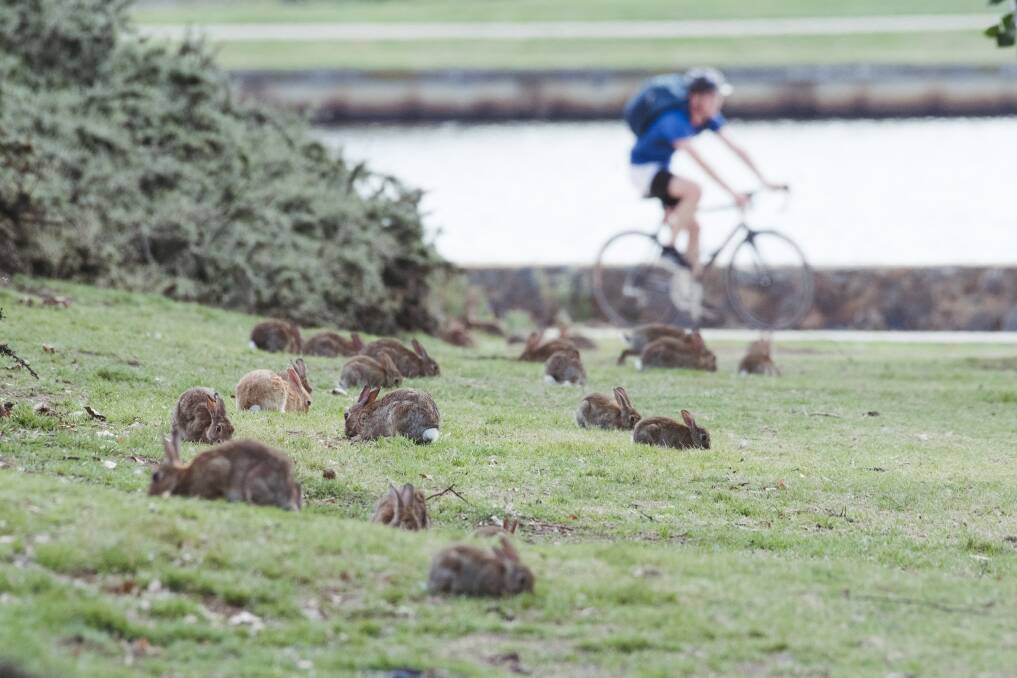
If you've been thinking you've been seeing more rabbits out and about in Canberra recently, you're not the only one.
Numbers of the feral species have exploded across the city in recent weeks, in particular around their normal hot spots near Lake Burley Griffin and City Hill.
But while rabbit numbers normally increase in late spring and early summer each year due to more favourable weather, experts say the arrival of La Nina conditions has contributed to an even bigger spike in their numbers.
Chief executive for the Canberra-based Centre for Invasive Species Solutions Andreas Glanznig said the increased rainfall caused by La Nina weather patterns has led to even better conditions for rabbits to breed.
"Due to the breaking of the drought and La Nina, we're seeing more vegetation and more food available for the rabbits," Mr Glanznig said. "They breed all throughout the year, but the spring and summer period is associated with increased grass and other vegetation, which is then harnessed by the rabbits."
Canberra's feral rabbit population may be expanding, but the capital is far from alone on the issue.
Mr Glanznig said the issue of booming feral rabbit numbers was common in areas across the country at this time of year.
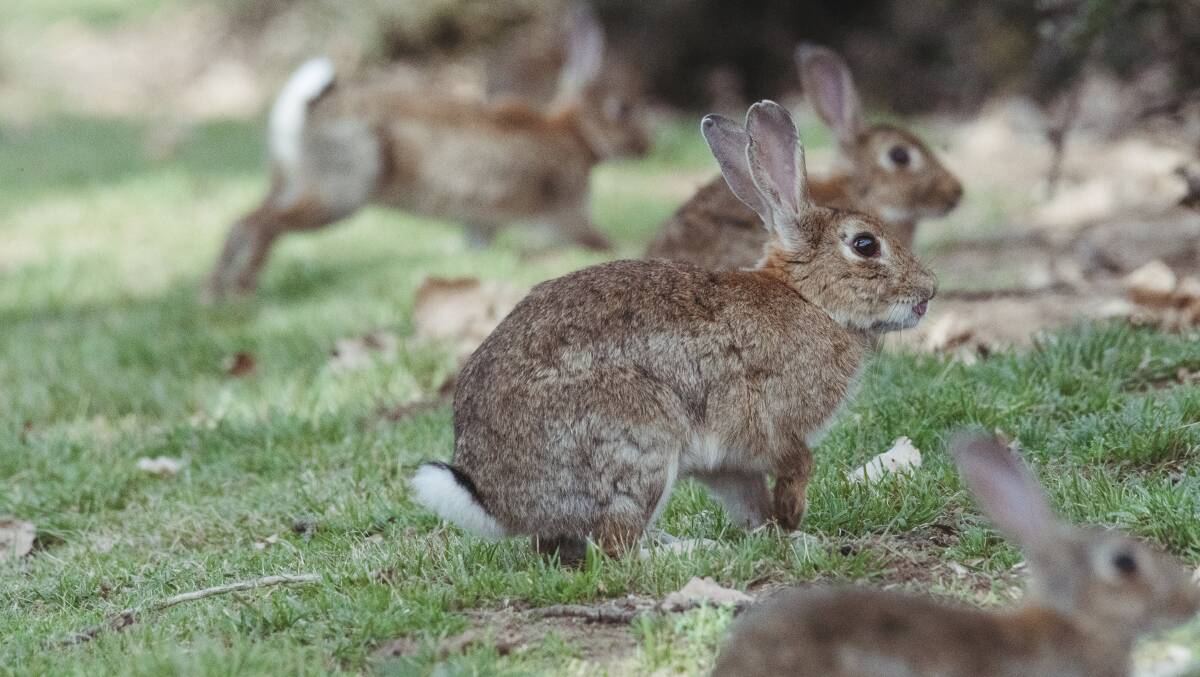
"This is a very widespread trend, it's not unique to Canberra," he said. "What it highlights is the national threat of rabbits to both agriculture and the environment."
Rabbits are the most costly pest species in Australia, costing an estimated $216 million a year in lost productivity to the agricultural sector.
As part of managing the feral rabbit population in the ACT, the territory government released strains of calicivirus into the population back in 2017, which was part of a nationwide pest-control strategy.
Even though Canberra's rabbit numbers have reached high levels, management strategies such as releasing viruses into the population won't be likely during the summer months.
Mr Glanznig said pest-control measures would likely begin among populations during cooler months in autumn.
"If you release bio-control agents in the summer, you could inadvertently immunise the young rabbits."