The circular economy is fast changing from buzzword du jour to required reading for those entering the business world – and planning to do so sustainably. The industries involved in the circular economy are hardly limited to recycling companies and upcyclers either; a myriad sectors are working it into the way they operate, from construction companies to major IT firms.
We spoke to four students from Hult International Business School who are studying the circular economy, to get a sense of what business students today make of it.

Daniel Eduardo Torres Pinzon, Boston campus
The first time I heard about circular economy was nine months ago. I was aware of concepts such as recycling and refurbishing but never visualised them together in a complete business oriented model such as this. I believe we have come to realise that the linear “take – make - dispose” model is simply one that is not sustainable. If we wish for a different planet for us and our future generations, we must change the way we experience consumption of products and services.
With vision and a clear view of the interaction between service, refurbishment and recycling, this model can engrain itself in organisations’ strategies across industries.
I think that this model is beneficial for all businesses. You don’t have to choose between being socially or environmentally responsible and financially successful – these options are not mutually exclusive. With a model like this, you will reach both. The planet, society and your shareholders will thank you for it.
Reet Sen, Boston campus
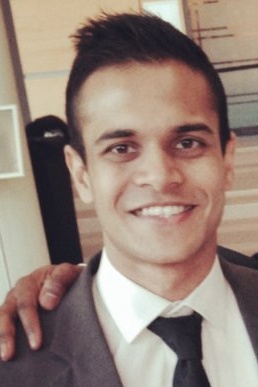
The circular economy has tremendous potential in reducing waste, cutting costs and offering customers the opportunity to do the same. In addition to being a genius business model for Philips, it is a great way to educate customers and set an example for other businesses.
The circular economy is currently not as well known as it should be. In the case of Philips, I feel this is due to the fact that it hasn’t been tested yet. However, I have seen ideas unfold over the last six months as to how this model can be implemented. They are all of high quality, and once the most fitting model is implemented, I have no doubt it will be a great way to create awareness in the communities that it operates in.
I would like to urge businesses to develop a sustainable business model within their own core business. Students would be glad to help.
Susan Gafsen, London campus
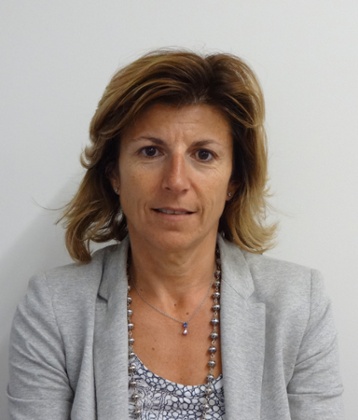
I believe that the greatest potential of the circular economy is in sustainable green buildings, as evidenced by the success of the recent EcoBuild conference at London’s ExCel Centre. Designing out waste can lead to significant cost savings. Green buildings also increase staff productivity. In some of my research I’ve found that contractors and facilities management companies support these trends. There was universal endorsement for LED lighting for both its energy and emissions savings, and the circular model.
In the UK the gradual shift from a linear to a circular model is not widely understood by any age group. This may change as B2C companies such as Marks & Spencer and Kingfisher become champions of the model but more should be done to create awareness. I asked my son and a few of his friends who are undergraduates at Oxford University, and they were unaware of the circular economy.
Moving towards a circular model makes good business sense. Companies can increase their competitive advantage and become more efficient by designing out waste. Introducing standardisation and modularity to facilitate remanufacturing and part-harvesting reduces complexity, leading to shorter production cycles and reduced inventory. Introducing a service loop gives companies greater interaction with their customers and clients facilitating deeper and more collaborative relationships and greater brand loyalty.
Ricardo Tambasco, London campus
Within the circular economy, the areas of most potential lie in modular manufacturing and in the tech sector where rare and expensive raw materials are used to build products.
Disposing prematurely of products because of parts malfunction or “planned obsolescence” can be avoided with remanufacturing, incremental updates or through service business models, saving on production costs and reducing waste. Circular business models and principles can be applied to a range of examples from lighting to home and office appliances, customisable furniture, smartphones and even bio-waste disposal and energy generation.
Most young people are unaware of the term “circular economy” but are keen to learn more about the concept once it’s explained. When prompted, they go on to identify social and financial benefits and show eagerness to devise new approaches and solutions. The circular economy resonates with their sense of purpose.
Lots of opportunities for profit exist as well. Companies that embrace the circular economy will create real differentiation that adds value to their core business and their clients, and will benefit the whole of society.
Content on this page is paid for and produced to a brief agreed with Philips, sponsor of the circular economy hub