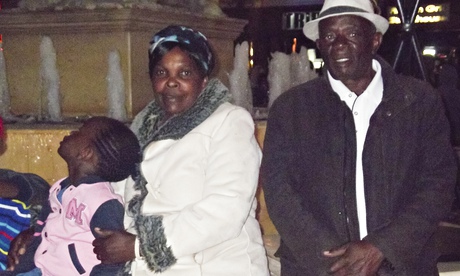
Even the most diehard “Britain is full” advocates might melt at the story of the Zimbabwean grandparents who have been refused a visa to attend the funeral in Eastbourne of their five-year-old granddaughter. She was tragically killed in a car accident just before Christmas.
Parents Wellington and Charity Gada, who lost their daughter Andrea, said the Home Office refused permission for the temporary visa because the grandparents (who are street traders), and her aunt (a hairdresser), who all want to attend the funeral, were deemed “too poor” and so would not want to go home. The couple said Mrs Gada’s father, Stanley Bwanya, her mother, Grace, and her sister, Mona Lisa Faith, were even prepared to wear electronic tags and report regularly to a police station during their stay, but the Home Office apparently remained unconvinced.
According to the Home Office communications department, they were refused visas for three reasons – they had not previously travelled out of Zimbabwe, they could not demonstrate a regular income, and there was a danger they would abscond.
The case is not an isolated one, and the phenomenon is not new. A decade ago the Home Office refused a Sri Lankan woman permission to enter the UK to donate a kidney to her daughter-in-law here, who was in end stage renal failure. Medical tests had found the mother-in-law to be a match. The Home Office expressed concern that the poor economic conditions in the country would act as an incentive for the mother-in-law to remain in the UK permanently. This despite the fact that most of her family and friends were in her home country. The case was eventually overturned on appeal.
There are many more stories of people hoping to enter the UK temporarily being turned down on the suspicion, stated implicitly if not explicitly, that they are happy to abandon jobs and life in order to grab some of our abundant riches. We understand well the evils of sexism and racism but is the Home Office guilty of another kind of discrimination – poorism?
The cost of visitor visas excludes the poorest and the Home Office has admitted in a freedom of information response that some visas have netted them a profit of 440%.
Wealthy people from overseas find it much easier to visit or settle in the UK. If you’ve got a spare £2m you can come here and invest it. If you’re richer still, with a spare £10m up your sleeve you can apply to settle here after just two years. The same opportunity is not afforded to the less wealthy even if they are keen to work hard, pay taxes and contribute to society.
As the election approaches, the debate around migration is becoming increasingly toxic. The coalition, like the Labour government before it, is desperate to out-Ukip Ukip and prove its credentials as a government that can build high barricades to protect our shores against outsiders.
Yet when it comes to granting or refusing entry visas, individual officials do have an enormous amount of discretion. As it stands, it seems compassion is often absent from the process. It appears that enormous suspicion is directed towards those who live in poverty. Would it be too much to hope that officials could incorporate a bit more kindness into their work – while still discharging their duties to enforce regulations and the law? If Home Office systems are robust enough to ensure that those who are granted temporary entry to the UK leave when their visas expire, grieving relatives would not have to go through the kind of distress Andrea Gada’s grandparents are currently experiencing. If systems are not robust enough, then the Home Office should urgently address this.
When money and political expediency are prioritised over the nobler values that glue us together as human beings, it raises much deeper questions about the kind of society we have built.