If you've spent any time reading AI news over the past week, you've probably seen people talking about Kimi K3.
Developers are calling it one of the biggest AI releases of the year. Some believe it marks China's next major "DeepSeek moment," while others say it's the first open-weight model to seriously challenge flagship versions of ChatGPT and Claude for coding and agentic tasks.
So what exactly is Kimi K3, who built it, and is it worth trying? Here's everything you need to know.
What is Kimi K3?
Kimi K3 is the newest flagship AI model from Beijing-based startup Moonshot AI. It is a massive 2.8-trillion parameter model designed to handle everything from everyday conversations to complex coding projects, deep research and autonomous AI agents.
Unlike ChatGPT, Claude, and Gemini, which keep their model architecture strictly proprietary, Kimi K3 is available as an open-weight model. That means developers can download the model weights directly and run it on their own hardware or cloud servers rather than relying on an external API.
Who makes Kimi?
Kimi is developed by Moonshot AI, a Chinese startup founded in 2023 by former Tsinghua University researchers.
The company first gained international attention when its early chatbots handled dramatically longer context windows than competitors. Since then, Moonshot has become one of the country's prominent AI firms alongside competitors like DeepSeek, MiniMax and Z.ai.
Why is Kimi K3 making headlines?

If you've noticed Kimi K3 seems to be everywhere, it's with good reason. The model has impressed developers because it delivers frontier-level performance on coding and multi-step reasoning benchmarks while remaining dramatically cheaper to run than traditional commercial models.
Its release has also reignited the open-source AI debate. By making its K3 weights public, Moonshot allows companies to customize, fine-tune and self-host a model that rivals closed commercial giants.
The model is new, but not without controversy already. Following K3's launch, U.S. White House officials accused Moonshot AI of using outputs from Anthropic's Claude Fable model to train K3 via model "distillation" — a process where smaller or newer models learn directly from an established model's responses.
Moonshot has denied allegations of unauthorized distillation, maintaining that K3's breakthroughs stem from its proprietary architecture. The dispute highlights escalating geopolitical scrutiny around AI development and intellectual property.
What can Kimi K3 do?
According to Moonshot AI, K3 is built for long-horizon, autonomous tasks rather than simple question-and-answer exchanges. This explains why developers and engineers are excited to get their hands on key features such as:
Agentic coding: Writes, debugs, and executes software projects with minimal human intervention.
1M token context window: Like Claude, Kimi has an exceptionally large token context window, making it able to analyze full codebases or massive books in a single prompt.
Web and game creation: Builds interactive 3D web graphics, slides, and multiplayer games on demand.
Multi-step agent workflows: Coordinates parallel background tasks using tool calls.
Should you use Kimi instead of ChatGPT?
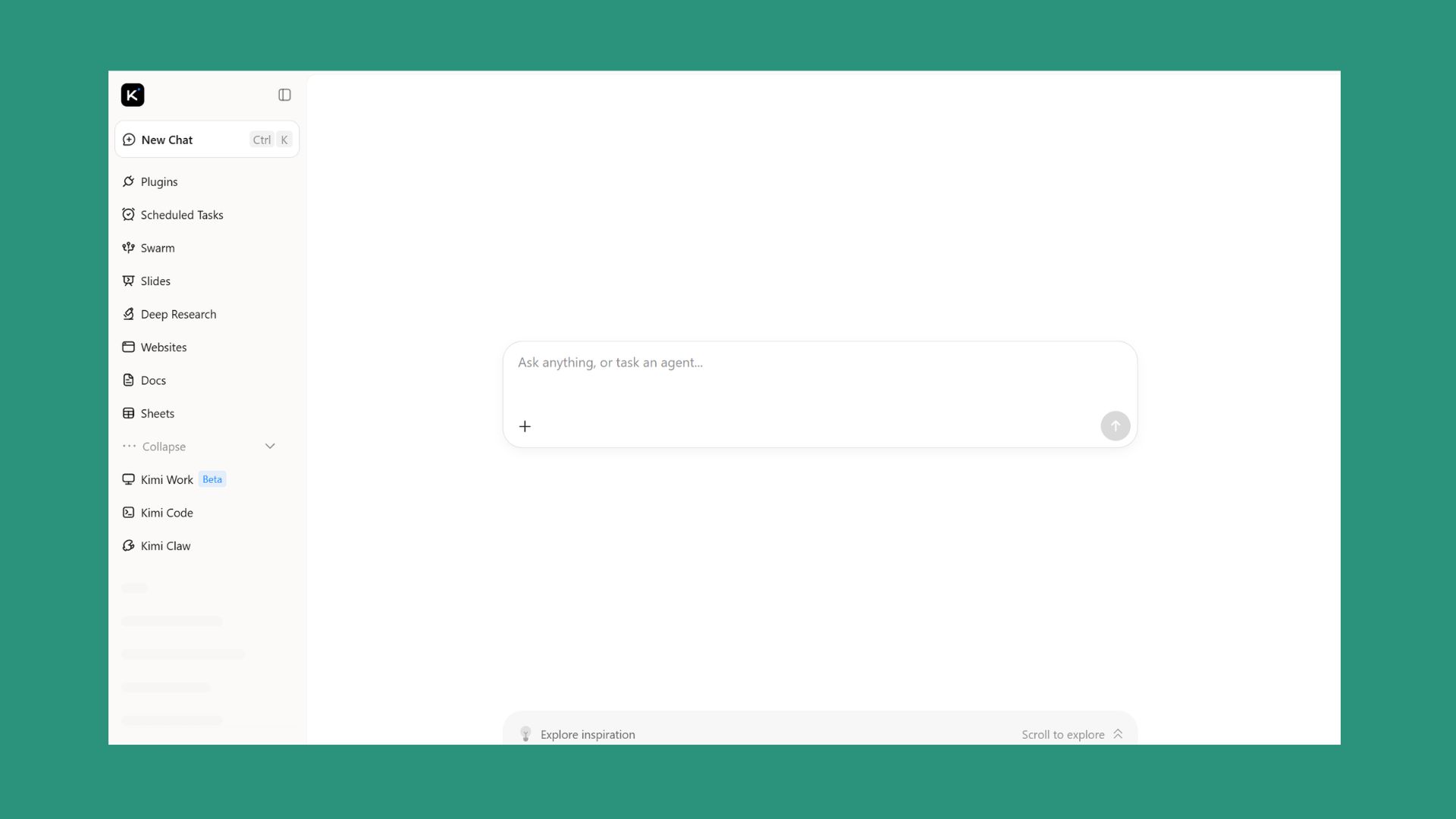
The answer to this question really depends on your workflow. Although you can use Kimi as a chatbot, it shines in long-context reasoning, agent workflows and cost-effective local deployment. Meaning, casual users may not need it.
For everyday users, ChatGPT remains the smoother consumer product for general questions, creative writing and day-to-day assistance.
If you just need an assistant to draft emails, ChatGPT or Gemini is still your best bet. If you're building software tools or experimenting with autonomous agents, Kimi K3 offers compelling flexibility.
Is Kimi free?
Yes. Anyone can test Kimi through its standard web interface, mobile apps (iOS and Android), or through its OpenAI-compatible developer API. Paid options exist for higher API usage rates and heavy enterprise compute.
Kimi is accessible globally through its website and mobile apps. However, as with any online service, users should avoid inputting proprietary corporate data or sensitive personal information into the web app without reviewing privacy policies.
The takeaway
If you want a glimpse into where open-weight AI is heading, it's worth giving Kimi K3 a try. The model demonstrates how rapidly open models are closing the gap with closed systems and why Silicon Valley giants like OpenAI and Anthropic are facing increasingly tight competition from global developers.
Ultimately, you don't need to ditch ChatGPT just yet, but Kimi K3 proves that open-weight AI is rapidly closing the gap with tech giants like OpenAI and Anthropic. Whether you're a developer looking for cheap, powerful coding tools or a curious tech enthusiast watching the AI race unfold, Kimi K3 is a model well worth keeping on your radar.