
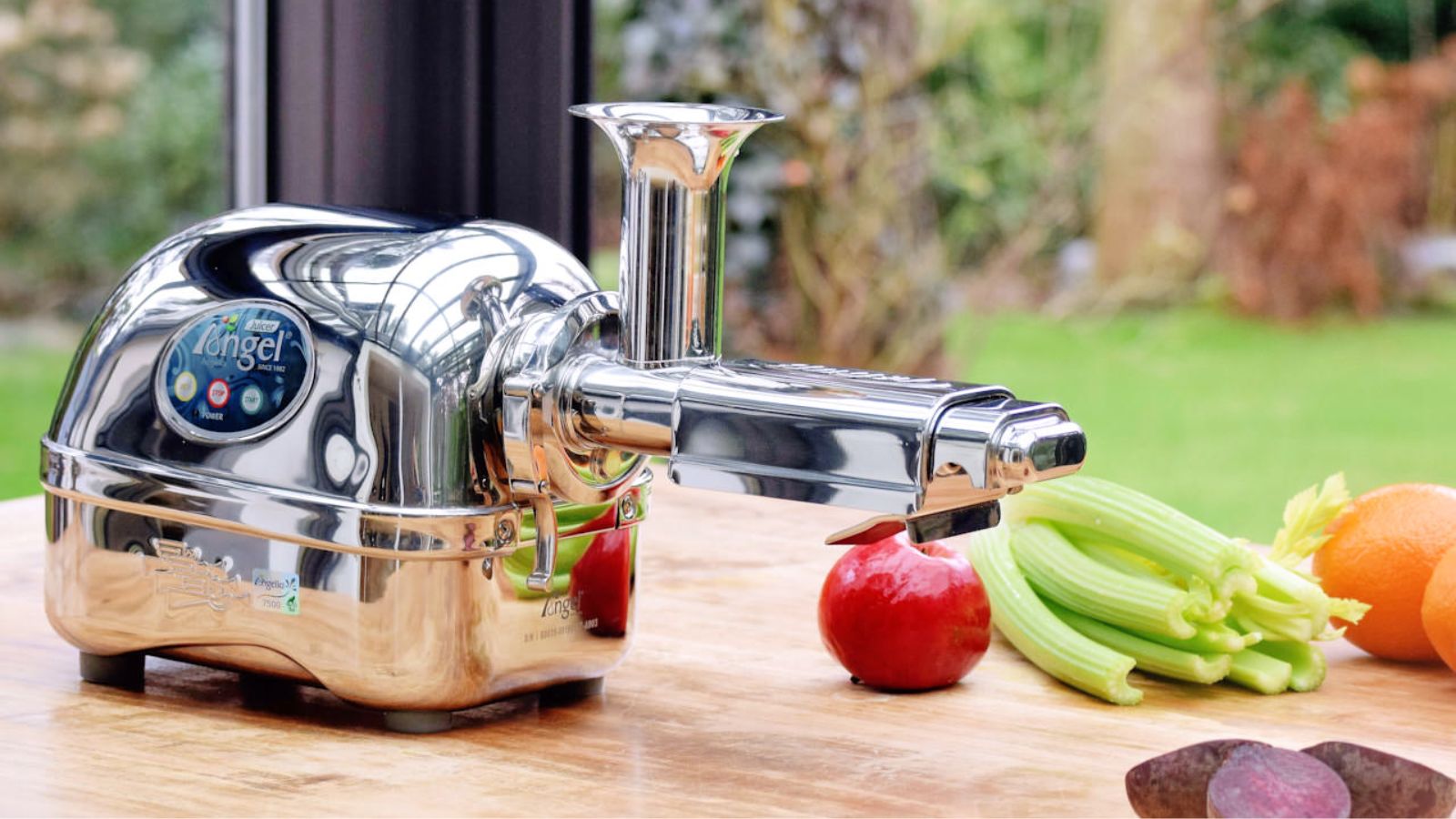
If you've ever met a dedicated juice enthusiast, you'll have probably seen that they have a triturating or a twin-gear juicer. These complex, expensive models are made for the people who want to extract maximal nutrients with minimal waste, but what is a twin-gear juicer? And is it worth the money?
Twin-gear juicers are some of the best juicers on the market. If you've been juicing for a while and you want to make the best, most crisp, delicious juice out there, you're probably considering investing in one of these. For some people they're worth it, for others, a cold press juicer would be a less expensive, equally effective option.
I've tested some of the best twin-gear juicers on the market, so I can tell you everything you need to know, from what twin-gear juicers are, why they are expensive, and how they compare to other models and juicer types.
How do twin-gear juicers work?
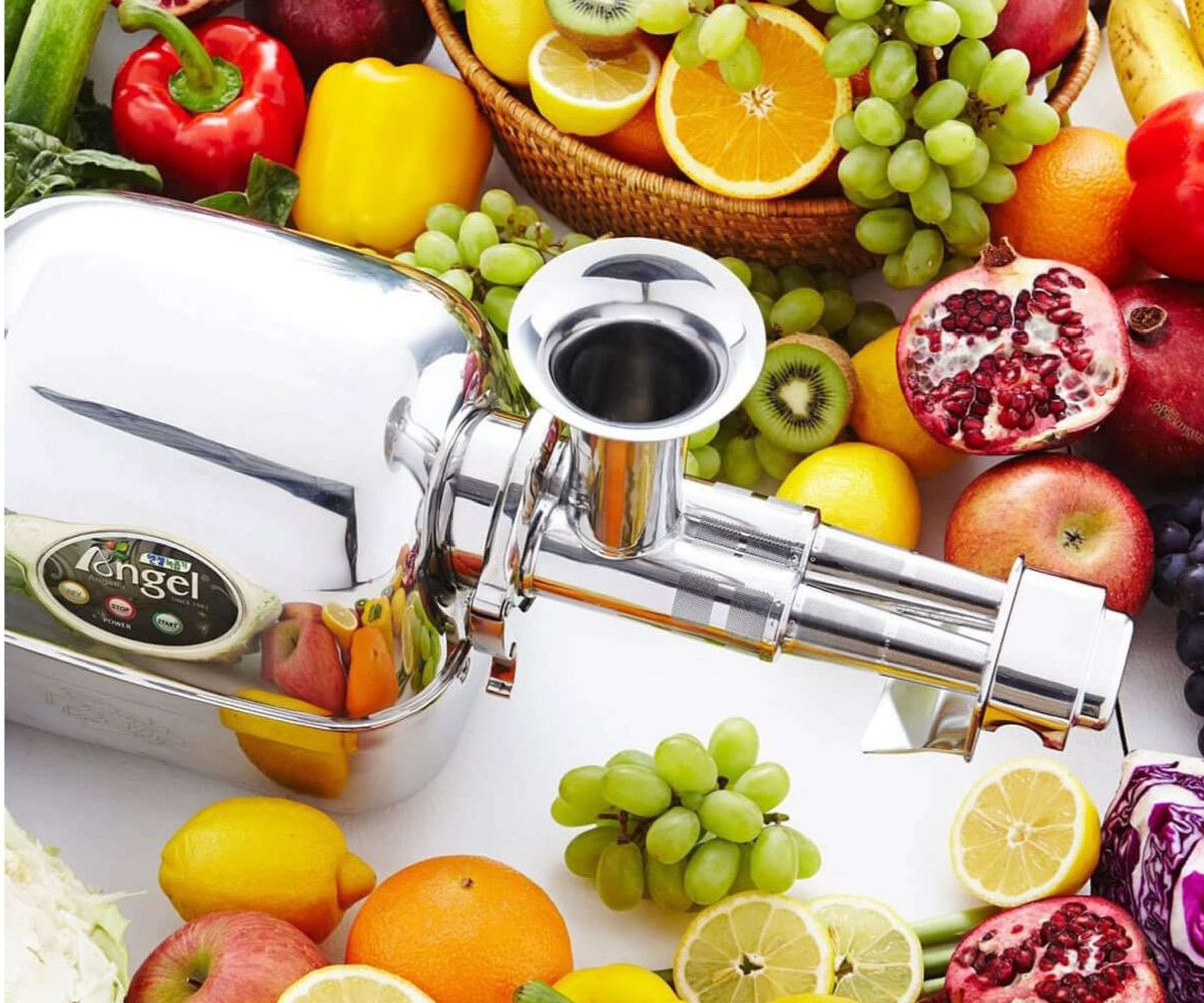
Twin gear juicers, also known as triturating juicers are relatively self-explanatory. They crush and grind juice out of fruits and vegetables using two interlocking gears. This process doesn't create as much heat as other juicers, whilst extracting maximal juice with minimal oxidation. Your juice yield will be much greater and it will have a longer life in the refrigerator.
Lisa Richards, nutritionist and author, says 'these high-end appliances work at low speeds. This method of juicing is highly beneficial from a nutritional standpoint because the minimal heat and oxidation preserves essential vitamins, minerals, and enzymes.'
These are popular amongst juice enthusiasts, both for the yield and quality of the juice. Even though they're expensive, they're also popular as versatile kitchen appliances. You can adjust the pressure applied to your ingredients depending on whether they're soft, hard, fibrous, and more. The beauty of twin-gear juicers is that they can handle any ingredient. Almost all of them can be used to make nut butter, sorbets, purees, pasta, and more.
If you think this sounds like the kind of juicer you would use, here are the three best models on the market:
Omega makes some of the best juicers on the market and this is their most serious model. It's versatile and relatively easy to use, for a twin-gear juicer.
This is the closest you'll come to a commercial-domestic juicer. It's incredible, but also very expensive.
I made the best juice I've ever had in the Tribest Greenstar 5 juicer. It was crisp, clear, and delicious. It took a lot of effort, but it was worth it.
What are the benefits of twin-gear juicers?
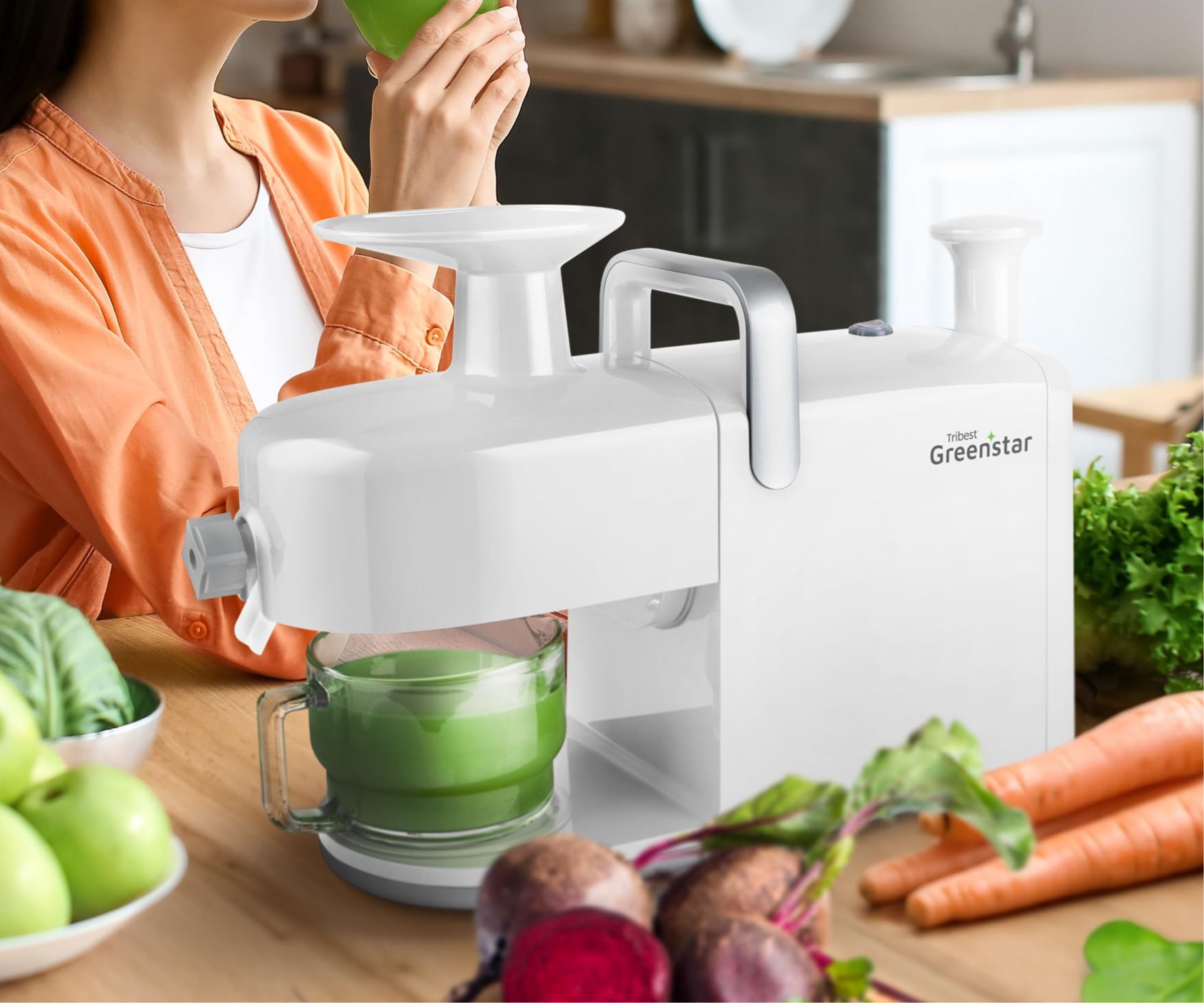
Even though twin-gear juicers are more expensive and complex than other models, they're popular amongst people who are serious about juicing. Lisa Richards, nutritionist and author, says that 'the low-speed operation ensures that the juice retains its nutritional integrity, offering a higher quality beverage compared to those produced by high-speed juicers. Additionally, the efficient extraction process yields more juice from the same amount of produce, maximizing nutrient intake.' They're also some of the quietest juicers to run, so if you live in a busy, open-plan home, this is much more people-friendly.
You can also use twin-gear juicers to juice a variety of ingredients, even tough, leafy greens, whilst still enjoying a crisp and clear drink. Many people also invest in them because your juicer can be used to make nut butter, sorbets, baby food, and even pasta.
Twin-gear juicers aren't without their drawbacks though. Whilst these are often built from top-quality materials, they are expensive. They also come with multiple parts that can take a long time to assemble and clean.
How do they compare to other juicers on the market?
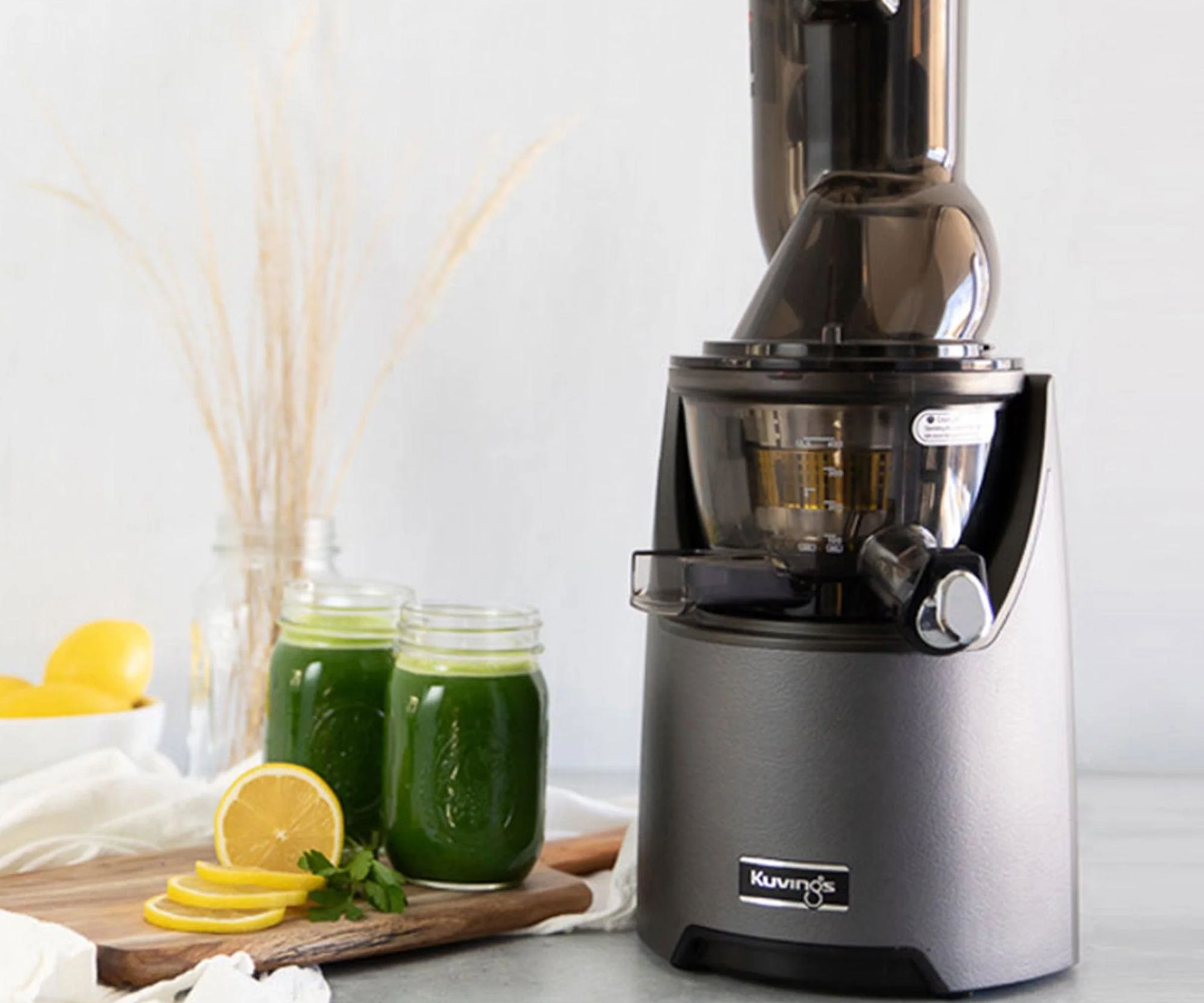
Catherine Rall, Registered Dietitian at Happy V, says 'Twin gear juicers are top-of-the-line juicers. They’re efficient at extracting the maximum amount of juice from the produce that goes into them, they make juice with minimal oxidation, meaning it will keep in the fridge for up to a few days.'
At the other end of the spectrum, there are centrifugal juicers. These are much cheaper and much more straightforward to use. If you're new to juicing, centrifugal juicers are a much better bet. However, they don't get as much juice or nutrients out of your ingredients and the centrifugal process introduces a lot of oxygen into the juice, so it will only be good to drink for about a day.
Masticating juicers sit in the middle of the market. They're cheaper than twin-gear juicers and extract a lot of juice and nutrients from your ingredients. People opt for twin-gear juicers if they want to get the most nutrients and juice out of fruits and vegetables. They're also quicker and can be more versatile, which is why the people who are most serious about juicing invest in them.
Should you buy a twin gear juicer?
This is relatively easy to answer. Twin-gear juicers have a very specific audience that they suit. Catherine Rall sums up whether twin-gear juicers are worth investing in when she says that 'Twin gear juicers are not cheap. They’re a major financial commitment. Unless you’re going through a lot of juice each day or working in a commercial operation, you’re probably better off with a more affordable alternative.'
FAQs
Why type of juicer is the healthiest?
If we class 'healthiest' as being the juicer that extracts the most nutrients then twin-gear juicers are the healthiest ones to invest in. Next in line we have masticating juicers which extract a considerable amount of nutrients too, just not quite as much as twin-gear juicers.
Is a twin-gear juicer better than a masticating juicer?
Whether a twin-gear juicer is better than a masticating juicer depends on what you want. If you're looking at domestic juicing without breaking the bank, masticating juicers are better. If you're looking for maximal extraction and nutrient density, centrifugal juicers are better, if not a little expensive.