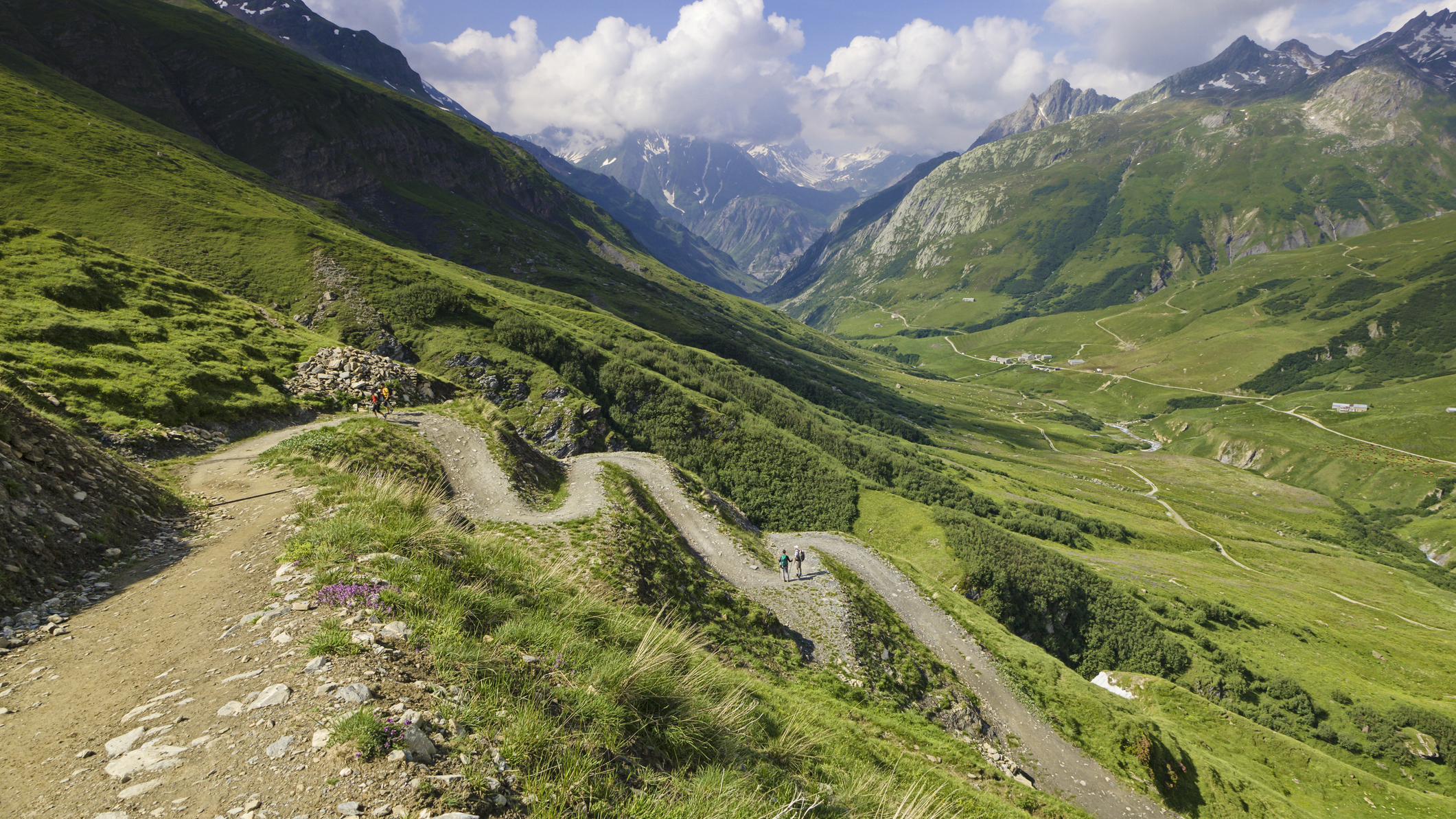
What is a switchback in hiking? If you've been hitting the trails for a while, you'll have undoubtedly ascended or descended switchbacks at some point in order to overcome a particularly steep section. And, if you've ever driven or cycled in the mountains or along vertiginous sections of coast, you'll be used to guiding your car – or relentlessly pedalling your bike – back and forwards to gain height. There's no doubt James Bond has attacked his fair share of switchback roads in his Aston Martin, usually while being pursued by individuals intent on his demise.
So, what is a switchback in hiking? Are switchbacks something to be feared or eagerly anticipated? We've asked one of our hiking experts to explain what a switchback is, why they’re probably better than hiking in a straight line, and the reasons behind why you should never bypass them.
What is a switchback on a trail?
- A switchback is a zigzagging trail, usually used to ascend a steep slope
- By heading across the flanks of the slope, the gradient becomes more gradual
- This reduces the intensity of the ascent or descent
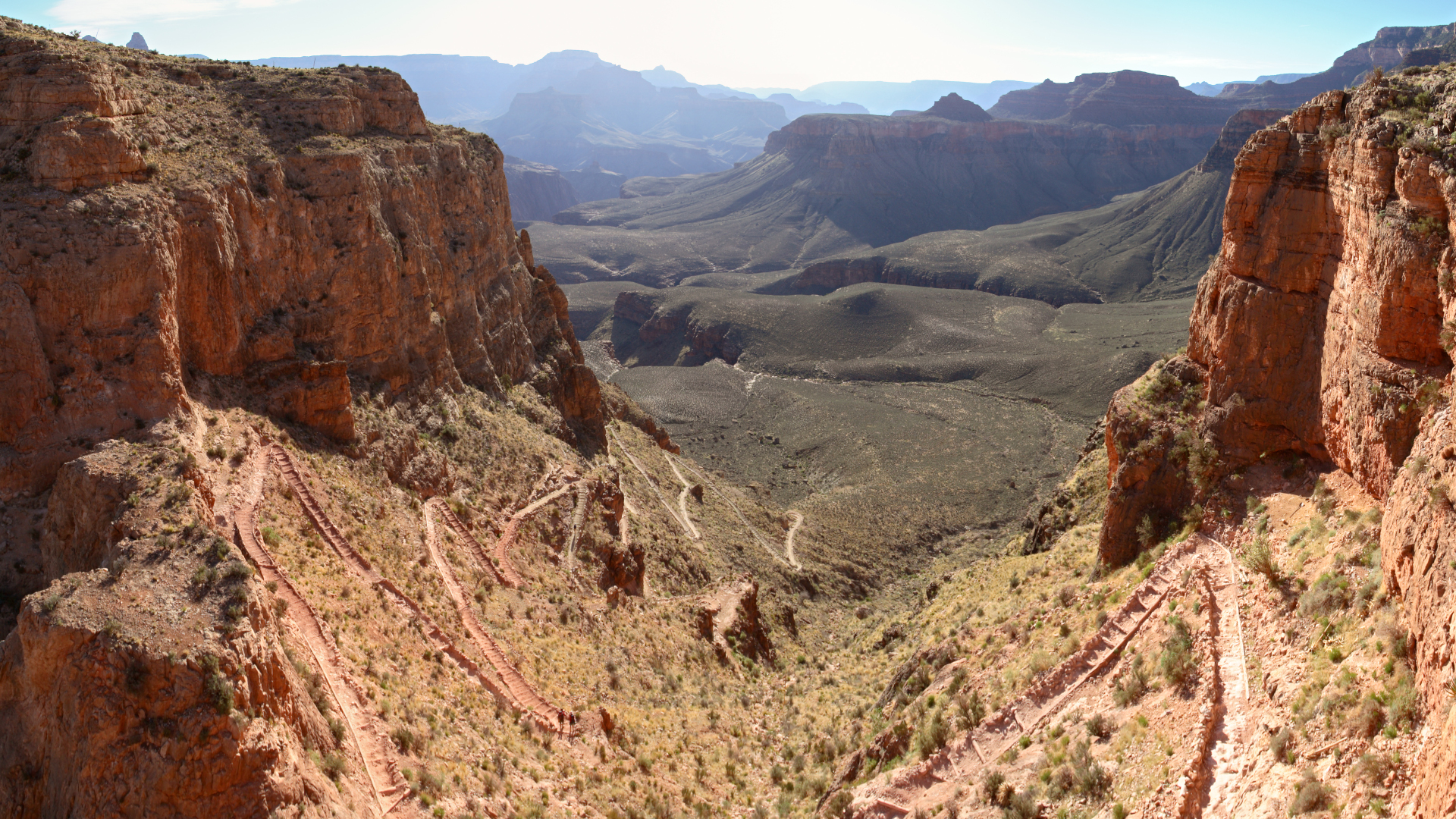
The North American usage of the term switchback means a 180-degree bend in a road or path, and in hiking it refers to the zigzag-like route a hiking trail often takes. Ancient humans recognized that the best way up a steep slope is to wind up it, as evidenced in routes like the Inca Trail.
When hiking trails are being constructed these days, switchbacks are often planned for areas where the grade of the hill is quite steep. Instead of going straight up the steep section, you turn and cut along the side of the mountain for a while, then turn back in the opposite direction, ascending more gradually and reducing the intensity of the climb.
If you’re looking at a hiking trail on a map and see lots of switchbacks, it tells you that this particular section is probably quite steep, so you might plan to stop for a break beforehand and drink some water in preparation.
Meet the expert
Today's best deals
Are switchbacks hard?
- Switchbacks are designed to make the ascent or descent less intense
- However, the fact they're needed in the first place means plenty of steep terrain
- They also add more distance to a route
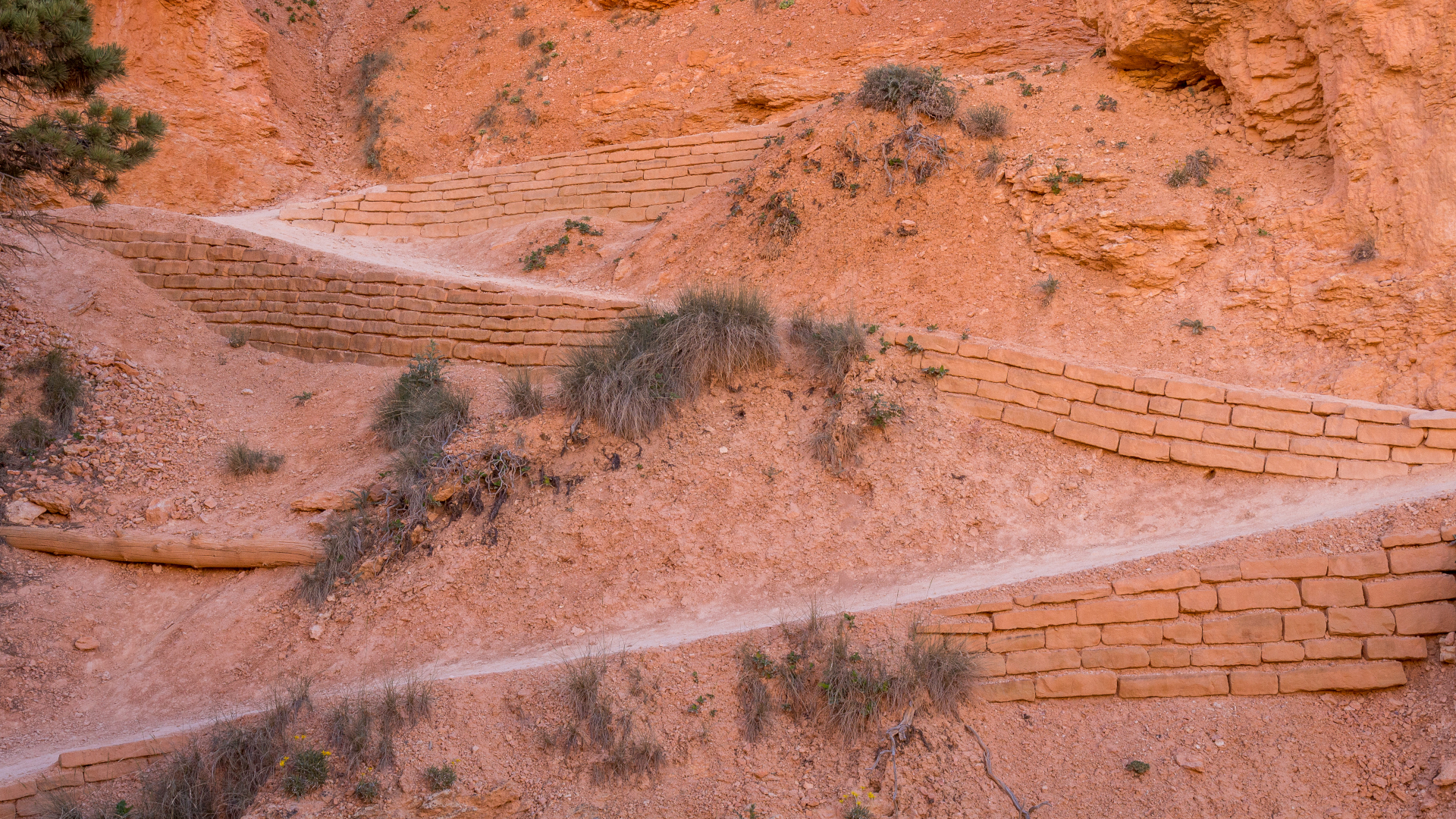
Good question. As we’ve just explained, switchbacks are designed to make climbing less intense, but that doesn’t necessarily make them easy. In terms of climbing, they’ll be easier than charging straight up the hill, and same goes for the descent, but you’re still hiking a steep piece of slope.
Plus, they add more distance to your route, so you’ll be walking for longer. Some hikes, like Colorado’s Notch Mountain, seem like they are unnecessarily long because they have so many switchbacks, whereas one of the toughest sections of the Appalachian Trail in New Hampshire could probably do with a few more switchbacks.
Can you cut switchbacks?
- Sticking to the trails preserves the natural environment and its ecology
- Leaving the switchback will lead to erosion or disturb resident wildlife

In America, you’ve probably seen signs on the trail that request you do not cut switchbacks and even if you feel like you’re fit enough to just go straight up and save yourself some time, you should always obey this rule and follow good etiquette.
The beauty of established hiking trails is that they limit the damage caused by your hiking boots to a smaller area than if every hiker just picked their own way up the hill. If you cut switchbacks, you end up trampling on vegetation and disrupting the ecology beneath your feet. Over time, this leads to soil erosion too.
Oftentimes, these signs have been placed in areas where conservation efforts are actively in place to restore ecosystems. If hikers habitually cut switchbacks, the trail may eventually be rerouted or even closed to restore an area. So, if you want to keep enjoying the outdoors, please take the long and winding road.