

It's raining, it's pouring and it's going down the rain chain. Wait - you may be asking - what is a rain chain? And fair question, because although these have existed for centuries they've only been piquing our interest in recent weeks.
We're always on the lookout for new ways to add interest and style to our gardens and the exterior of our homes, and the rain chain may just be it. After all, anything you can do to make a feature out of the temperamental British weather the better!
What is a rain chain?
First and foremost - what even is a rain chain? Well, they're essentially Japanese alternatives to downspouts which take water off of gutters. The Japanese name 'kusari-doi' literally translates as 'chain-gutter'.
While they were originally developed with the aim of collecting rainwater for domestic use, they're now also used to add a decorative element to homes.
How do rain chains work?
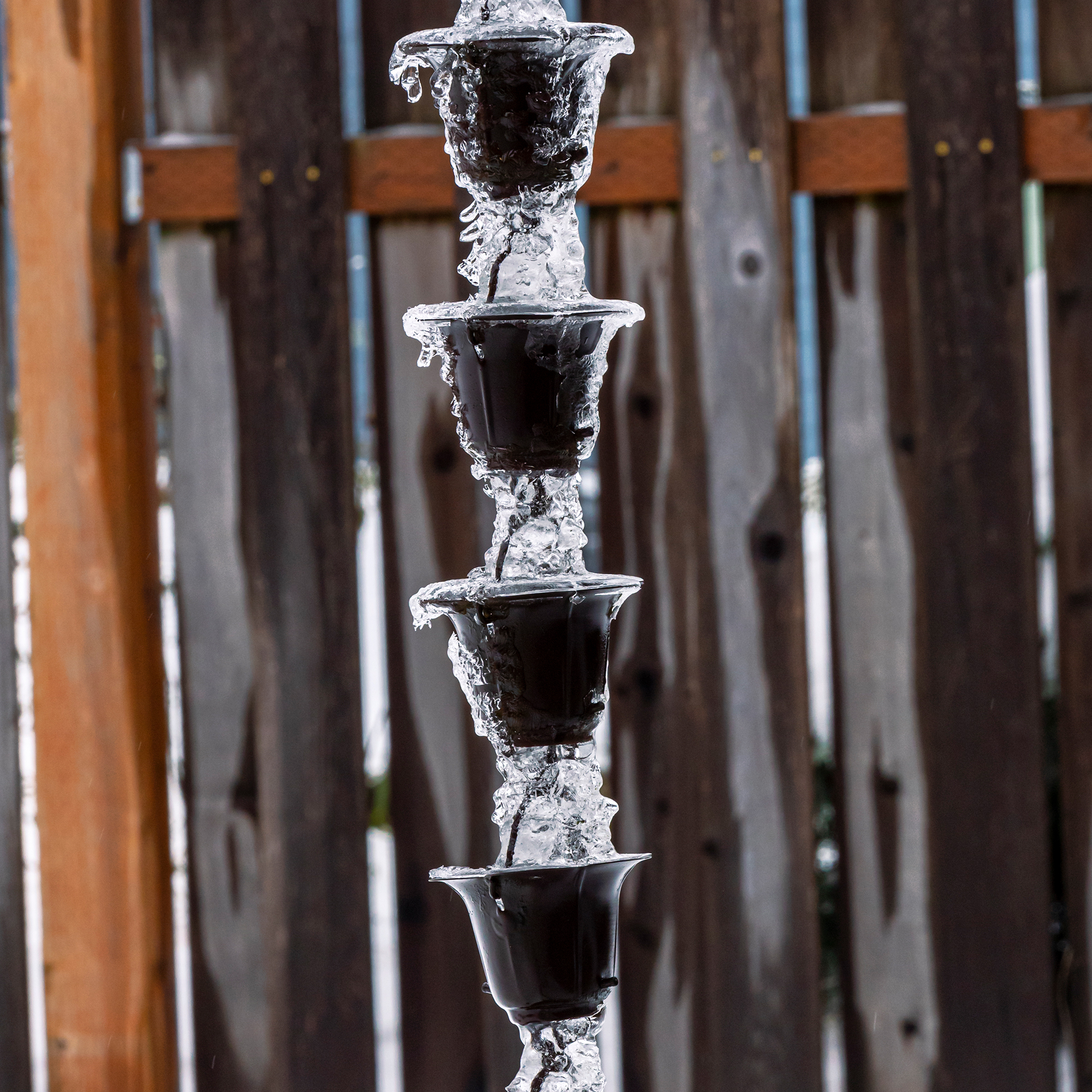
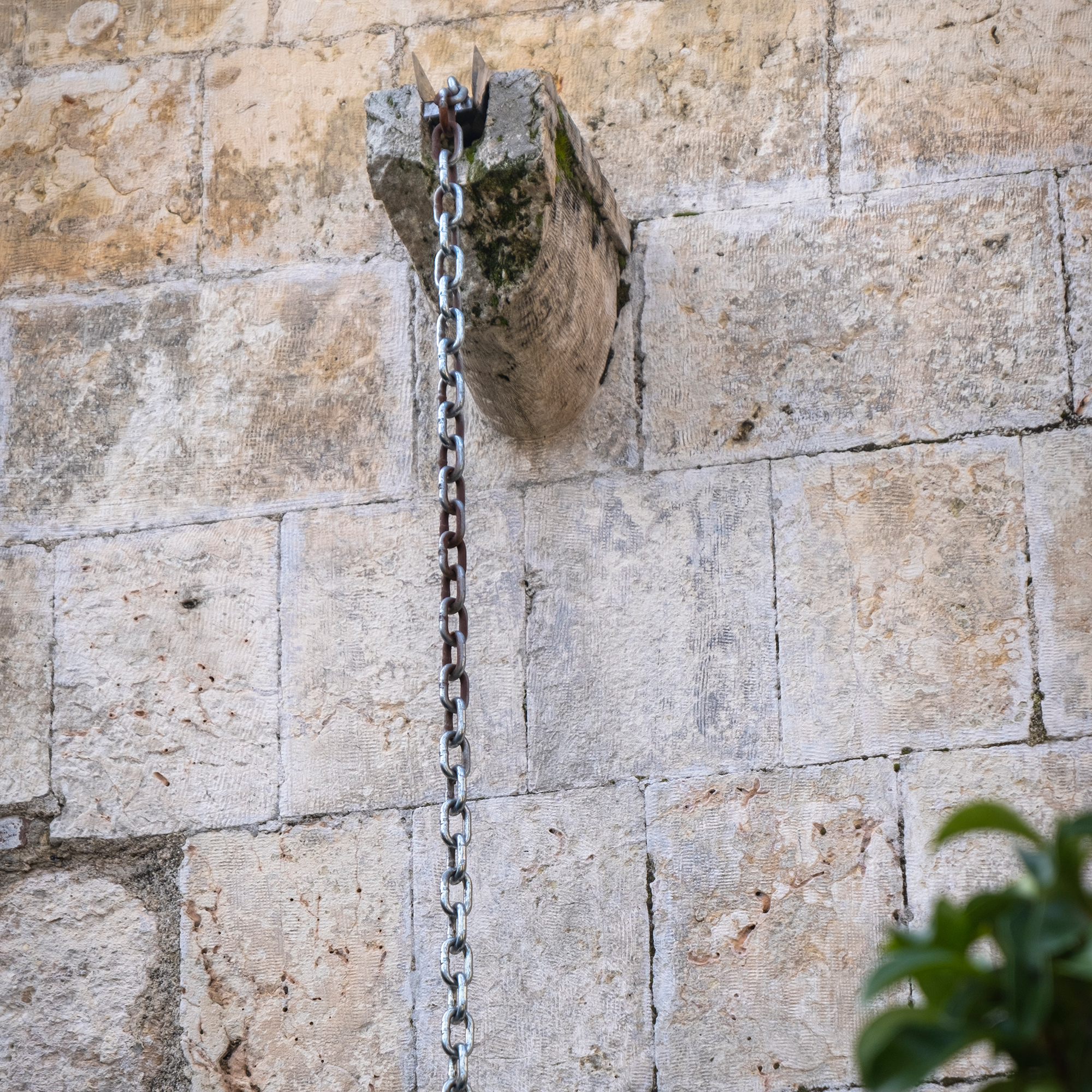
Rain chains work in a very simple, but effective, manner. They consist of either vertical chain links or a series of cups made out of metal - traditionally copper (which of course oxidises into pretty aquamarine tones), but also in more contemporary metals like steel and aluminium.
Rain water goes into the gutters and instead of coming off the roof using the downspout, it cascades down the chain creating a gentle waterfall effect.
The cup design sometimes has holes in the bottom of each container to allow the rainwater to stream through, but if not then the water will pass along as each section overflows and spills into the next.
What do you put at the bottom of a rain chain?

So the water comes off the gutter onto the rain chain, but what next? Well you have a couple of different options. You can reroute the water directly into the ground, or even create a simple - and budget friendly - water feature.
However, the most common approach is to direct the water into a collection barrel or bowl. You can then use this runoff to supplement watering your garden and houseplants.
If you choose this route remember that you'll want to keep an eye on this overflowing in heavy rainfall, and may have to empty it into other containers.
Why are rain chains a good option?
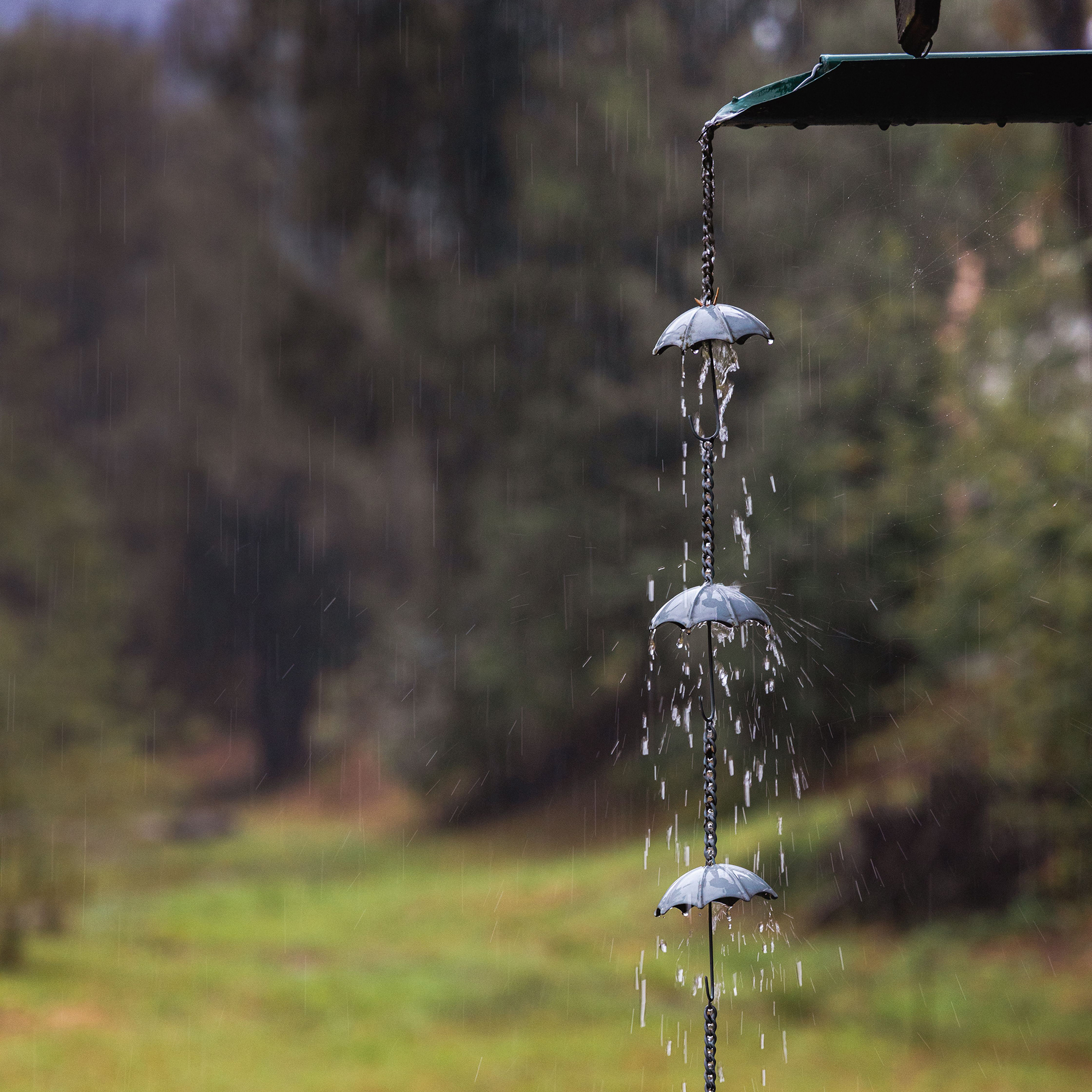
‘Obviously, a rain chain is more beautiful than a traditional downspout, however, it is also a practical option,' says Holly Reaney, Content Editor and gardening pro. 'A rain chain won’t become blocked as nearly frequently as a downspout and, if it does, is much easier to clean.’
We also love a rain chain because of how easy they are to install - you simply need to hang them beneath the section of the gutter where you'd typically place your downspout and decide on how or where you're going to direct the rainfall.
Plus, with simple DIY knowledge you can create or customise your own rain chain. They're a great budget garden idea, too, because as well as being inexpensive to purchase, maintenance is minimal as you can opt for designs where you can remove or replace individual links as needed.
What is the downside to a rain chain?
This all sounds well and good but, as with everything, there are some downsides to bear in mind. Probably the biggest disadvantage for dealing with UK weather is the water flow capacity. Some designs will struggle to cope with heavy rain and then essentially not do the job they're meant to do.
But if you're happy to deal with a little bit of overflow during the more tempestuous days of the year then other than that you'll find rain chains to be a decorative and useful addition to your home.