Immigration and Customs Enforcement agents are swarming U.S. airports, which are blighted by long security lines amid the government shutdown.
Armed ICE officers wearing military-style vests moved into at least 13 major transit hubs on Monday, including airports in New York City, Houston and Atlanta.
Here, we look at why President Donald Trump has deployed them and whether they’ll make any meaningful difference to wait times.
Why has ICE been deployed to airports?
Armed ICE agents have been deployed to more than a dozen airports across the U.S., including major hubs such as Atlanta–Hartsfield-Jackson, New York’s JFK and Chicago’s O’Hare.
Their presence is to supplement Transportation Security Administration (TSA) personnel who have been working without pay while Congress is deadlocked on a funding deal for the Department of Homeland Security, which oversees TSA as well as ICE and other immigration agencies.
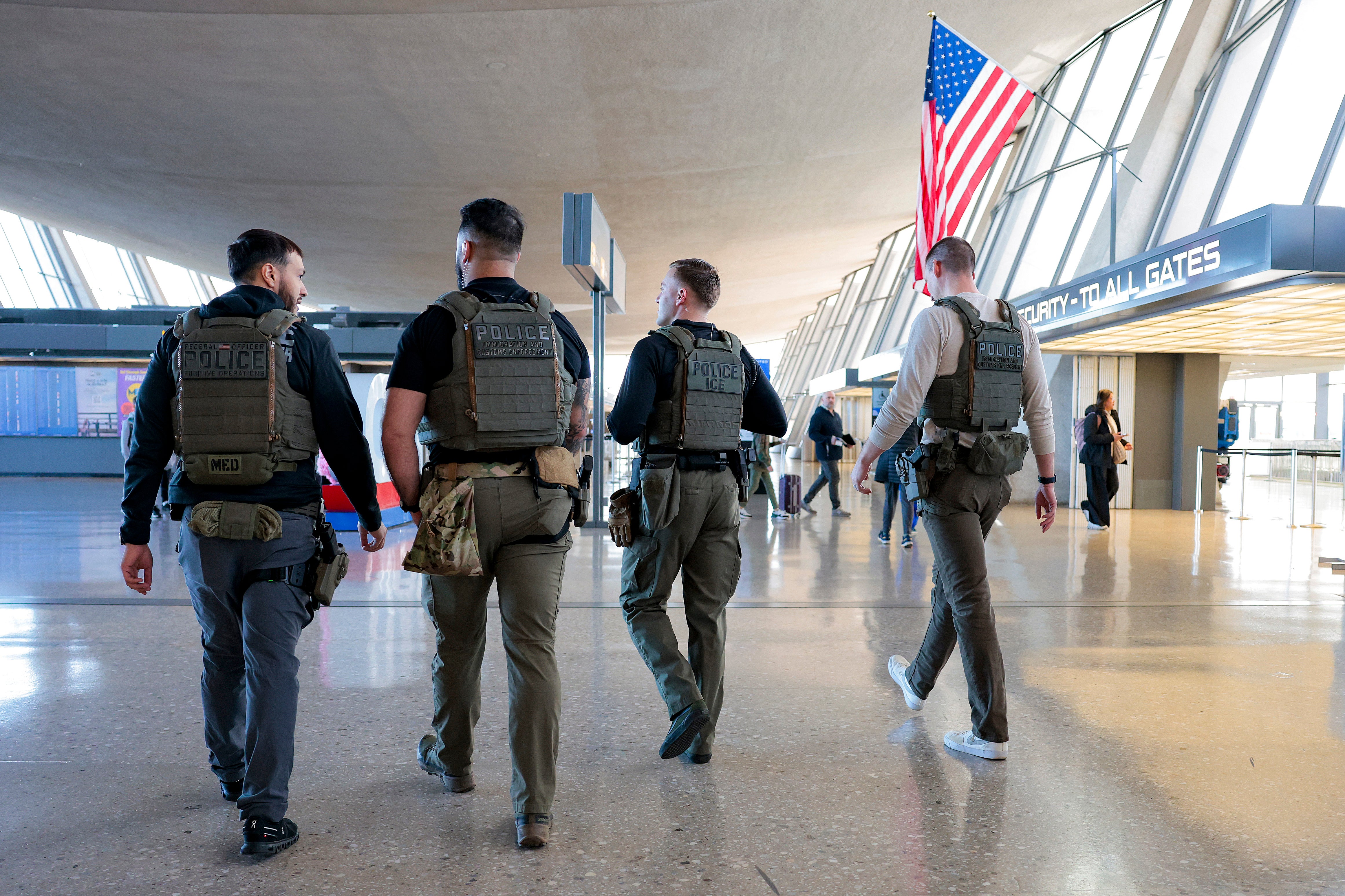
Trump says the agents are relieving TSA workers, performing immigration arrests and providing “security like no one has ever seen before.”
What does it mean for travelers?
ICE agents cannot screen passengers, run X-ray machines, conduct pat-downs, perform explosive trace detection or clear bags. These are security procedures that take months of training.
Therefore, ICE agents cannot meaningfully shorten security lines.
The presence of ICE officers will also have no impact on international travelers arriving into the States.
What ICE can do
ICE agents can offer crowd-control support, guard key entry/exit points, help with escorting travelers and carry out limited admin duties, which might help to free-up TSA agents to perform screening duties.
Miami-based immigration attorney Juan Carlos Rivera told The Independent: “Their deployment serves as a 'force multiplier' to ease the operational burden.
"ICE personnel are stepping in to handle "non-specialized security functions" so that certified TSA staff can focus entirely on screening.
"According to White House border czar, Tom Homan, by taking over supportive and perimeter duties, trained TSA officers can be entirely reallocated to the physical screening process, which indirectly maximizes the airport's remaining screening capacity."
However, TSA officer Darrell English, president of Chicago’s chapter of the American Federation of Government Workers, which represents TSA workers, said he’s “unaware” of what role ICE is playing inside airports.
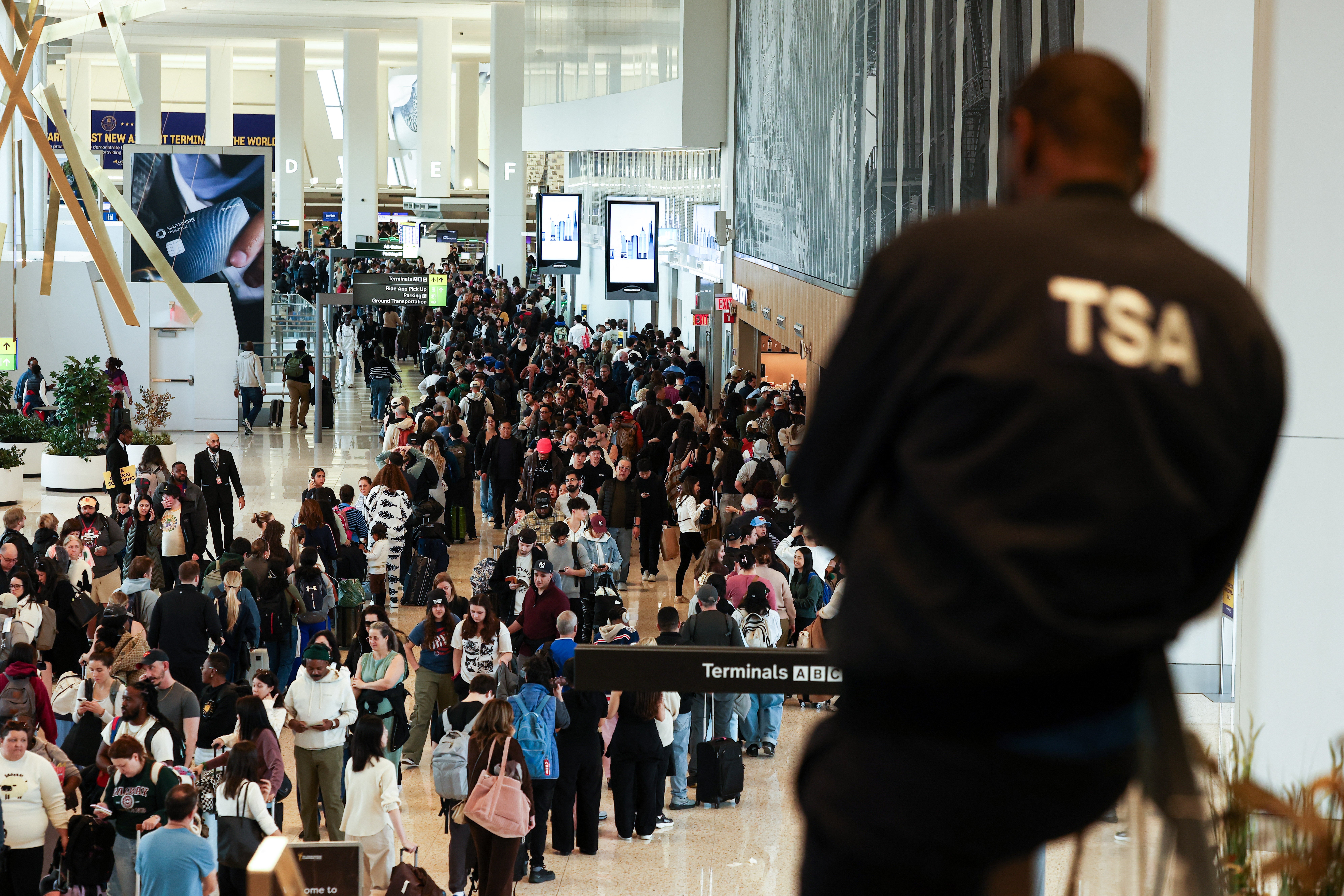
“I can’t see them doing anything as far as screening procedures, so it might be limited as far as what they can do,” he told CNN.
Former TSA agent Angelo Kevin Brown, who's now Assistant Professor of Criminology at Arkansas State University, pointed out: "Even if it works as planned and frees up a few TSA agents from smaller tasks, the main issue with time in the security line is dependent on the number of lanes open, so there is still the issue of not enough TSA agents to run the technical side of the lane."
What travelers might actually notice
Travelers are reporting that ICE is making the atmosphere more intimidating.
Tom Charging Hawk told The New York Times that he was “rattled” by the presence of ICE agents inside Chicago’s O’Hare International Airport. He said his colleagues dropped out of attending a conference because of “ICE and security weirdness.”
Rivera told The Independent: "From a legal perspective, this visible deployment of immigration enforcement officers will likely cause heightened anxiety for immigrant communities navigating the airport, even if the agents are strictly assigned to crowd management.
"I have had some immigrants clients, who are legally eligible to travel, cancel their trips because they fear they may be detained by ICE."
Why are lines so much longer?
Roughly 60,000 TSA workers are caught in the middle of a congressional stalemate over Homeland Security’s budget, which saw a massive injection of taxpayer cash for immigration enforcement under a separate measure last year.
TSA workers, considered essential staff, have been showing up to work without a paycheck over the past month, but workers are calling out sick and roughly 400 employees have quit. More than a third of TSA officers at Atlanta’s airport — the busiest in the U.S., handling roughly 100 million passengers annually — have called out sick.
Even expedited TSA PreCheck and Clear lanes have closed at some airports and had themselves been hour-long in the run-up to shutting down.
What is the DHS saying about ICE being in airports?
Lauren Bis, the Acting Assistant Secretary for Public Affairs at the Department of Homeland Security (DHS), put the blame for the situation on the Democrats, and said that ICE was helping the TSA to work more efficiently.
She said: "TSA is extremely grateful to the patriotic men and women of ICE who have deployed to airports that are facing a high number of callouts because of the Democrats’ shutdown. After receiving standard TSA training curriculum, ICE officers are guarding entrances and exits, assisting with logistics, doing crowd control, and verifying identification using TSA equipment and standard operating procedures.
"The more support we have available, the more efficiently TSA can focus on their highly specialized screening roles to efficiently get airport security lines moving faster.”
What travelers can do
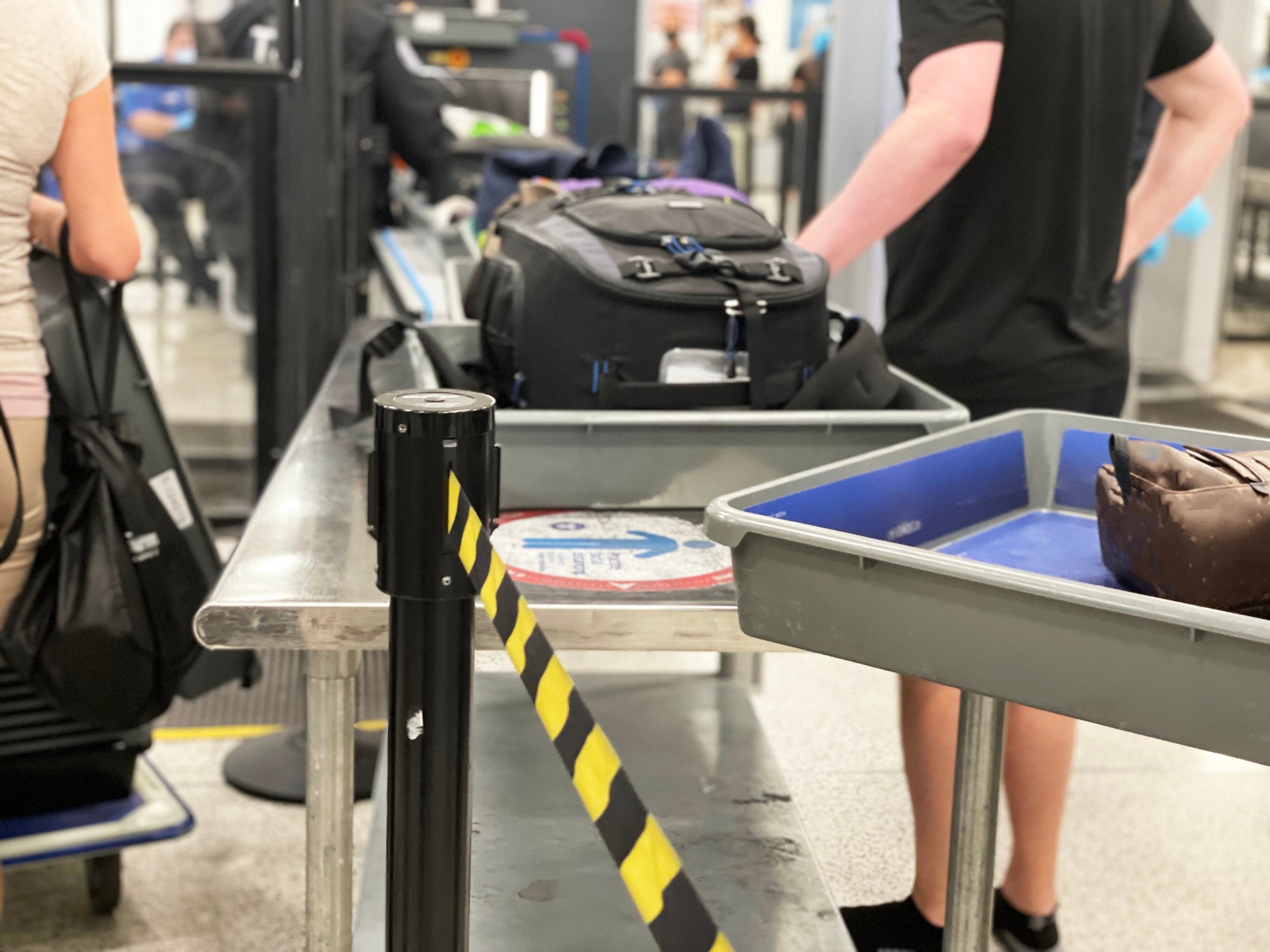
It’s vital that you arrive at the airport extra early for your flight. Most airports are no longer displaying TSA wait times during the shutdown but are instead advising travelers to show up at least four hours before their flights.
The TSA’s app typically shows live wait times, but this has not been a reliable source of information during the shutdown.
You should also keep your eyes glued to your airport’s website and social media feeds, because some incorporate trackers or are posting messages on X telling travelers how long the security queues are.
In addition, expedited TSA PreCheck and Clear lanes, despite blips in reliability due to the shutdown, are still highly recommended.
Able to flex your departure days? The Points Guy travel site recommends booking flights for Tuesdays, Wednesdays or Saturdays, as these tend to be quieter.
Finally, be prepared for a very long wait, and make sure you have snacks and something to read handy.
The joy of a late flight – even in uncertain times
Best airport in North America named in ‘Oscars of Aviation’ — and it’s not in the US
Business class-only airline finally announces first departure after three years
MGM offers new affordable, all-inclusive option for Vegas tourists
Millions of drivers could claim more mileage expenses
LaplandUK tickets drop this week – here’s how to beat the queue and secure a spot