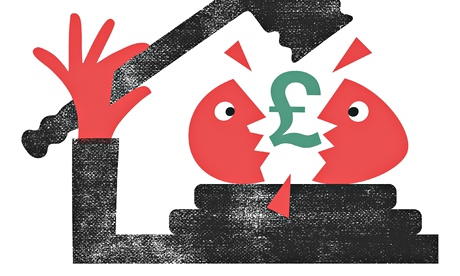
You sigh heavily, shut your eyes and rush your hand to your forehead. You weep silently for a few moments, keen not to let it escalate, then brace yourself, lifting your head to continue the meeting. I offer you some water and a tissue. Soon, we are busily talking through the strategy and your hopes for the financial settlement.
Disappointment and misery: I have an honorary degree in both. Sometimes, a client might mention some aspect of their failed relationship that triggers in my brain, making me wonder whether the same is true of my own marriage. A quick analysis ensues, but is usually dismissed as another red herring. Then I’m on to thinking of the next piece of advice, how much, how long, when. A constant list of to-do items are stacking up in my mind, while all the while trying to appear empathetic.
Middle-aged divorced men warm to me: perhaps I represent the sane version of their “mad” wife, or they appreciate a female opinion on the divorce. Sometimes, I wish for their sake that they’d get back together – I can tell they are still in love with their ex.
There aren’t many thank yous involved in divorce, the end result being a virtual decimation and division of their assets, and not a small fee for my help.
But occasionally something better happens: when a client leaves a meeting visibly more confident and hopeful than when they arrived; when a client is reunited with their child after being prevented contact and they telephone me to share their joy; when a client turns a corner with their depression and their email correspondence becomes sparky and fun. These short moments of lightness make it worthwhile.
I can go home, taking a heavy sigh myself, along with a large glass of pinot grigio, and feel satisfied that things are as they should be and that I helped things get there. Until the next email arrives from the opponent’s solicitor the following morning…
• Tell us what you’re really thinking at mind@theguardian.com.