It is the type of delicious irony that we suspect journalist and activist Juanita Nielsen would greatly enjoy - if only she was around to see it.
It has been 46 long years since the disappearance and suspected murder of the Sydney heiress and vehement anti-development campaigner.
And yet even as recently as this month, the controversy which surrounds her disappearance all those years ago bubbled back up as a much-vaunted fresh expose of the case by the national broadcaster was shown, then hastily withdrawn from public view amid accusations the evidence provided was fallacious.
Ms Nielsen's tragic case is almost irresistible media fodder.
It involves greed, corrupt police, dirty politics and cover-ups, encapsulated within a timeframe when Sydney's criminal underworld wielded significant influence and regularly called in favours from key state politicians.
Cold cases, even those with this level of notoriety, often fade into obscurity over time. And yet the Nielsen case continues to resonate strongly with the Australian public.
This ongoing level of public fascination prompted the ABC to produce and promote the fresh television documentary that raked over the details of the cold case.
Seeking out a easy headline-maker to hoover up an audience, the ABC doco makers, embarrassingly, promoted their product using what they described as a fresh witness who had never before told his story.
But an expert says the account was confected. For what reason, no one knows.
The result was red faces all around at the ABC and a vicious public skewering by Media Watch. The documentary is no longer on ABC iView.

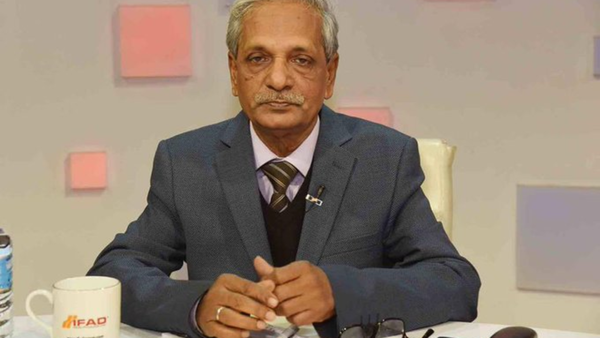
Canberra-based journalist Peter Rees knows as much about the Nielsen case as the detectives who have been assigned to it, and he has dedicated years to its investigation and interviewing witnesses, friends, and family members.
His book, Killing Juanita, won a Ned Kelly award for true crime when it was first issued in 2004, and has now been updated and re-released with fresh information.
He says the ABC's decision to hang its story around a fraudulent, "we-name-the-killer" account by one man, John Innes, was poorly researched and regrettable, and only serves to muddy the waters and draw attention away from what he sees as the main focus: finding where Juanita Nielsen's remains are located, and thereby providing the suffering family with resolution.
"I think the Juanita [Nielsen] story is a Greek tragedy which captures and reveals the soul of Sydney at the time," he said.
"The story of Juanita has become urban legend in Sydney.
"Here's a woman who stood up against developers who had money, power and incredible influence.

"The story reveals so much about the motivations that worked in Sydney, in clubland as it was at the time, the corruption in the police force at the time; it's a real window into all those factors that came to a head on the day she disappeared and was murdered."
In 1975, Sin City was rampant with corruption and it took years - and the subsequent Wood Royal Commission - to reveal the full extent of that misconduct.
Relatively few people - Juanita Nielsen and celebrated "green bans" union boss Jack Mundey among them - were prepared to rail against the overwhelming pressure exerted by greedy developers and those in authority whom they bribed, including police, to support them.
Ms Nielsen's body has never been found.
Every time a bushwalker stumbles over human remains in the Blue Mountains - strangely, it occurs more often than you would think - speculation is reignited as to whether important physical forensic evidence could provide some fresh insights.
But not so. And the mystery lingers on.
In response to questions from The Canberra Times, NSW police confirmed they declined to be interviewed by the ABC for its latest doco and podcasts. That, in itself, should have sounded a warning to the national broadcaster.
Police described the Juanita Nielsen disappearance as an "open and ongoing investigation under Strike Force Euclid led by a detective inspector from the Unsolved Homicide Unit".
"A $1 million reward was announced in June 2021 and remains in place for information regarding the 1975 disappearance and suspected murder of Juanita.

"NSW Police Force has no comment to make in regard to Mr Innes."
Multiple factors continue to keep this cold case in the public eye. Juanita Nielsen was part of Sydney's wealthy Foy retail empire and had been raised and educated at the very best of institutions. She had undertaken a June Dally Watkins modelling course at 17 and was intensely conscious of her physical appearance, taking a full hour every morning to apply her make-up.
She was also smart, courageous, stubborn and independent. At age 25, she was cut off from the family finances after falling in love and marrying a Danish seaman after a shipboard romance. The marriage did not last but surviving, jilted and alone, tending bar and cleaning houses in Morocco, provided some invaluable life lessons.
Returning home, the terraced houses of Victoria Street, the roadway framed by over-arching plane trees, were home to a mixed bag of eclectic and bohemian residents. Ms Nielsen moved into 202 Victoria Street.
When NSW Liberal premier Robert Askin sacked the Labor-filled Sydney local council and installed more sympathetic aldermen, there was an immediate change to planning laws. At a sweep of the pen, huge tracts of real estate around Woolloomoloo, Kings Cross, Potts Point, Darlinghurst and Kings Cross were rezoned from residential low-rise to commercial high-rise.
Overnight, it became prime real estate for redevelopment. The developers, key among them millionaire Frank Theeman, began buying up properties and building high-rise apartments. The area became a real estate battleground between rich and poor, the bullies versus the disenfranchised. Cars were firebombed, countless threats made and residents strong-armed.
Ms Nielsen empathised and supported those desperate to preserve Victoria Street. She edited her own local newspaper, NOW, which became a lightning rod for attention in its support for preserving the historic area. Her supporters gathered around, among them Jack Mundey, whose union action effectively kept the developers at bay.
As she told her partner, David Farrell, at the time: "If they expect me to soften my stand, they don't know me very well. I'm certainly not backing off."
It was at the peak of this tempestuous time in July 1975, as construction delays began costing the developers millions of dollars, that Juanita Nielsen visited a seedy Kings Cross nightclub, the Carousel, owned by notorious mobster Abe Saffron and managed by Jim Anderson and gun-for-hire Eddie Trigg.
It was a morning meeting with Trigg and she had been promised an advertising deal for her newspaper.
But she never re-emerged from the meeting. A day later she was reported missing.
Under normal police investigation practices, the Carousel should have been made a crime scene immediately. Instead, police dragged their feet and any critical forensic evidence was lost.
"The corruption in the police force at the time went all the way to the top, the police commissioner, and the officer in charge of the investigation was his bagman," Mr Rees said.
A few days after her disappearance, some of the contents of Ms Nielsen's shoulder bag were found strewn along the roadside by the highway, now the F4 freeway, between Sydney and the Blue Mountains. It appears that as an afterthought, the killer, or killers threw the items from a moving car, most likely after having disposed of her body somewhere in the bush.
The two key suspects in Ms Nielsen's death, club owner Jim Anderson and bumbling gunman Trigg, are both dead.
Anderson, who is believed to have organised the murder, died in 1989 and Trigg, the suspected killer, died in 2013 in a small rented room at the Abbotts Hotel in Waterloo.
Neither ever made admissions.
"This is something that really is so unresolved for the family," Peter Rees said.
"There's just been no closure for them, or for those close to her.
"There is some slim hope - and I emphasise that it is a slim hope - that the million-dollar reward that the police announced a few months ago just might help bring someone forward with information about where Juanita's body is buried in the Blue Mountains."
- Killing Juanita, by Peter Rees (HarperCollins) $24.99.