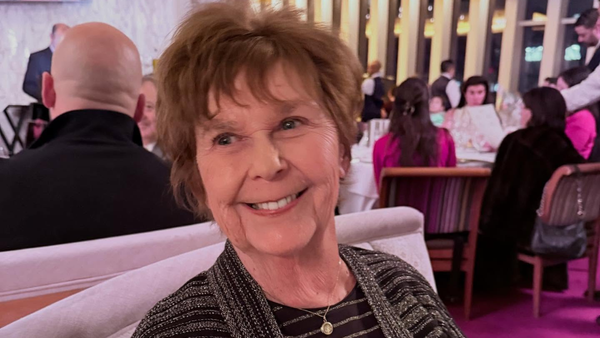
“Is there a deal at all?” asked Mairi McNeil, 65, as she sheltered from a rain shower off Buchanan Street with her husband, William, 66, a retired business analyst.
While Scotland’s first minister. Nicola Sturgeon, was meeting opposition leaders in London to discuss a cross-party alternative to Theresa May’s Brexit deal, it was hard to find anyone on the streets of Glasgow with a good word to say about leaving the EU – even among the minority of Scots who voted for the proposition in 2016.
A remain voter like his wife, William was not convinced the first minister’s trip would produce the necessary compromise. “Of course it helps to have Nicola Sturgeon down there, but I also think what England wants, England gets.”
Mairi felt Westminster was not listening to Scotland’s needs. “Apparently Ireland was mentioned 100 times in the [Brexit deal] document, Gibraltar was mentioned 50 times and Scotland was not mentioned at all.”
While Scotland voted by 62% to 38% to remain in Europe, turnout was 56% in Glasgow and 67% across Scotland, compared with 73% in England. It has been suggested that a combination of voter fatigue and a misplaced belief that remain was certain to win kept some Scots at home.
The Glasgow-born McNeils moved back to Scotland seven years ago after spending their working lives in West Sussex, and they described the political mentality in Scotland as very different to that in the south of England. “Since we’ve had the Scottish parliament, it’s nearer the people. Down there it’s the Westminster bubble that has lost the plot” William said.
“I feel sorry for the young people,” Mairi added. “We’ve sold our grandchildren down the river. The research money, the investment, all that has been lost for years to come.”
Mo Fareed, 30, an assistant hotel manager waiting for his girlfriend outside the Glasgow Museum of Modern Art, echoed William’s view that England’s wishes were dominating the agenda.
“If there was a second referendum I would 100% vote to go back into the EU,” he said. “I voted to remain in 2016 but England has a bigger population so whatever they say is what happens.”
Fareed was hopeful that there would be a second vote. “So many people voted for Brexit and now regret it. They just heard the noise about ‘if you come out of the EU you’ll be rich’, and that just hasn’t happened.”
Brian Collins, enjoying a lunchtime pint at the Yes bar off West Nile Street, a hub of pro-independence campaigning during Scotland’s second-last referendum, described the Brexit negotiations as “a dog’s dinner”.
“If they allow Northern Ireland to stay in then you’ll see Scottish industry going over there. The 48 letters [to trigger a vote of no confidence in May] aren’t in yet, there could be a people’s vote or a general election next year – it’s changing day to day,” the 51-year-old factory worker said. “It’s incredibly complex.”
Given this degree of uncertainty, was it wise to throw the threat of another independence referendum into the mix? “If we lose another referendum, that’s our last chance, there can’t be a third one,” Collins said. Nonetheless, he wanted to see one before the next Holyrood elections, due in 2021, pointing to the significant increase in support that the yes campaign gained once the official campaign had begun in 2014.
For Paul Andrews, 21, one of the minority of Scots who voted to leave the EU in 2016, the continuing uncertainty had left him uncomfortable with his choice. “I do feel bad about it, especially for the people who voted to remain. The prime minister said in that press conference that we would still be getting the extra money for the NHS and a lot more control, but I do think we were sold a false hope,” the teaching student said.
“We have a clearer understanding now of what it means, now that we’re halfway through, and I wouldn’t vote to leave now. I do think we were misled.”