The State Opening of Parliament and the King’s Speech will take place on Wednesday, marking the formal beginning of the parliamentary year and the first session since the local elections.
Policies on immigration, green energy and reforms to special educational needs and disabilities (Send) schooling will be part of the King’s Speech, which will lay out the government’s legislative priorities for the next Parliamentary session.
The speech will be read by the King in the House of Lords before MPs and peers.
Here’s a look at what the ceremonial event involves.
How much pomp and ceremony does the day involve?
Quite a lot, and it starts before the King even makes an appearance as the royal bodyguards, known as the Yeoman of the Guard, conduct a ceremonial search of the cellars of the Palace of Westminster for explosives.
This is a nod to the Gunpowder Plot of 1605, in which a group of English Catholics failed to blow up the House of Lords and kill the protestant king.
An MP is also ceremonially taken hostage in Buckingham Palace while the monarch attends Parliament. This is designed to ensure the King’s safe return from Parliament.
Traditionally, a government whip known as the vice-chamberlain of the household performs this task.
When does the main event start?
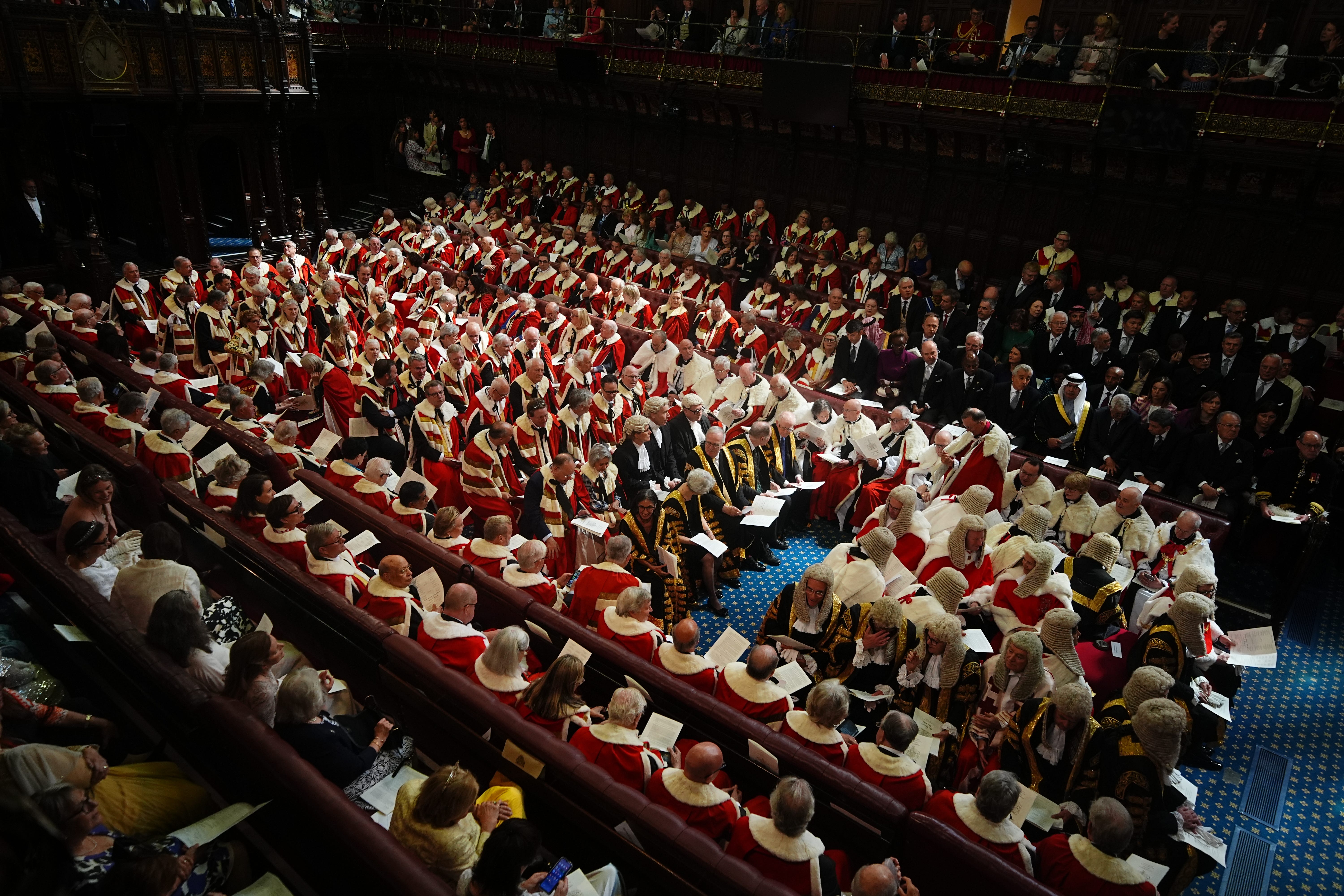
Peers assemble in the House of Lords in the morning, and it is one of the few occasions on which they can wear their traditional scarlet robes.
Dignitaries, including ambassadors, also take their seats, and peers mix with guests, who can include members of the royal family.
Outside, just before 11am, a procession from Buckingham Palace to Parliament takes place as members of the Household Cavalry Mounted Regiment escort the King.
As part of the procession, it is usual to see the Imperial State Crown and other important items such as the Sword of State travel in carriages to Parliament.
Officials with titles such as Gold Stick, who are responsible for the command of the Royal Household troops in the procession, are also involved.
The King will arrive at the Sovereign’s Entrance to Parliament and proceed to the Robing Room.
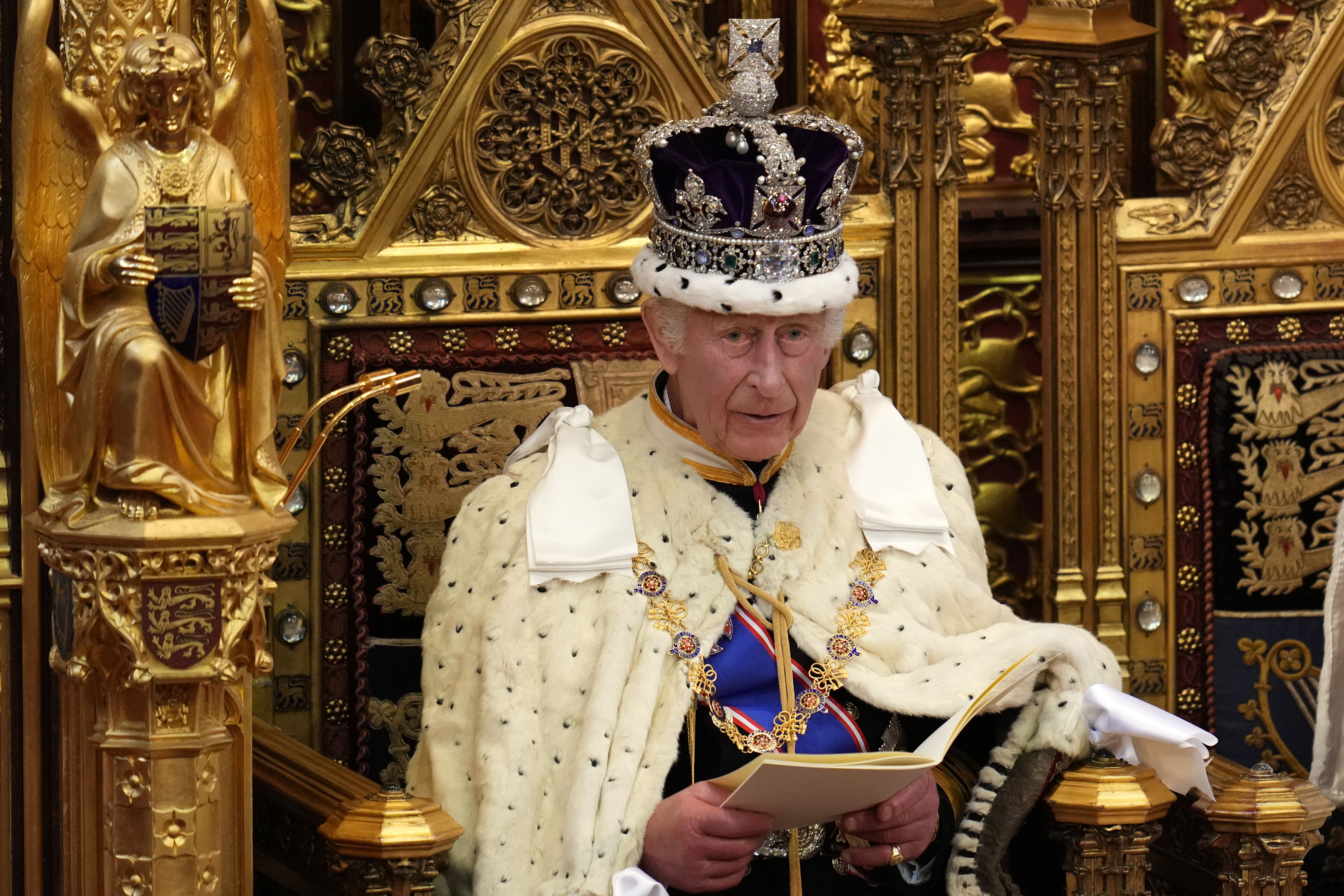
He then dons the ceremonial robes and the Imperial State Crown before making his way to the House of Lords, attended by various members of the Royal Household.
Meanwhile, it is a slightly more toned-down affair in the House of Commons as MPs gather before meeting for the King’s Speech.
The King is seated on the throne in the Lord's Chamber at about 11.30am.
How does the King request the presence of MPs in the Lords to watch the speech?
Black Rod, a senior Lords officer, is sent to the Commons to summon them to the Lords to listen.
The door is slammed in Black Rod’s face. Black Rod then strikes the door three times and is given permission to enter, a tradition said to symbolise the Commons’ independence from the monarchy and dating back to the 17th century.
MPs file through Central Lobby to the Lords and as many as can be accommodated watch from the bar of the House of Lords. Some stay behind in the Commons and watch on their phones and tablets.
Former Labour MP Dennis Skinner used to make a topical quip when Black Rod arrived in the Commons, although no other MP has yet to do similar since he lost his Bolsover seat in 2019.
What happens next and why?
Once everyone is in position, the King reads out a speech that outlines the government’s legislative priorities for the parliamentary session.
The speech is written by the government of the day and is read out in neutral tones by the monarch. It will contain details of bills the government intends to introduce in the session and other policy priorities.
It is expected that new legislation is to be announced in the King’s Speech, which will give the government the option to bring British Steel into public ownership.
The length of the speech depends on how much information the government wishes to include in it.
Is there any more ceremony in Parliament once the King has finished reading it?
After the State Opening ceremony, MPs leave the Lords and the House of Commons is due to sit again from 2.30pm.
They will spend either five to six days debating the address, which is proposed and seconded by two Government backbenchers – one usually a long-serving member and the other a relative newcomer. Their speeches are intended to be funny and make reference to their constituencies.
The debate then continues with the leader of the Opposition and the Prime Minister making contributions. Debates on particular subjects, such as foreign affairs or health, take place on subsequent days. Votes on amendments to the motion can take place the following week.
No Westminster Hall debates are held until the debate on the King’s Speech ends.
No urgent questions or ministerial statements take place on the same day as the State Opening, but they can be submitted at a later time.
What to expect from the King’s Speech as Starmer fights for survival
The Latest: UK's Starmer meets prospective leadership rival ahead of King's Speech
King Charles III will lay out UK government agenda as Starmer's job hangs in the balance
Immigration to feature in King’s Speech amid calls for Starmer to resign
Andy Burnham: The ‘King of the North’ with No 10 in his sights
Every Labour MP who has demanded Starmer quit as number reaches 92