Giada Scodellaro’s Ruins, Child and Anna Poletti’s Hello, World? are very different books. Scodellaro won the 2024 Novel Prize; her book stitches together a history of Black feminist poetry, theory and prose. Poletti’s novel is a work of queer erotic introspection, investigating the limits of domination and submission.
There’s not much to connect them in terms of style, theme or ambition. If there is a common anchor, it is that both dispense with the traditional mechanisms of narrative. They abandon conventional chapter and paragraph forms, prioritising “fragments” as the unit of construction.
Ruins, Child – Giada Scodellaro (Giramondo)
Hello, World? – Anna Poletti (Puncher & Wattmann)
Because of this experimental approach, these books might be considered “avant-garde”. This is a loaded term that originally referred to soldiers who scouted ahead of the army. The military metaphor was attached, in the 19th and early 20th centuries, to writers and artists who worked in spaces yet to be cleared by human consciousness.
Sometimes, but not always, these artists were aligned with progressive politics, and sought to use their works to help people imagine a different, more liberated future.
Neither Ruins, Child nor Hello, World? attempt this gesture. Scodellaro’s novel is interested in the experience of “lateness”; Poletti’s uncovers some of the bonds that make personal progress a fraught project. Both dwell in a kind of political melancholy where the priorities are not revolution, but survival and care.
If these are the radical novels charting new territory in the 2020s, they raise an important question: what does the “avant-garde” look like today?
Hello, World?
Anna Poletti is an Australian queer and feminist media-studies scholar who works in Utrecht. The endorsements on the back cover of her book come from Chris Kraus and McKenzie Wark, heavy hitters of theory and postmodern literature.
Hello, World? follows Seasonal, a genderqueer academic, who moves to the Netherlands for a job. After they break up with their long-term partner, they undergo a sort of katabasis: a journey into the underworld of their deeper sexual drives.
The book compares itself to Pauline Réage’s erotic novel The Story of O and the work of the notorious French libertine the Marquis de Sade. It spends most of its time exploring Seasonal’s dominant/submissive relationship with Laszlo, a self-exiled Hungarian.
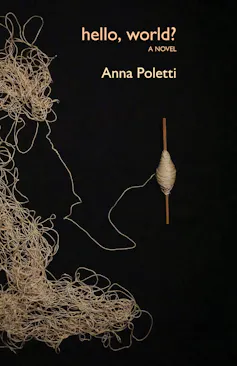
The Kraus endorsement calls the book “radical”, and it’s true that it depicts a kind of relationship that is usually kept hidden. Poletti goes to the root of kink culture, trying to chart the ethics that sustain a relationship ultimately built on structured violence.
But the fragmentary approach, which moves between vignette-paragraphs and long text-message exchanges, allows the author to avoid some of the more intense moments between the characters. The book often stops just short of showing us the interior of the erotic relationship. It is elliptical about things that might be interesting for a reader of queer erotica.
That seems to be part of the point. The real subject of the book is the modulations of the relationship, as each character tries to avoid tipping the scales from domination to exploitation.
Seasonal often muses on their relationship to their own trauma. They are troubled when Laszlo uses the language of violence to describe them. It seems neither character can fly by the nets of their cultural and sexual conditioning.
In its exploration of the limits of trauma and violence, Hello, World? does chart somewhat virgin waters. Seasonal is an interesting creation. While they wax theoretical about relationships, they garble judgements about art and politics, declaring no interest in learning about either. They discard their long-term partner with relative ease when he says he won’t have sex with them.
They are straightforwardly dedicated to their own pleasure, in the best Sadean fashion, and largely indifferent to the suffering of those around them.
This complex portrait uncovers some interesting aspects of the doctrine of personal sexual liberation. Seasonal’s fairly uncritical embrace of identity politics and communitarianism leads to a sympathy with some of the arguments of Viktor Orban’s Hungarian nationalism. For all the rejection of the Enlightenment in the novel, the only thing that separates kink from abuse ends up being rational consent.
In the end, Seasonal’s pursuit of sexual freedom makes them into the sort of person they have spent their life rejecting.
As a diagnosis of the politics of self, Hello, World? works quite well. But its deconstruction of progressivism and internalised hetero-patriarchy is not “avant-garde”, nor particularly radical. I wonder what sort of circulation it will have outside the coterie of media-studies lecturers.
Ruins, Child
Like Hello, World?, Ruins, Child is a novel of fragments. But it arranges its fragments in a very different way. It is a tessellate of a huge number of texts drawn from the tradition of Black poetics and radicalism.
The notes identify the main texts as the writings of August Wilson, Toni Cade Bambara, Derek Walcott, Zora Neale Hurston, Langston Hughes and June Jordan. References to art, architecture, music and film are woven through the book.
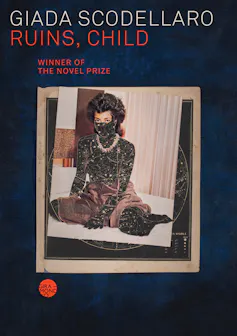
The image on the front cover is a collage by Lorna Simpson, and collage is certainly one way we might think about Ruins, Child. The narrative is based on Bannu Cennetoglù’s HOWBEIT, a video-art project comprising 128 hours of footage taken between 2006 and 2018. The setting of the novel, Scodellaro explains in her notes, recalls the idea of “The Hill”, a figure of suburban ghettoisation in the work of Wilson and Bambara. The central characters are in constant dialogue with Bambara’s novel The Salt Eaters (1980), which Ruins, Child seems to be remixing.
The novel assembles these parts into a fascinating puzzle, revolving around six characters watching footage taken earlier in their lives. The women live in a crumbling apartment tower, shunted there by a neglectful government. They watch their past selves prepare for a carnival and trade boyfriends, and as the oldest of them, Vonetta, endures a seemingly endless pregnancy. Reality is stretched across decades. We are often left guessing the time and place of a given event.
This indeterminacy of time is right at the heart of the novel. Events seem to be taking place in the not-too-distant future. There is something vaguely prognostic about the world we are creating today: infrastructure and the old forms of society are eroding; the natural cycle of the seasons has given way to extremes of heat and cold.
But this is not an attempt to think about the future, so much as a consideration of what has already been lost. Scodellaro draws on the work of architects Peter Eisenman and Elisa Iturbe, whose theory of “lateness” in architecture is a sort of metaphor for what Ruins, Child is doing with history. Instead of building something new, the novel is picking up pieces. Vonetta, the eternal mother, laughs at people who want to “live in the near future”. She suggests “the mother does not aim for this, she does not think about being avant-garde”.
Philosopher and cultural critic Walter Benjamin mused that ruins, like other fragments, call out for the critic and historian to make them whole again. This means trying to revive the ideas and dreams that went into their creation before they were destroyed.
Ruins, Child brings together the pieces of nearly a century of Black radical writing in a similar gesture of salvation. It dwells in the moments of allegiance and solidarity that have allowed the oppressed to survive in a crumbling world.
Inwards and backwards
Poletti’s hello, world? reflects some cynicism about the progressive project; Scodellaro’s novel explicitly rejects the idea of being “avant-garde”. But neither book has its eyes set on the artistic or political horizon. They turn their eyes inwards and backwards, explaining our failed liberation or saving what they can as the world hurtles to oblivion.
I think both are conservative postures. It may well be that these ways of adapting to our present have contributed to us being where we are. There is a kind of easy melancholy in dwelling on the contradictions of personal politics and stooping to retrieve the relics of the past.
Scodellaro’s book is a wonderfully wrought collage; its clever construction rewards close reading. Poletti’s book has less to offer, though it does carry some important lessons in its slippery portrait of Seasonal.
Neither book is utopian, because neither really believes in politics. That our boldest books are restrained and intimate rather than forward-looking and activist is, I think, as telling a fact about literature in the mid-2020s as anything else.
This article was originally published on The Conversation. Read the original article.