The coalition government has repeatedly emphasised the need to make better use of workspaces in the public sector. Since 2010, it has reduced the amount of space it occupies by more than two million square metres – more than 26 times the space of Buckingham Palace. But has government struck the right balance between cost savings and boosting productivity? What makes a good government workplace? Here’s what the experts say.
It’s about people not property
I have seen some great workspaces in the public and private sectors and generally organisations are embracing the changes; not just for cost reduction but for a whole host of other reasons, such as sustainability, attracting talent and portraying a modern image to staff and clients.
When designing workplaces it’s important to think about your organisation’s key remit first – whether that be education, social services, delivering policy, and so on — and property second. Property is a tool, an enabler, not the end in itself.
Ginny Gibson, professor of corporate real estate and deputy dean, Henley Business School
Our approach to the buildings we have designed is to see the workplace as the platform for change. The change is really in the way that people are working and how they deliver services. It’s all about people. The communication strategy is always key. IT readiness is critical, too – ensuring mobile phones, laptops and so on are all in place for mobile or transient working. The quality of the design is also important, particularly access to natural daylight, floor plan depth, ceiling height and air quality.
Paul Norbury, director of 5plus architects
Good workplaces need to be flexible
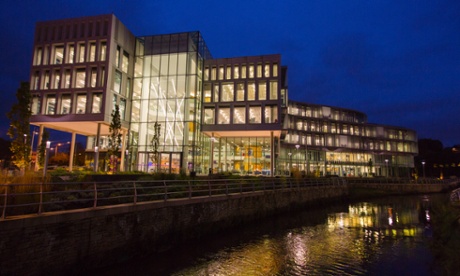
Here in Rochdale we have seen staff become more interactive as our new building – Number One Riverside, which won best workplace in the UK this year – has brought together 2,000 council staff from across the borough. This encourages people to send fewer emails and meet up in the variety of flexible spaces in the building, from the coffee shop, library and breakout areas to more formal meeting rooms. Designing flexible workplaces is critical to ensuring that as public sector delivery changes, the spaces can change to accommodate new ways of working.
Mark Widdup, director of economy and environment at Rochdale borough council
Good designs can improve working practices
We have a programme called Active by Design, which focuses on building and public space design to encourage activity. Much of it is about using “nudge” theory to encourage changes in behaviour and to get away from standardised (and ignored) health and safety notices and approaches to building management. Building design can help to change practices and behaviours, for example by tackling the hyper-reliance on email to talk to colleagues 10 metres away or giving office workers space to think creatively.
Brian Quinn, Cabe (Commission for Architecture and the Built Environment) adviser at the Design Council
The public sector is falling behind
In the public sector, we fail to learn the lessons that the private sector has understood for more than 20 years. Investment in working conditions and staff culture directly impacts performance and reduces costly and destabilising issues such as staff sickness. We have to be able to do better, especially at a time when we are asking so much from those delivering our public services.
Joseph Harrington, partner and co-head of service design at the Innovation Unit
It should not be all about cost savings
The public sector is all about delivering services at a time and place appropriate to service users. The choices we make in locating our staff must have this primary objective in mind: if in doubt, ask the customer.
We are going to see a very different public service in the future. Can we ensure that public services are prioritised by customer insight, as well as providing more financially efficient services? Merely squeezing staff into smaller offices or working from home isn’t going to produce in itself more efficient services for local people. Staff support and organisation must accompany property reductions if real benefits are to be achieved.
Stephen Jacobs, senior programme manager of the One Public Estate programme, Local Government Association
There are benefits to sharing a building
There’s been an acceleration during this parliament of public service organisations sharing property and making major savings. What we’ve not yet seen very much of is bringing together organisations not simply because of what you might call a marriage of space convenience, but because there is additional benefit to co-location. With so much more money to be saved in the next parliament, planning is needed to identify where deeper operational savings and productivity gains can be made by co-locating.
Mark Langdale, partner for central government, EC Harris
These comments were made during a livechat, supported by EC Harris, which took place on Friday 5 November. Read the livechat in full here.
Sign up for your free weekly Guardian Public Leaders newsletter with news and analysis sent direct to you every Thursday. Follow us on Twitter via @Guardianpublic