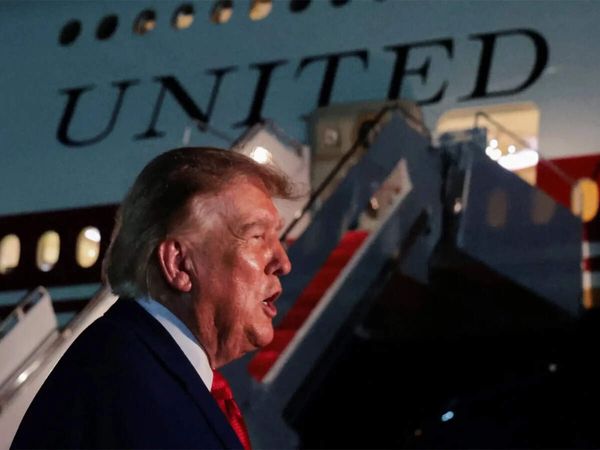
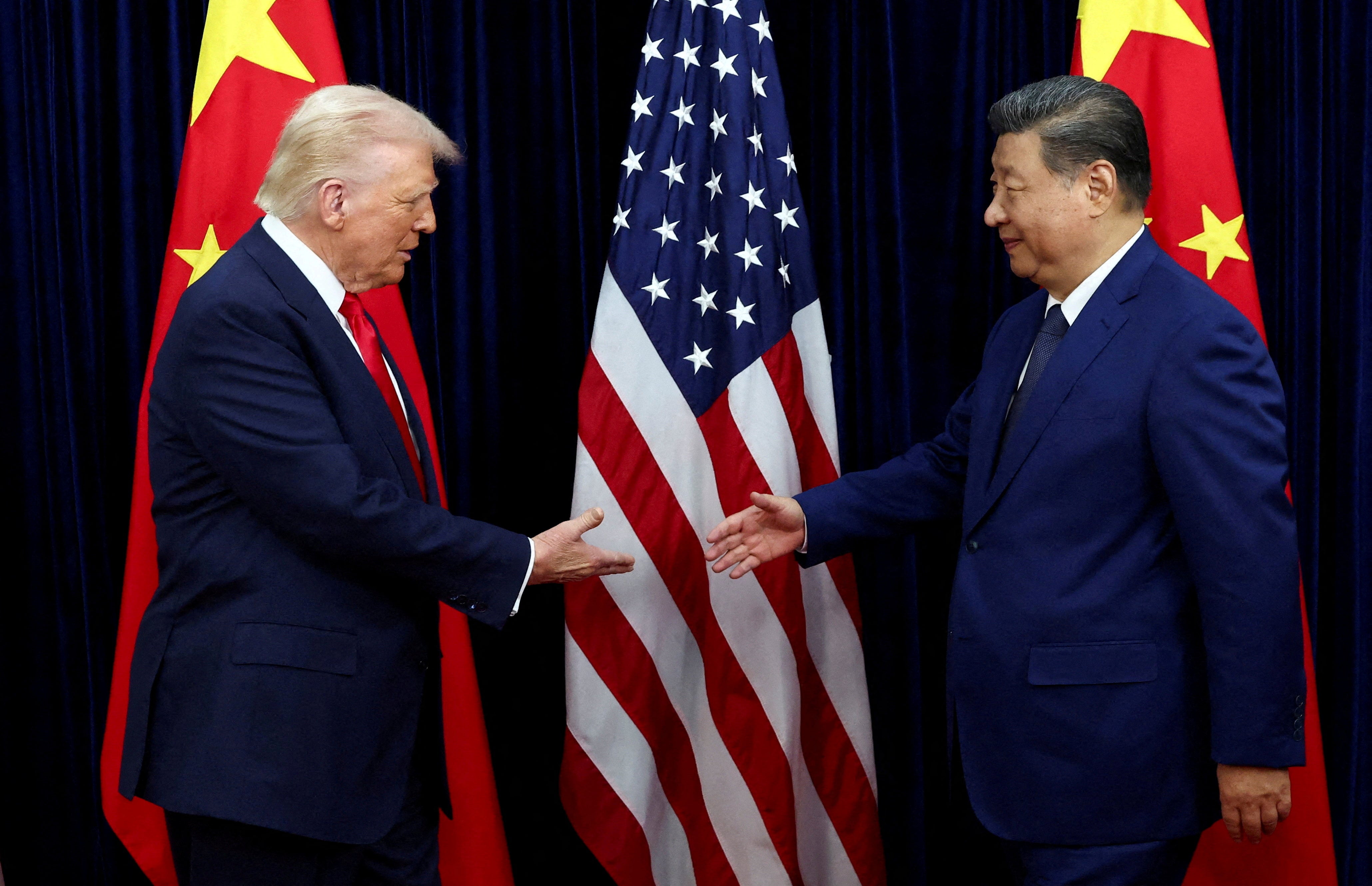
US president Donald Trump is gearing up to meet his Chinese counterpart in Beijing for what is expected to be a high-stakes summit between the two world leaders.
China is reportedly preparing to welcome Trump with much pomp and ceremony, but beyond the optics, there is also a lot at stake – including the issue of Iran and the opening of the Strait of Hormuz.
Trump has said he is looking forward to his seventh face-to-face meeting with Xi, and that he expects the Chinese president to give him a “big, fat hug when I get there”. The Republican is not shy about cosying up to even the most problematic of world leaders, and is unabashedly pleased to be met with a grand welcome on his travels.
But we know far less about the thoughts of Xi himself, who doesn’t have the same social media output and enjoys near total control over his own country’s media narrative. When he does make public appearances, they are punctual, carefully stage-managed and mostly stick to the script. Even after more than 13 years at the helm of affairs in China, Xi remains difficult to read.
Some clues about how his interactions with Trump can be found in the Republican’s previous visit in 2017, though the global context was very different. Trump was delighted to be given a rare tour of the Forbidden City as part of a “state visit plus” treatment, and when he and Xi were together, the two shared plenty of camaraderie. At one stage, Trump showed the Chinese leader videos of his granddaughter, Arabella Kushner, reciting Chinese poems in Mandarin. Xi called it an “A-plus” performance.
Beyond the ability to flatter, Xi has shown occasional glimpses of a sharp wit in interactions with other world leaders – a lighter side that is rarely, if ever, reflected in Chinese media coverage. Last year in November, when Xi gifted South Korea’s president Lee Jae Myung a pair of Xiaomi smartphones, he joked about the devices’ security protocols.
At the event, Lee lifted one of the (phone) boxes and looked at it. He then asked Xi: “How is the communication security?”, upon which Xi and other gathered officials erupted in laughter. Xi then pointed at the phones and responded: “You can check if there’s a backdoor.”
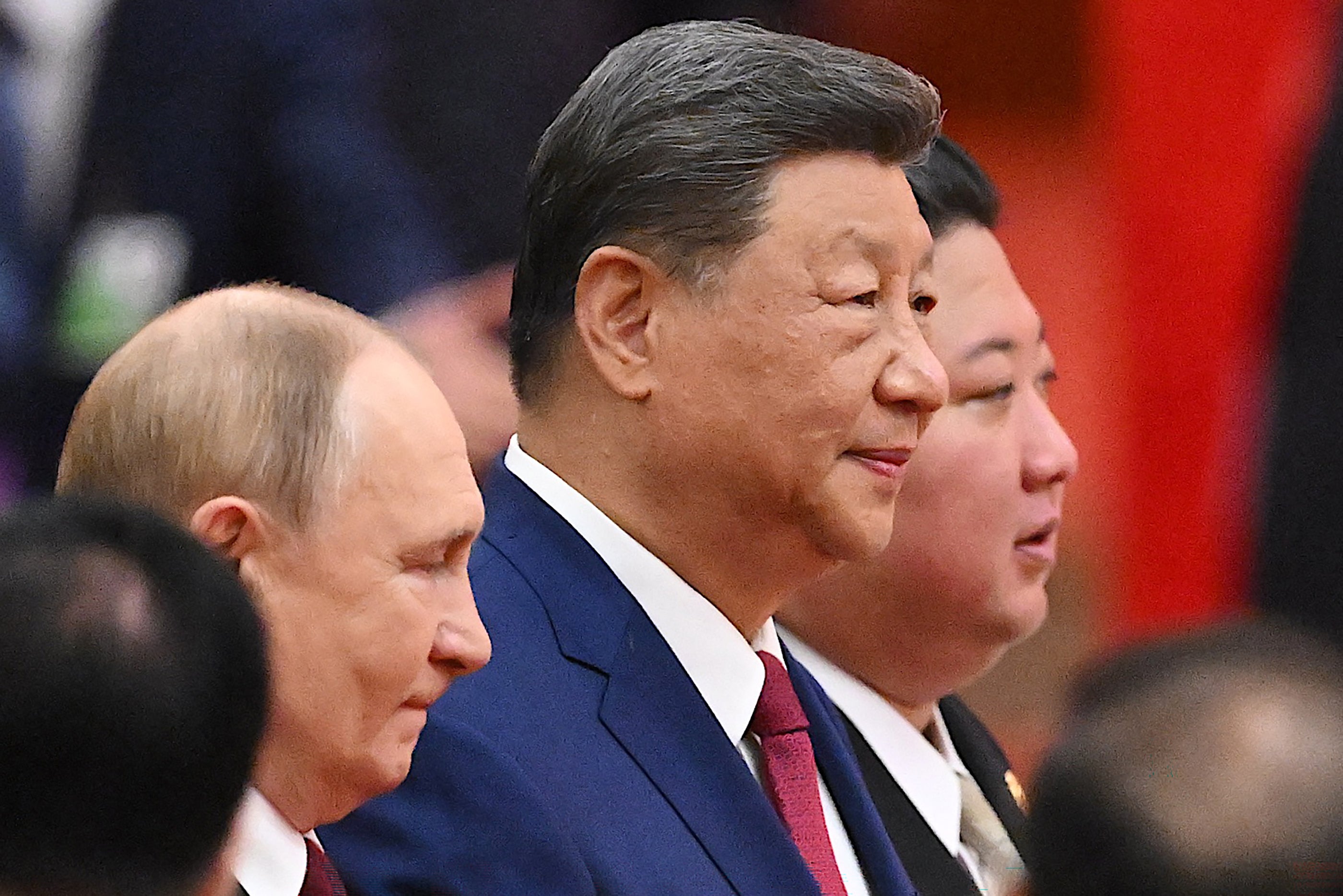
Some of Xi’s most relaxed public appearances have been alongside fellow authoritarians, such as close ally Russian president Vladimir Putin. In 2017, at a Shanghai Cooperation Organisation meeting in Kazakhstan, Xi was briefly left sitting alone across from a large Russian delegation after a delay involving his aides.
Seeing the awkward moment, Putin jokingly called Xi a “lone warrior”, and the comment evoked laughter from the Chinese leader.
In another instance, the Chinese leader was caught on a hot mic musing about living forever. In September last year, a hot mic caught the Chinese leader and Russian president discussing organ transplants and the possibility that humans could live to 150 years at a military parade in Beijing.
Both leaders are in their 70s and have suggested that they may want to stay in power for years to come.
“It could be that in this century humans might be able to live to 150 years old,” Xi was heard saying.
Later, Putin was asked about the comments: “Modern health methods allow humanity to hope” that “life expectancy will grow significantly” and among those advances, he said, were “medical means, even surgical ones, related to organ transplants”.
“People rarely lived to be over 70, but these days, at 70, you are still a child,” a man, apparently translating Xi’s comments for Putin, could be heard saying in Russian.
“Biotechnology is making advances,” Putin responded, according to the translator, now speaking in Mandarin for Xi. “There’ll be constant transplants of human organs, and maybe even people will grow younger as they age – even achieving immortality.”
In 2023, Xi also mused about how he, along with Putin, was driving a political change. Xi could be heard saying: “Right now there are changes, the likes of which we haven’t seen for 100 years, and we are the ones driving these changes together.”
“I agree,” replied Putin, to which the Chinese leader responded: “Take care of yourself, dear friend, please,” and waved goodbye to the Russian president, who wished him a “safe journey”.
Another key trait – Xi’s willingness to control the narrative around his activities – came to the fore when he met with the Canadian prime minister Mark Carney. Recounting his first meeting with Xi since he took office at the APEC summit in November last year, Carney has said: “He chose to spend the first 10-plus minutes discussing how he wanted the personal interaction to be” and that he did not want to be criticised in public.
“If I were to summarise [Xi’s message]: No surprises. If you really care about something, be clear. I mean, he didn’t say it this way, but I interpret it. Don’t lecture me in public. Bring issues to me directly,” painting a picture of the leader who is keenly interested in controlling optics.
Another Canadian leader had a similar experience to that of Xi. Justin Trudeau in 2022 endured a rare public and seemingly unscripted rebuke from the Chinese leader after media reports emerged based on Canadian officials sharing details of a previous meeting between the two leaders.
Xi, in a clip which went viral, could be seen angrily telling Trudeau that it was “not appropriate” for details about a previous conversation between the two leaders to have been shared with the media.
“Everything we discuss has been leaked to the paper; that’s not appropriate,” Xi says to Trudeau through a translator. “And that’s not the way the conversation was conducted,” he added.
Stephanie Carvin, a professor of international relations at Carleton University in Ottawa, suggested at the time that even this seemingly spontaneous telling-off was itself probably carefully calibrated – that it was tellingly directed at Canada, a country with much less economic heft. She told The Guardian: “At the end of the day, Canada isn’t Europe or the United States, and Xi knows he can take a more aggressive stance publicly. Moreover, he can use Canada as an example to other states without much in the way of consequences.”
Xi’s need for control extends beyond Chinese borders – when Trump was first elected, he is said to have expressed private concern about what it would mean for global stability.
In 2016, when the then-US president Barack Obama met with Xi at a summit in Peru, he was apparently curious about the then newly elected Republican. Xi reportedly asked Obama how Americans could elect someone so unconventional.
According to Ben Rhodes, a deputy national security adviser in the Obama administration who attended the meeting, when Obama tried to explain that Trump’s popularity was partly driven by frustration over lost manufacturing jobs and intellectual property concerns involving China, to which Xi reportedly reacted coldly.
Xi folded his arms and said: “If an immature leader throws the world into chaos, then the world will know who to blame.”
Xi’s need for control appears linked to an absolute belief in the importance of authoritarianism, according to another former US president’s interactions with Xi. In 2022, Joe Biden said: “Xi Jinping, the leader of China, who I’ve talked – I’ve spent more time with than any other world leader has – over 78 hours – either in person or on the telephone with him. And the fact of the matter is, he just is straightforward about it.
“He says that democracies cannot be sustained in the 21st century. Not a joke. They cannot be sustained, because things are moving so rapidly, democracies require consensus, and it’s hard to get consensus; therefore, they can’t keep up with an autocracy, one-man rule.”