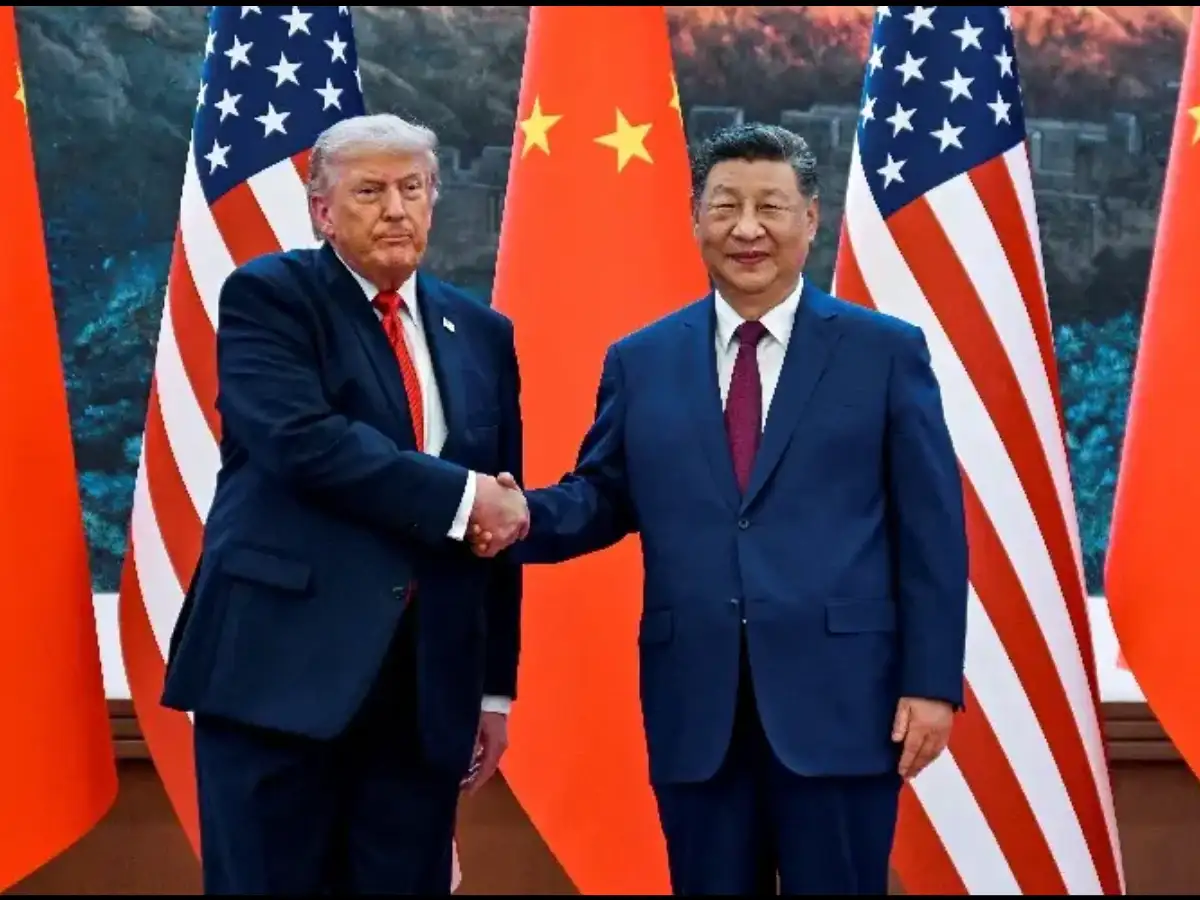
Beijing/Singapore: China has committed to buying at least $17 billion of U.S. agricultural products annually in addition to soybeans for three years, the White House said on Sunday, after a summit of the two countries' leaders in Beijing last week.
The world's largest importer of agricultural goods, China sharply reduced U.S. purchases after last year's trade war between the world's two biggest economies. But both have agreed to expand agricultural trade and tackle non-tariff barriers for beef and poultry, China's commerce ministry said on Saturday.
Also Read: China to purchase $17 billion worth of US agricultural products annually: White House
Here are details of their agricultural trade and how purchases could unfold:
WHAT THE DEAL MEANS
The $17-billion pledge, in addition to existing commitments on soybeans, would take China's total U.S. farm imports close to $28 billion to $30 billion a year, traders and analysts said, below a peak of $38 billion in 2022 but sharply above last year's figure of $8 billion and $24 billion in 2024.
To meet that target, Beijing would have to sharply increase purchases of wheat, feed grains, meat and non-food agricultural goods such as cotton and timber, traders and analysts said.
Beijing has fulfilled a commitment to buy 12 million tons of soybeans, taking some wheat and a large volume of sorghum, after a deal last October between U.S. President Donald Trump and Chinese counterpart Xi Jinping. As part of that deal, the White House said China would buy at least 25 million metric tons of soybeans a year.
REDIRECTING IMPORTS
Higher purchases of U.S. farm goods are likely to come at the expense of exports from rival suppliers such as Brazil, Australia and Canada.
"Achieving $17 billion annually excluding soybeans would likely require China to intentionally redirect purchasing away from existing suppliers toward the United States for political and strategic reasons rather than purely commercial reasons," said Cheang Kang Wei, vice president at StoneX in Singapore.
Brazil, China's dominant soybean supplier with 73.6% market share in 2025, has also emerged as its top supplier of corn. Last year, China approved imports of Brazilian distillers' dried grains (DDGS), a high-protein animal feed byproduct of ethanol manufacture.
Also Read: China has agreed to address US concerns over rare earth shortages, says White House
Australia, China's top wheat supplier in 2023 and leading sorghum supplier in 2025, could face reduced demand if U.S. wheat and sorghum gain ground. Barley imports may also come under pressure, while higher U.S. beef purchases could curb demand for Australia's premium beef in China.
Other major suppliers, including Canada and France for wheat, and Argentina for sorghum, could also see lower demand.
SOYBEANS
China is expected to start buying new-crop U.S. soybeans for shipments from October, with North American supplies priced competitively against Brazilian cargoes, traders said.
"Buying 25 million tons of U.S. soybeans should not be an issue as U.S. prices are pretty attractive now," said an Asia-based oilseed trader at an international trading company that runs soybean processing plants in China. "They can buy for crushing as well as stockpiling."
State-owned COFCO and Sinograin are expected to be the main buyers of U.S. soybeans until China lifts an additional tariff of 10%, traders said.
China has sharply reduced its reliance on the U.S. oilseed since Trump's first term, with U.S. soybeans making up about a fifth of imports in 2024, down from 41% in 2016.
CORN AND WHEAT
Chinese state traders are likely to remain the dominant buyers of U.S. corn and wheat as well, since they are largely allocated low-tariff import quotas.
China has import quotas of 9.64 million metric tons for wheat and 7.2 million tons for corn at a 1% tariff. Imports beyond the quota face prohibitively high duties of 65%.
It bought just $5 million worth of U.S. corn in 2025, down from $561.5 million a year earlier, with shipments stalling after June, Chinese customs data shows.
Wheat imports fell to near zero in 2025 from 1.9 million metric tons, worth $600 million, in 2024.
SORGHUM AND DDGS
China is expected to increase purchases of feed grains, including sorghum, after heavy rains damaged its northern crop in 2025.
Unlike wheat and corn, sorghum is not subject to quotas.
Since November, Beijing bought at least 2.5 million metric tons of U.S. sorghum to make up domestic corn shortages, but significant DDGS purchases would require it to lift anti-dumping and anti-subsidy tariffs dating from 2017.
MEAT
China is a key market for U.S. chicken feet, pork ears and offal - items for which there is little U.S. demand.
Imports of U.S. beef and poultry are likely to rise after Beijing said both sides would work to resolve issues.
China gave five-year registration extensions on Friday to 425 U.S. beef plants largely shut out after their registrations lapsed last year, and approved new five-year registrations for 77 additional U.S. facilities.
Beijing introduced a beef import quota system last December, with a 55% tariff on imports above the quota for major suppliers, including the United States, to protect domestic industry.
NON-FOOD AGRICULTURE PRODUCTS
China's imports may also include non-food products such as cotton and timber. Cotton imports dropped to $225.7 million last year from $1.85 billion in 2024.