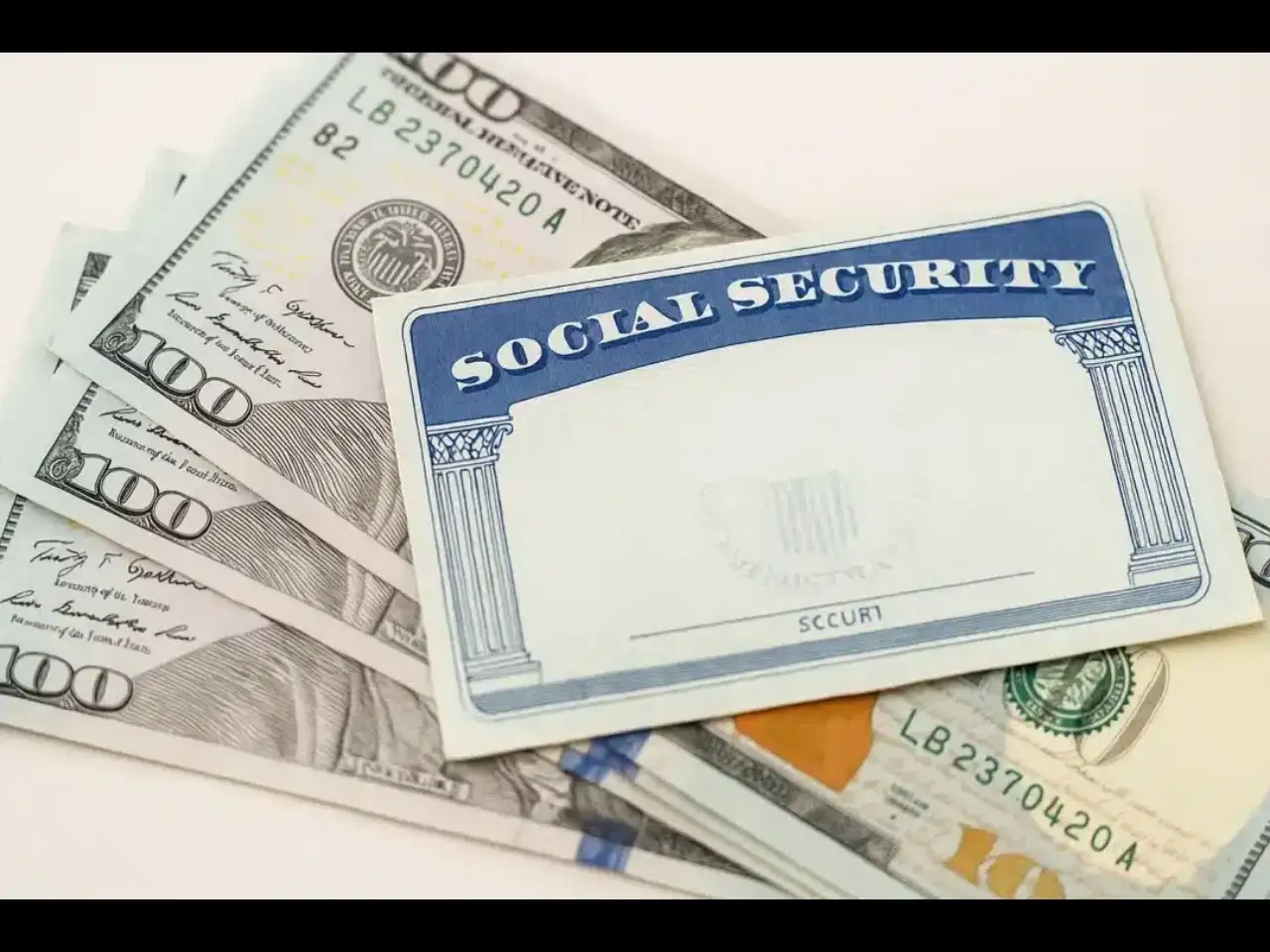
Millions of Americans who depend on Social Security benefits may face a painful financial reality within the next decade. A new analysis from the Committee for a Responsible Federal Budget (CRFB) warns that Social Security benefits could be reduced by an average of $500 per month if the program’s retirement trust fund becomes insolvent at the end of 2032. The warning comes as policymakers continue to debate how to address Social Security’s long-term funding gap. For the nearly 75 million Americans who receive retirement, disability, or survivor benefits, the prospect of a major reduction has renewed concerns about retirement security, rising living costs, and the future of one of the nation’s most important federal programs.
Are your Social Security benefits at risk of a $500 monthly cut in 2032? Why experts are raising concerns
The projected reduction in Social Security benefits is tied to the financial condition of the Old-Age and Survivors Insurance Trust Fund, which helps cover benefit obligations when payroll tax revenue alone is insufficient. Over the past several years, demographic changes have placed increasing pressure on the program. As more Baby Boomers retire and life expectancy remains relatively high, the number of beneficiaries has grown faster than the number of workers paying payroll taxes into the system. According to the CRFB analysis, if lawmakers do not enact reforms before the trust fund reaches insolvency in late 2032, Social Security would only be able to distribute benefits using incoming payroll tax revenue.
Current projections suggest that available revenue would cover only about 76% of scheduled payments. Under existing law, this would trigger an automatic reduction in Social Security benefits for all recipients. The CRFB estimates that the average beneficiary would lose approximately $500 per month, representing a cut of roughly 24%. While Social Security benefits would not disappear entirely, the reduction would significantly impact retirees, disabled workers, and surviving family members who rely on these payments for housing, healthcare, food, and other essential expenses.
Which states could see the largest Social Security benefit cuts?
The CRFB report found that the impact of Social Security benefits cuts would vary across states because average monthly payments differ from one region to another. Connecticut is projected to experience the largest average reduction, with beneficiaries potentially losing about $556 per month. New Jersey follows closely with an estimated $554 monthly reduction, while New Hampshire residents could see average cuts of approximately $553. Delaware, Maryland, Washington, Minnesota, Massachusetts, Michigan, and Utah also rank among the states expected to experience some of the largest reductions in Social Security benefits.
Nationally, the average cut remains close to $500 per month. While the exact amount varies, the report emphasizes that every state would be affected if the trust fund becomes insolvent. Higher-benefit states would generally see larger dollar reductions, while states with lower average benefits would still face meaningful losses. For many retirees already struggling with inflation, healthcare costs, and housing expenses, even a modest reduction in Social Security benefits could create significant financial hardship.
How many Americans depend on Social Security benefits?
The potential impact extends far beyond monthly payment amounts. Social Security benefits serve as a critical source of income for millions of households across the country. The CRFB analysis estimates that more than 15% of residents in 47 states currently receive Social Security benefits. In several states, nearly one in five residents depends on the program in some form.
Maine has the highest proportion of residents receiving Social Security benefits, with nearly 23% of its population relying on the program. West Virginia, Vermont, Delaware, Montana, and New Hampshire also have particularly high shares of beneficiaries. These figures highlight how deeply Social Security benefits are woven into local economies and household finances. Any reduction would not only affect individual recipients but could also impact consumer spending, healthcare access, and economic stability in communities where retirees represent a significant portion of the population.
What are advocates saying about the Social Security crisis?
Advocates for older Americans argue that Congress must act quickly to prevent automatic cuts to Social Security benefits. Many policy experts believe that earlier action would provide lawmakers with a broader range of solutions and reduce the need for abrupt changes. Delaying reform could force policymakers to adopt more dramatic measures as the insolvency deadline approaches.
Shannon Benton, Executive Director of The Senior Citizens League, stressed that Social Security benefits remain an essential lifeline for millions of older Americans. She noted that beneficiaries depend on these earned benefits to pay for basic necessities including housing, food, prescription medications, and healthcare. Benton also warned that postponing action increases the likelihood of sudden benefit reductions that many retirees simply could not absorb financially.