The Centers for Medicare & Medicaid Services completely rewired Remote Therapeutic Monitoring for physical therapists and healthcare systems. The biggest news is that CMS finalized lower data collection and management thresholds to bridge real-world clinical gaps for shorter duration monitoring. Historically, the rigid 16-day monitoring requirement caused widespread billing friction because many acute musculoskeletal episodes naturally resolve or alter trajectory before that window closes.
The introduction of newly established, shorter-window RTM codes under the sometimes therapy umbrella completely changes how outpatient physical therapy clinics operate. Instead of treating data collection as an all-or-nothing administrative gamble, providers can now capture legitimate reimbursement for truncated, high-impact monitoring periods.
This policy pivot recognizes that clinical data has immense therapeutic value even if it is collected over a tighter seven to ten-day window. For musculoskeletal care, this means tracking early-stage home exercise compliance and range-of-motion milestones when the risk of patient dropout is highest.
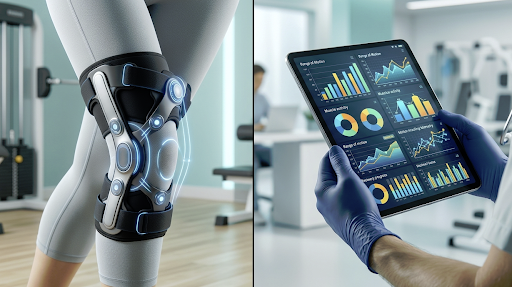
Image Source: Google Gemini
Who Can Bill and How the Rates Shape Up
Navigating who can actually submit claims for these updated codes requires a look at both individual credentials and the underlying math. Physical therapists, occupational therapists, and speech-language pathologists remain the primary eligible practitioners for therapy-specific RTM codes. However, the financial mechanics require careful calculation due to recent statutory shifts in conversion factors that have subtly compressed baseline values across the entire Medicare Part B spectrum.
To offset these baseline shifts, optimization relies on effectively capturing both the device supply and the management time codes. The 2026 national average reimbursement rates reward organizations that maintain rigorous, compliant documentation workflows.
Clinical teams must remember that billing treatment management codes require at least one interactive communication session with the patient during the calendar month. This interactive call cannot be an automated text or a generic email notification. It must be a live, documented conversation in which a clinician reviews the transmitted data and adjusts the care plan accordingly.
Outpatient Clinics Versus Integrated Health Systems
The practical impact of these 2026 updates looks radically different depending on the size and structure of your healthcare organization. For independent outpatient physical therapy clinics, the updated rules are an absolute lifeline for cash flow and patient retention.
These smaller clinics regularly struggle with high cancellation rates and non-compliance with home exercises, making a reliable patient engagement software subscription essential for keeping individuals engaged with their recovery goals between face-to-face appointments. Integrated health systems view these RTM shifts through the lens of population health and enterprise-wide risk management. Because health systems often operate under value-based care contracts or bundled payment models, they utilize RTM data to prevent expensive downstream interventions.
There are 1500 orthopedic patient readmissions every day across domestic hospital networks that could be avoided with better immediate post-discharge monitoring. When a health system hooks RTM data directly into its primary electronic health record, they create an automated safety net.
If a total joint replacement patient shows a sudden drop in joint mobility or a sharp spike in reported pain during home sessions, the system flags this to the care team immediately. This level of integration transforms subjective home recovery into objective, actionable data points that prevent emergency room visits.
Technical Capabilities and Compliance Guardrails
Purchasing or upgrading your digital health infrastructure in 2026 requires strict adherence to evolving federal standards. Buyers cannot afford to invest in software that treats data logging as a manual entry process for the patient. To satisfy Medicare Part B claim-formatting and FDA device-transmission criteria, the software must automatically transmit therapeutic data directly from the device to the clinician.
The underlying software platform must fulfill several specific architectural capabilities to remain compliant:
- Devices must automatically log non-cognitive data without requiring manual patient transcription
- Portals must feature built-in timers that track cumulative clinical review time down to the exact second
- Dashboards must generate audit-ready reports that separate data transmission days from clinical interactive minutes
Security protocols have also intensified alongside these technical billing updates. End-to-end encryption is no longer an optional luxury; it is the standard benchmark for protecting patient privacy in virtual care management programs. Platforms must ensure that every single stream of therapeutic data is fully segmented and heavily protected against unauthorized access.
Building a Sustainable Virtual Care Workflow
Successfully implementing these 2026 updates requires a complete rejection of old, clunky documentation habits. Clinicians cannot wait until the final day of the month to stitch together their interactive communication logs and data transmission reports. Successful clinics build RTM review directly into the daily clinical schedule, treating it with the same operational respect as an in-person manual therapy session.
If you want to stay up to speed with a wide range of current affairs and talking points across industries of all kinds, stay right here on our site and check out more of our posts.