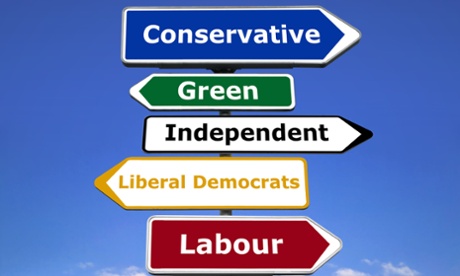
With just over a week to go until the General Election, we’ve revisited our live Q&A with civil society representatives from the political parties. Back in March we asked you to put your questions to representatives from the Liberal Democrats, the Green Party, and Labour. This is what they had to say about their priorities for the third sector.
The Panel*
Darren Hall, parliamentary candidate, the Green Party
Lisa Nandy, shadow civil society minister, Labour
Stephen Williams, communities minister, the Liberal Democrats
*The Guardian Voluntary Sector Network approached the Conservatives and Ukip, but no suitable candidate was available to take part.
What would you do about the Charity Commission and regulation, while encouraging trust in the sector?
Nandy: Following some very critical reports there is evidence the Charity Commission is improving, which is welcome. Recent scandals show how important it is to the whole sector that the commission is proactive in its approach to all forms of abuse. It’s important the commission retains its independence, but there is a question for government about whether it has sufficient funding.
What would your party do about the involvement of the voluntary sector in delivering public services?
Williams: The voluntary sector and social enterprises can play an important role in delivering more holistic public services – for example, the health champions working in Polar as part of the Our Place programme. They are community volunteers who encourage people to give up smoking and tackle other public health problems. What I find infuriating is that anything that is non-state is immediately criticised by other parties as privatisation.
How would you enable local communities to thrive, given the scale of potential cuts after the election?
Hall: If we put money in at the bottom instead of waiting for it to trickle down, more people can participate in their communities, instead of being labeled as a drain on society.
Williams: As communities minister I have championed the rollout of Localism Act community rights to all parts of England and to all social groups. The Localism Alliance has been a great ally. The new support grants specifically favour deprived areas, for instance £14,000 for a neighbourhood plan, as opposed to the £8k base grant for all parishes/designated areas.
Would you repeal the Lobbying Act?
Nandy: Charities don’t just have a right, but a duty, to speak up on behalf of the people they represent. It’s not always comfortable and we challenge criticism when we don’t agree, but it’s a voice we should hear, which is why we’ll repeal the Lobbying Act, extend the voting franchise to 16- and 17-year-olds, repeal judicial review restrictions and get rid of gagging clauses in public contracts.
Hall: I look forward to helping repeal the Lobby Act – it is in our manifesto, too. Government is entirely hypocritical when so much corporate lobbying is in evidence.
How would you seek to champion the role of the sector across government?
Nandy: You need a commitment to the voluntary sector across government, or the Cabinet Office is left isolated and unable to effect change. I’ve been working across shadow government, for example with colleaguessuch as Andy Burnham, to develop plans for health and social care which give the public and voluntary sectors preferred provider status in new devolved arrangements.
Williams: The lack of “joined up government”, whether local or national, is a frustration that I have tried to tackle. An example of how it can work well is tenant groups. These can lead to better-managed housing estates, better repairs, rent collection, welfare advice, and much else. If they work with social enterprises or train apprentices to provide services, such as repairs, then you can get better value for money, reduced anti-social behaviour and more local jobs.
What about keeping volunteering voluntary?
Hall: In my own organisation we have stopped unpaid internships, but have to rely on volunteers to get by. For many this would be an ideal route to full employment if there were a better understanding of its value. I have had great feedback from previous volunteers about how it helped them to get jobs in the long run, but others have left us before completing their project because of the current rules.
Nandy: Genuine volunteering, where time is given freely, is different to taking part in a conditional work placement as part of claiming benefits, and we should recognise the distinction. Conditional work placements can be helpful but only if the focus is on building skills and confidence to help people get into and stay in work.
For more news, opinions and ideas about the voluntary sector, join our community – it’s free!