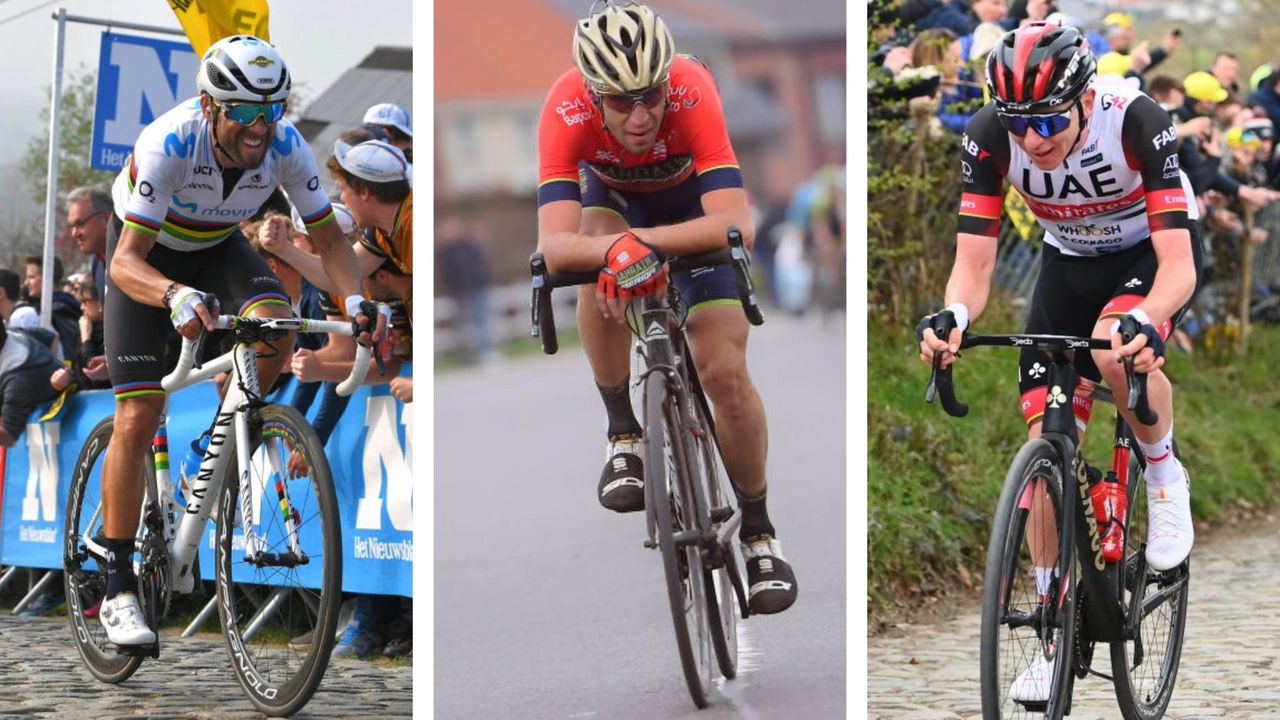
When Remco Evenepoel hits the cobbles of the Tour of Flanders on Sunday, he will be making the same route behind enemy lines trodden by a number of high-profile riders in recent years.
In an age of increasing all-rounderism, there is less of a shock factor at seeing riders stray from their usual lanes, and that's especially so in the case of Evenepoel, who is a Grand Tour champion but has achieved most of his success through one-day exploits.
The thing is, they've always been in much hillier, much less chaotic, and much less bumpy races. The cobbled Classics still remain a unique beast, and Evenepoel's secretive addition to the start list will have fans - especially in his native Belgium - licking their lips.
But what about the other riders who have scaled the heights of the sport, and then decided to test themselves on the cobbles of Flanders' Finest?
The pre-race favourite, Tadej Pogačar, is a prime example. Alejandro Valverde and Vincenzo Nibali are two more Grand Tour winners who made solitary but memorable appearances at De Ronde. And Julian Alaphilippe and Bob Jungels are two more all-rounders whose lightning first forays onto the cobbles could inspire Evenepoel.
Here, we take a look back at their Tour of Flanders debuts.
Tadej Pogačar makes his mistakes
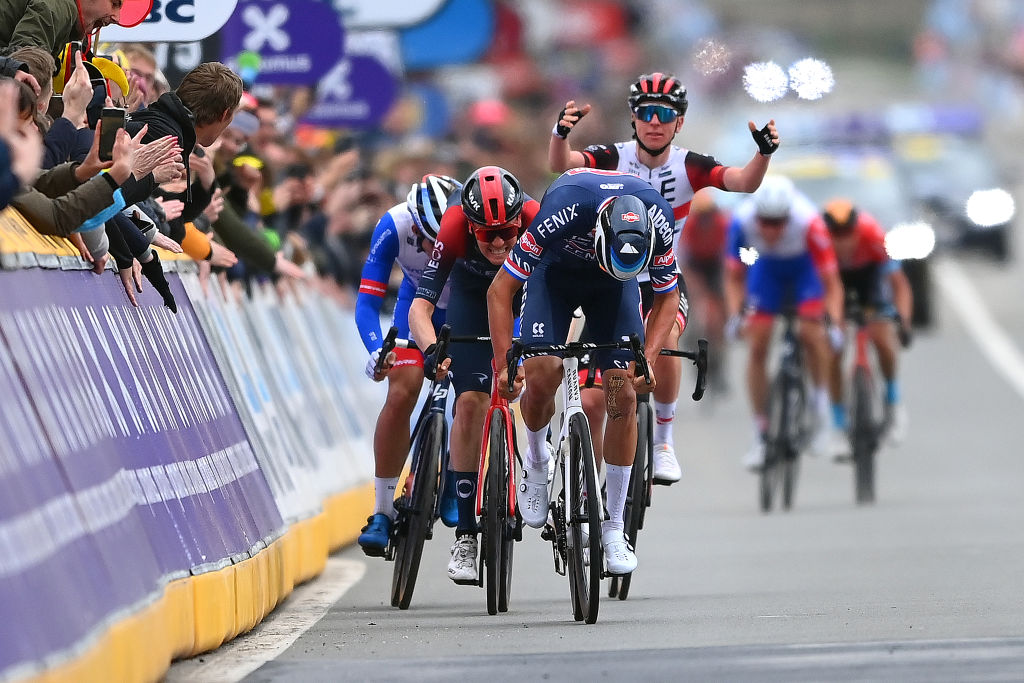
Where else to start other than with Tadej Pogačar, the heavy favourite to lift the Tour of Flanders trophy for a third time on Sunday afternoon?
Pogačar made his Flanders debut in 2022, and he arguably should have won it, but more on that shortly. Pogačar was at this point 23 years old and already a double Tour de France winner and a double Monument winner, taking his first titles at Liège and Lombardia the previous year. His visit to the cobbles of Flanders, which included a prelude at Dwars door Vlaanderen was spoken about in the context of the cobbles that would be on the menu at the 2022 Tour de France, but it soon became clear this was a rider who wanted to win every type of Classic conceivable.
His ride at Dwars was a bit of a wake-up call. Out of position when the decisive move formed on Berg Ten Houte with 70km remaining, he missed the chance to play any real role in the race, feeding that old Flandrien line of needing to learn the roads and the rhythms on Flanders. On the big day itself, he made no such mistake, grabbing the race by the scruff of the neck on the second ascent of the Oude Kwaremont and then dropping everyone but Mathieu van der Poel on the final ascent. He was always likely to come off second best in a sprint with the Dutchman, but he somehow contrived to finish fourth, as he slowed the pace to such an extent that two chasers swooped up and over in the dying metres. It was scant reward for the extraordinary way he had dictated the race on debut, especially against a rider of the cobbled calibre of Van der Poel.
Pogačar has become a master iron-outer of mistakes, and he returned 12 months later to ride in very much the same style, but this time making sure he was alone over the final Kwaremont. After a 2024 hiatus to focus on the Giro d’Italia, that same blueprint was repeated last year with his second Ronde title.
What’s interesting to note is that even Pogačar – on course to become the greatest cyclist of all time – needed some time, and some mistakes. In that respect it’s interesting that Evenepoel, despite saying he has been targeting this race since December, opted for no cobbled race in preparation for this.
Julian Alaphilippe DNFs but delivers an unforgettable debut
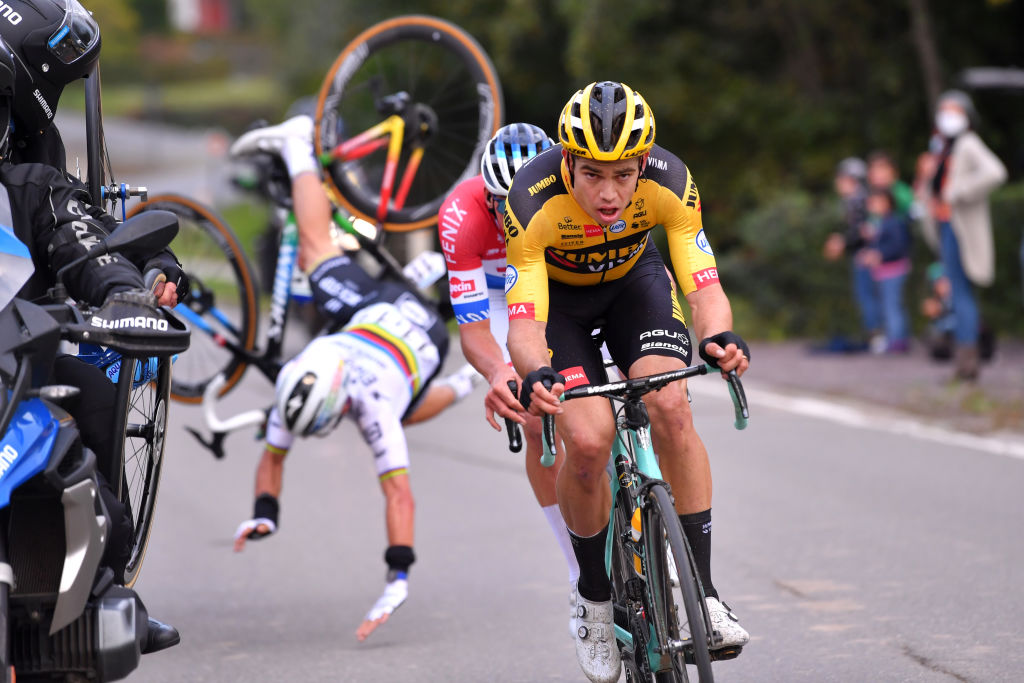
If Evenepoel’s looking for inspiration, he could do worse than to have a word with his former teammate, and fellow former world champion Julian Alaphilippe.
The Frenchman was a regular to the podium of the hillier Classics in the early years of his career, but when he won both Strade Bianche and Milan-San Remo in 2019, his horizons and his appetite broadened significantly. The Covid-19 pandemic would throw the 2020 season into disarray but when the dust settled, Flanders fell three weeks after the World Championships in Imola, where Alaphilippe danced away to the first of his back-to-back rainbow jerseys.
He’d won a stage of the Tour, won Worlds, threw away Liège, and won Brabantse Pijl; he was in flying form and he flew into the finale alongside the two pre-race favourites, the cobble specialists Mathieu van der Poel and Wout van Aert. We all remember what happened next. Bang. A brush with a motorbike, a somersault, and a gaping sense of ‘what might have been’. The sprint between Van der Poel and Van Aert, old cyclocross rivals, was dramatic enough, but we were robbed of what could have been one of the all-time great finales.
Alaphilippe was no passenger. Indeed, he had attacked on the Koppenberg and then gone clear on the Steenbeekdries, essentially creating that winning move. With the Oude Kwaremont and Paterberg still to come, he had every chance of winning the race, not least with the opportunity to play the frosty rivals off against each other.
Alaphilippe didn’t have the same impact the following year, and his career deteriorated after that, but that one DNF in 2020 remains one of the most memorable Tour of Flanders debuts in history.
Bob Jungels shows the breadth of his talents
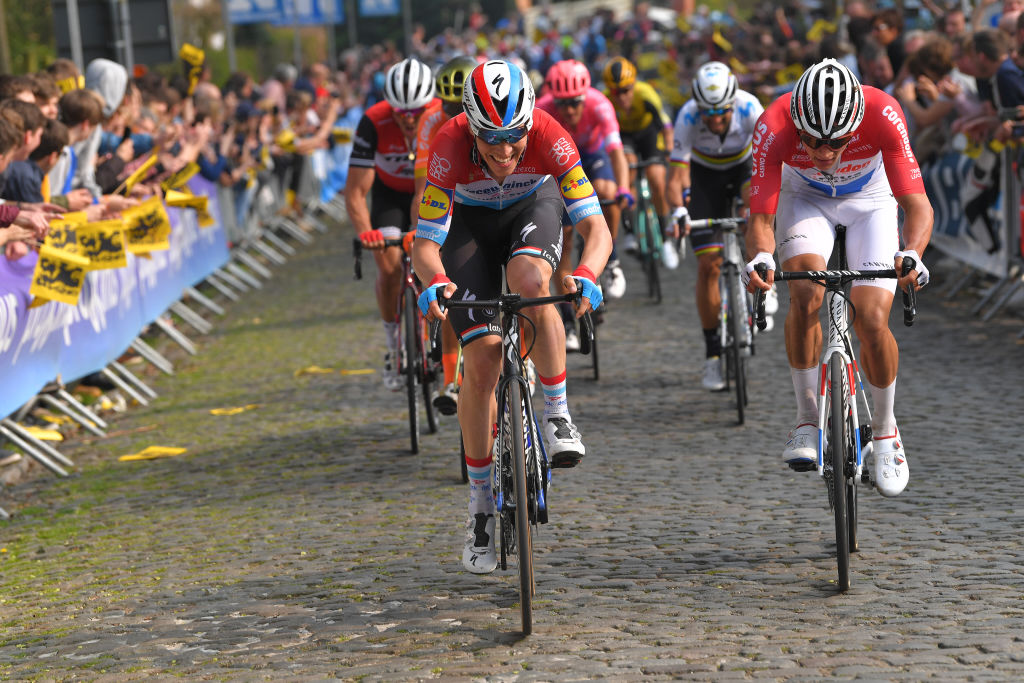
While we’re on the subject of QuickStep Ardennes leaders turned cobble hunters, Bob Jungels finished 16th in his first Tour of Flanders in 2019. That might not seem like the most notable result on paper but the Luxembourg rider’s presence in the main group of 16 Classics specialists behind solo winner Alberto Bettiol was still a highly creditable result.
And yet, there’s a sense that it could have been so much more. In fact, Jungels’ Flanders debut was somewhat underwhelming in the context of his Spring campaign up to that point.
Zoom out, and Jungels was a 26-year-old Swiss Army Knife of a rider. He was a stage racer, with two Giro d’Italia top 10s, he was an hilly Classics specialist, with a Liège-Bastogne-Liège victory, he was a time trial talent with a TTT world title, and he was even a lead-out man, part of trains powering the likes of Marcel Kittel.
When he rocked up to his first cobbled Classic at Kuurne-Brussel-Kuurne in early 2019, and soloed off with the victory, it turned out he could do the rough and tumble of northern Belgium just as well as anything else. In fact, when he proceeded to place fifth at E3 (behind a winning teammate) and third at Dwars, he almost looked like QuickStep’s best hope for the Ronde. This was, remember, back when QuickStep still ruled the Flemish spring.
Kasper Asgreen was also in the squad that day and if you’re looking for an even better debut then look no further than the Dane’s runner-up finish, but in terms of rider profile it’s Jungels who will give Evenepoel hope he can hit the cobbles running.
Alejandro Valverde bags a top 10
I’ve never seen someone look so out of place as Alejandro Valverde did in Waregem after the 2018 Dwars Door Vlaanderen. The Spaniard was already a serial Belgian Classics winner with four titles at Liège and five at La Flèche Wallonne, but the contrast between Flanders and Wallonia is stark, and he looked shell-shocked after a day of torrential rain and full-gas racing. I'm amazed he agreed to get off the bus and speak to us.
Not that he fared badly. In fact, he made the first big selection, pinged in some attacks, and came home in 11th place in the second group. Still, it was enough to put him off riding Flanders itself. At that point, he was purportedly only here to gain cobbles experience ahead of the pavé stage of the Tour de France, but Belgium rippled with rumours he’d grace De Ronde with his presence, though the grim weather looked set to continue and apparently played its part in his decision to swerve.
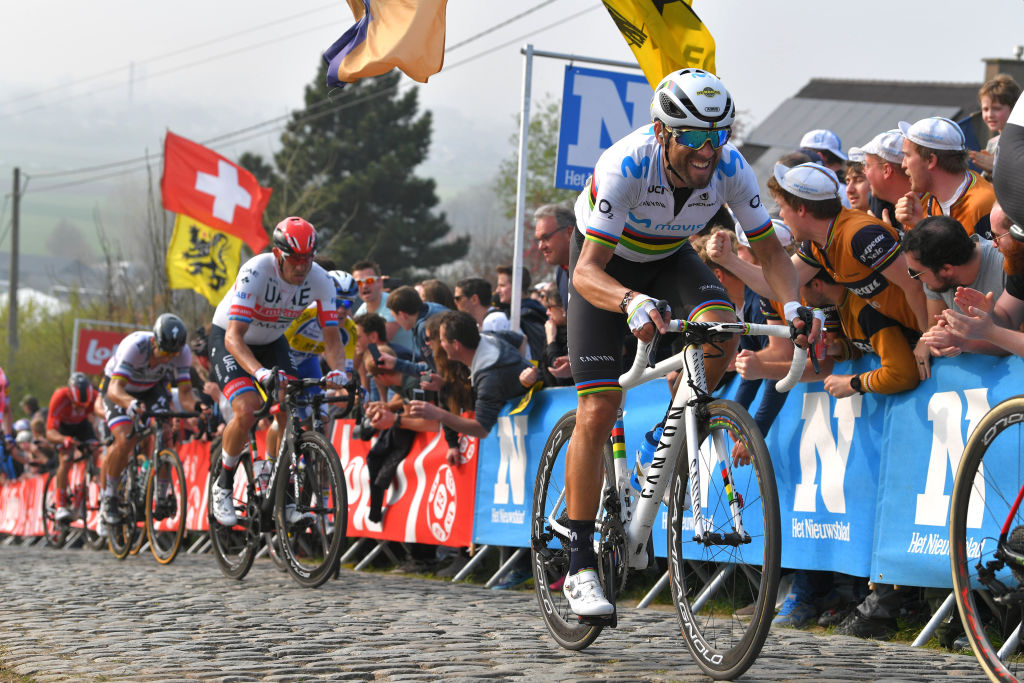
Valverde did, however, return the following Spring to race the Tour of Flanders, wearing the world champion’s jersey. It’s scarcely believable now, given the youngsters who dominate the sport, but he was 38 years old. Anyway, Valverde rode to 8th place on the day, in that same edition won by Bettiol mentioned above. Valverde even went clear in a chase group over the final Paterberg with cobbles hitters Mathieu van der Poel, Greg Van Avermaet, and Oliver Naesen. That move was shut down and Valverde sprinted to 8th from a larger group, but it was nevertheless an eye-catching debut.
You could tell how Valverde grew in confidence through the race. Positioning was an issue earlier on but as the field whittled down, he was up to the fore and racing on the front foot.
Ahead of the race, Valverde had said: “On Sunday I'll either tell you I came here too late, or that it's not a race for me.” It turned out to be more of the latter – he’d never return to the Ronde.
Vincenzo Nibali creates the winning move
Another Grand Tour winner and hilly Classics rider hitting the cobbles late in his career, Vincenzo Nibali could only manage 24th place in his debut Ronde but still left the impression that he should have paid more visits to Flanders earlier in his career.
Nibali was 33, and already winner of all three Grand Tours, when he rocked up in Antwerp for the 2018 Tour of Flanders. As with Valverde, there was the pretence of warming up for the cobbles of the 2018 Tour but there was always more to it than that. Just a month prior he’d won Milan-San Remo in typically deft fashion and that victory in a Monument not overtly suited to his characteristics surely spurred him on to try Flanders, a race he had never managed to find time for given his Grand Tour commitments. What's more, given the way he'd dominated the Roubaix cobbles en route to his 2014 Tour de France win, did anyone think he really needed practice?
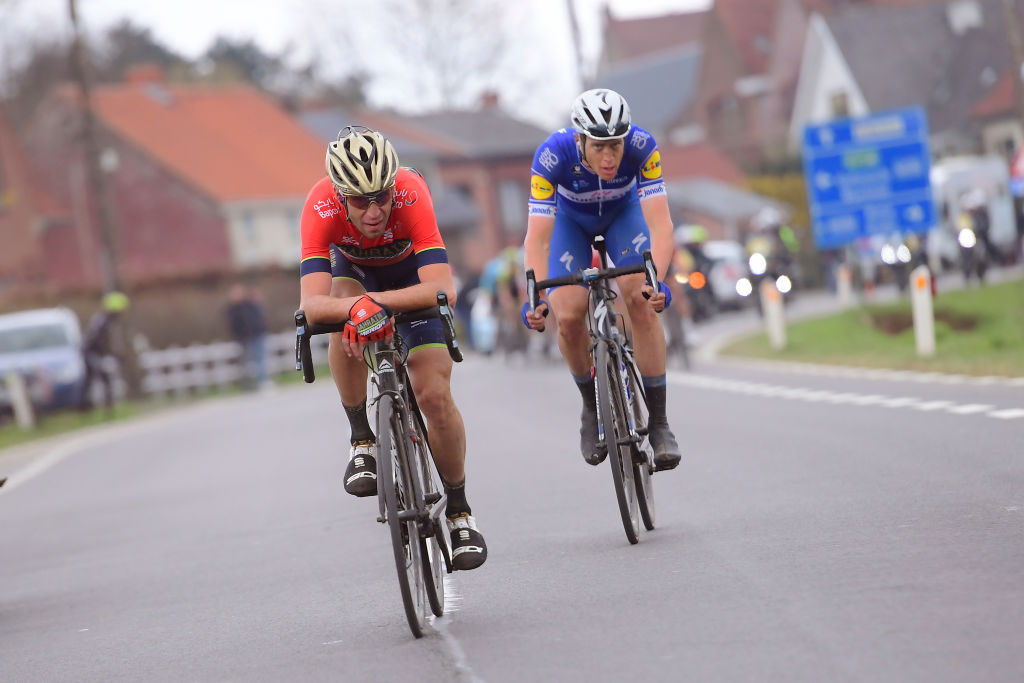
Nibali was 24th on the line in Oudenaarde, but had a much greater impact than that result would suggest. He not only rolled with the punches and made the early selections, but issued some punches of his own. He even effectively created the winning move. Attacking between the Kruisberg and the Hotond with just over 20km to go, Nibali was soon followed and joined by the eventual winner, Niki Terpstra. It didn’t last long. Terpstra, so strong that Spring, flexed his muscles on his home turf and unceremoniously dropped Nibali on the tarmac drag of the Hotond before blitzing past the breakaway riders to win alone.
Nibali faded on the Kwaremont and Paterberg but left with memories that wouldn’t fade so easily.
“It was a very difficult race but also a very beautiful one," he said. "Those are the two adjectives I'd use to describe it."
Get unlimited access to our unrivalled 2026 Spring Classics coverage with a Cyclingnews subscription. We'll bring you breaking news, reports, and analysis from some of the biggest races on the calendar, including Milan-San Remo, Paris-Roubaix and the Tour of Flanders. Find out more.