No women and no chit-chat were the golden rules behind setting up the Culture Club – a place where men in their 60s and 70s can meet and talk about the arts and the history that matter to them.
In another part of the country men aged over 50 get together each week to take part in Walking Football – where the rules are similar to the traditional game but running is banned.
These exclusively male-only clubs are on the rise as the UK starts to face up to the challenges posed by an increasing population of older men, growing numbers of whom admit to being lonely.
There are 911,000 men aged over 65 living alone in England and Wales and that figure is predicted to soar by 65% to 1.5 million by 2030 as men continue to live longer, according to research published last month. In England 4.2 million men aged over 50 admitted they felt lonely sometimes and more than 710,000 classified their loneliness as “high”, according to the results of the study by the International Longevity Centre – UK (ILC-UK) and the charity Independent Age. Older men reported higher levels of isolation than older women because as they grow older and especially after they become widowed, they have “significantly” less contact with family and friends.
The research is important because it highlights a hidden need, according to Andy Kaye, head of policy and campaigns at Independent Age: “This is a group which hasn’t been recognised as much as older women, because there has been this assumption that when you talk about the ageing population then you are typically talking about women. The gender gap is closing in terms of longevity so it’s important to look at more specific services for meeting the demands of men.”
Voluntary organisations like the Older Men’s Network, which is behind Walking Football – with similar versions for cricket and touch rugby in the pipeline – have been at the vanguard of developing activities for lonely older men. The organisation’s national manager Roger Jones says: “I think it’s absolutely vital to have gender-specific activities. You need to be aware that men don’t have great big social networks around them, they aren’t great at sharing their emotions or making new friends.”
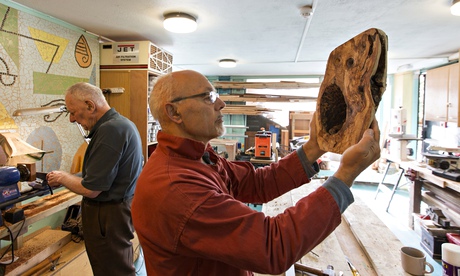
It is a view shared by Mike Jenn from Men’s Sheds – a UK network of DIY clubs for men which has grown in three years from just six to more than 157 which are either open or in the process of opening. He says: “I think that for some people it’s important that it’s just men – some guys definitely don’t want to go to the community centre because it’s 95% women and men are different. We want to talk about different things and we want to get our hands dirty.”
Jenn reckons it can take as little as £2,000 a year to run a shed, which makes it an affordable option. Age UK in Exeter, which established the Culture Club, says the model could be copied elsewhere in partnership with arts organisations. Its director Martyn Rogers says: “Arts centres and museums are keen from their own perspective to demonstrate their worth to the community, so this would provide a community response to a common problem.”
The Independent Age and ILC-UK findings come a year after the health secretary, Jeremy Hunt, described loneliness in England as a “national shame”. Since then the government has funded a “digital tool kit” developed by the Campaign to End Loneliness - a membership organisation devoted to ending loneliness. The toolkit is designed to help local councils and other organisations to map local levels of loneliness and isolation and develop services. The government has also introduced a “social isolation” indicator in the Adult Social Care Outcomes Framework, which measures the outcomes of adults receiving statutory social care.
But Anna Goodman, policy and research officer at the campaign which has seen its membership grow from 400 to 660 in the last year, says that is not enough. “The one thing we have been asking the government to do for the last two years is to develop a national measure of loneliness,” she says. “Better data would help local authorities and charities identify the level of loneliness they have and it’s a gap which need to be filled.”
Brian Beach, co-author of the joint Independent Age and ILC-UK report agrees that the government is “continuing to fall short” in providing solutions to tackling the growing number of lonely and isolated older men. But he is pragmatic: “There isn’t some broad national intervention [that would solve the problem] because the issue is going to be different depending on people’s individual circumstances. The government does though have a duty to create guidelines for local authorities for greater action and insuring that the money is available. But I don’t think that there is a broad simple approach to this that can be developed across the whole country.”
Content on this page is paid for and produced to a brief agreed with Independent Age, one of the sponsors of the Guardian Ageing Population series.