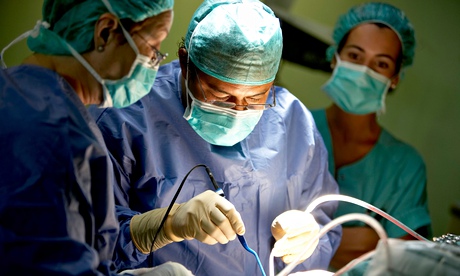
My work – paediatric cardiac surgery – is expensive, specialised, labour-intensive and complex, but in the UK we produce great results. Austerity has put the NHS under immense financial pressure. Despite a promised £8bn, the NHS still has to find £22bn of “efficiencies”. We are forced to reduce costs, but want to maintain high quality.
Working out per patient costs for any particular procedure is notoriously difficult, but we know that there is wide international variation, for apparently similar outcomes. A colleague in Bangalore, India, Devi Shetty, once asked why we were spending $50,000 (£32,672) on a case that he could do for less than $3,000. This question goes to the central issue for the NHS – how can we do what we do for less?
India has no national healthcare system. Shetty created and leads the Narayana Health group, which has built specialist hospitals on green field sites. All Shetty’s buildings are designed for high volumes of patients. Routine surgery starts earlier in the day, and finishes later than in the UK, and they operate on elective cases six days a week per operating room. Surgical and anaesthetic teams work more hours than their British colleagues are contracted to do, and they are actually operating most of that time.
Patients are “delivered” to the operating room, rather than sent for by the anaesthetist, and the team is expected to be there, saving hours each day. Enough staff are employed to overlap cases so that the next patient is anaesthetised and ready as the first is sent to intensive care. Everything is aimed at increasing the flow of patients.
Shetty’s team can do more operations per year in one hospital (more than 5,000) than we can do in 10 centres in England. Shetty has negotiated significant reductions in the cost of almost everything he buys, from sutures to drugs and gowns to surgical equipment. All doctors and administrators receive daily profit and loss calculations direct to their mobile, describing their own and the hospital’s performance. This engages all staff in the finances of the hospital, motivates them to keep costs low and enables rapid responses. Shetty insists on standard operating procedures. There is an electronic patient record system, and video is used for remote consultations and outpatient assessment. As many patients are illiterate, they have largely abandoned writing letters, instead using WhatsApp to communicate with patients, families and referrers. This saves on typing costs, provides more detailed information and allows patients to store data on their phone.
Could we apply these cost-saving methods here? Shetty’s main efficiencies come from economies of scale and low-cost buildings. It seems unlikely we do this in England. People don’t seem to accept the argument that it is safe to travel for excellent care, or that centralisation is a good thing. Yet, NHS England is giving us less now. We must make our processes more efficient, work more of the day in overlapping shifts, do elective work on more days of the week, and strive to eliminate waste and delay. This requires standardisation, and a link between activity and finance information, made available in real time. Clinicians can alter things and they need information and the freedom to make local changes.
We could use our assets more effectively. Most operating rooms are idle in the evenings and weekends, as are MRI machines in many places. Operations start later than in the US and India, and there are often hold-ups in intensive care and wards because of lack of staffed beds and difficulty sending patients back to local hospitals that are full.
But staff contracts mean that extending work into weekends or evenings actually increases costs rather than reducing them. People should not be working more hours per week, but they should be distributed more evenly. With seven-day working it should be possible over time to have higher-grade people present, reducing error and the need for people to be on call.
I think we should value efficiency as much as we value effectiveness, but hospitals must have the tools and skills to deliver it. Too often this has been attempted by hiring external consultants rather than building well-established business practices into the core training of both managers and clinicians.
There are lessons to be learned from Shetty’s group and we have to learn them fast, or go broke. Efficiency is just another dimension of quality; good medicine can be done more cheaply. We deliver excellent surgical results and intend to do better still, but we need to start reporting (publicly) cost and value in the same way so that we can appeal to the competitive instincts of staff to do it better for less.
• This is an edited extract from Martin Elliott’s ongoing series of Gresham College lectures at the Museum of London. The full version is at http://bit.ly/1FpHJOO. His next lecture is on Wednesday 14 Oct 2015, 6pm at the Museum of London