The Gashaka region is home to the most recently discovered subspecies of chimpanzees, who are threatened by hunting. The Primate Project, which studies chimp culture, had a huge selection of tools that were too precious to throw out, so they wanted to find a new use for them. I went and joined them Photograph: White Cube
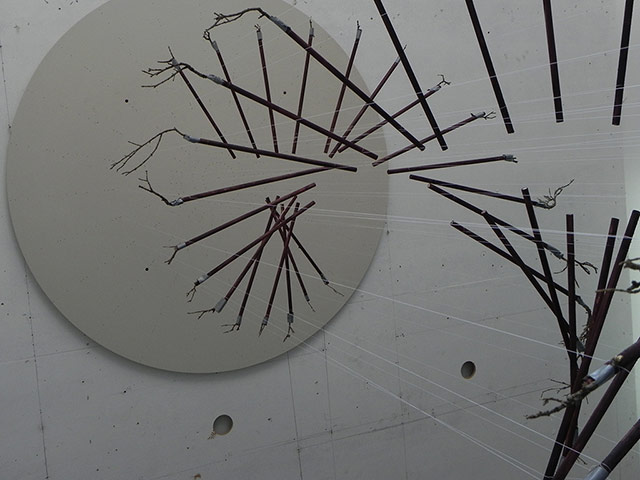
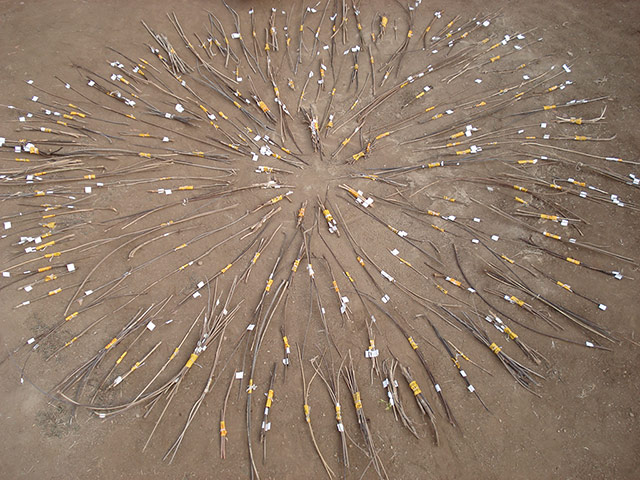
I took the chimp tools and arranged them in a DNA structure. Chimpanzees and humans share about 98% DNA. If extra-terrestrials came to earth and classified species, they would put us together
Photograph: © Damián Ortega/courtesy Freud Museum London
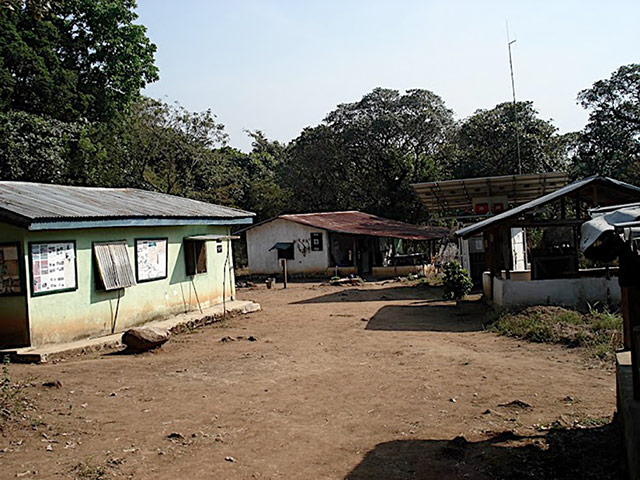
As an artist I never thought I’d be involved in these kinds of experiments. It was a total reversal of my point of view. I lived in very basic conditions in the middle of nowhere, woke up at 5am every day and walked around with the scientists, quietly looking and listening to chimps Photograph: White Cube
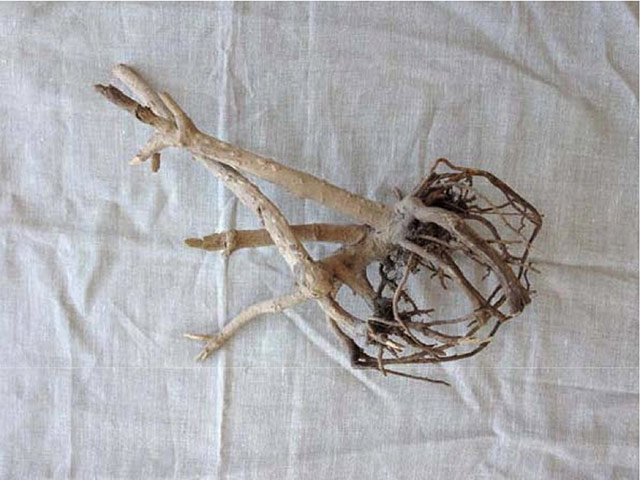
This is from a tree chimps use to make tools. They flatten the tips of twigs and branches to make brushes, just like paintbrushes, but which are perfect for sweeping biting ants out of trees. If it’s honey they want, they sometimes hold two tools in their hands: the stronger one opens the hive, then they go for the honey with their brush
Photograph: © Damián Ortega/courtesy Freud Museum London
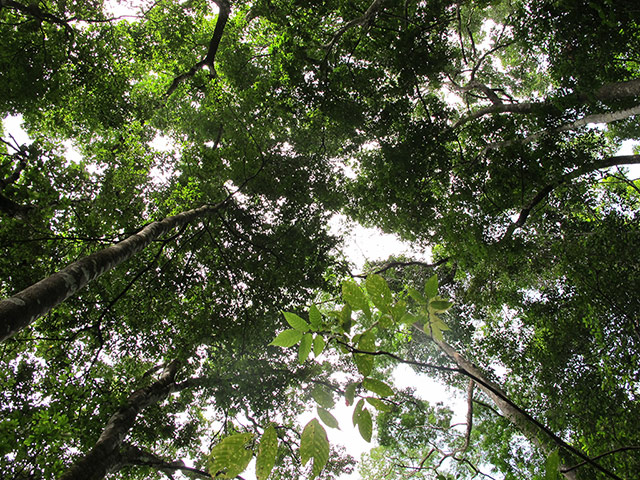
Chimp culture is so complex. They work in groups and have strict rules: some only eat ants, others only termites. We are so similar biologically – and they’re the only animals that make love while looking each other in the eye
Photograph: © Damián Ortega/courtesy Freud Museum London
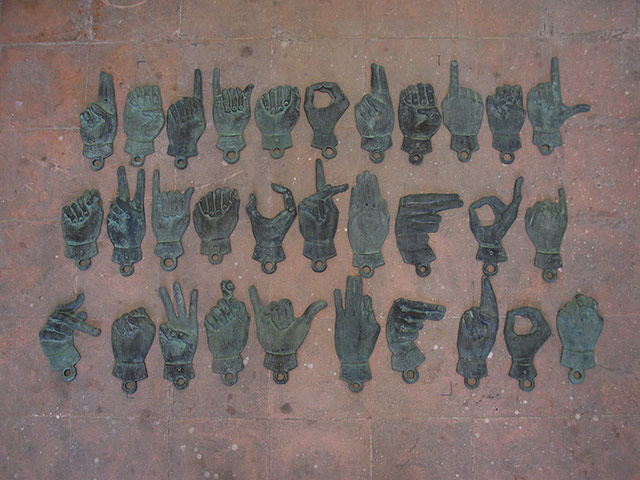
Chimps' main tools are sticks, but language is one of the most important tools for humans. Using hands, gesture and body language, we get a very precise language. In the jungle, the scientists talk with their hands. Every day, they spend hours just watching the different species very quietly. There’s a totally different way of communicating
Photograph: © Damián Ortega/courtesy Freud Museum London
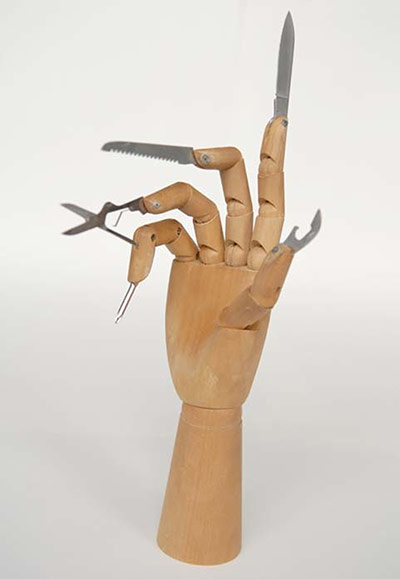
I made this about how important the hand is, how it can be used to transform nature
Photograph: © Damián Ortega/courtesy Freud Museum London
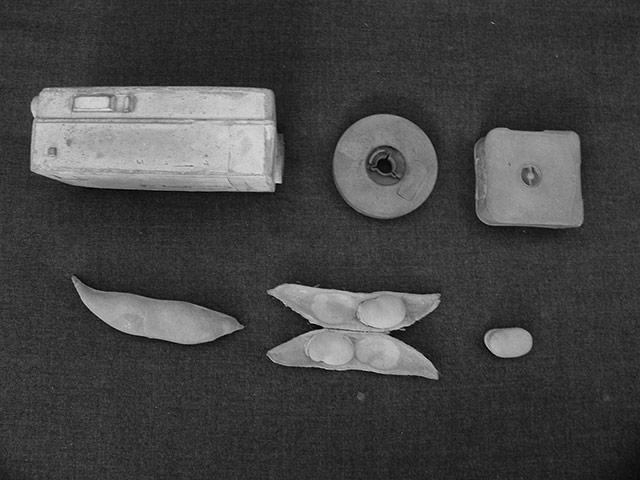
These cement sculptures are about how chimps talk in sign language. I researched Roger Fouts's experiments in teaching chimps sign language in the 1960s. At times, they use language poetically: when a chimp tries to describe a person and says 'she’s like rain with fruits.' With these objects, I showed how an object becomes a metaphorical thing: the pod, envelope and CD case are all alike, because you open them up and find something else inside Photograph: White Cube
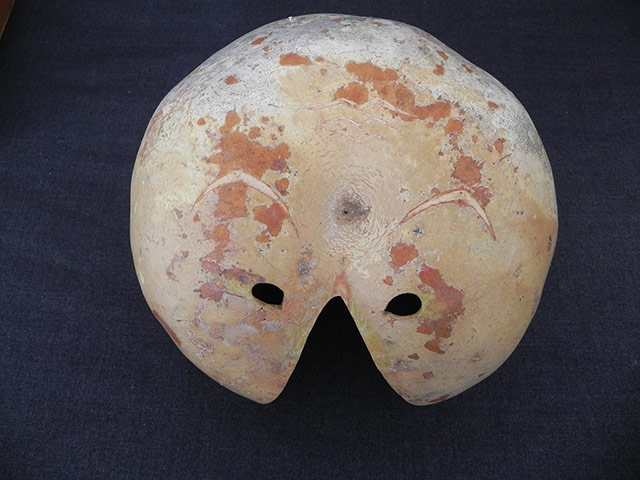
This mask is made from a big seed like a coconut, that's found in trees in Mexico. Going to Nigeria made me think about how humans can become divorced from nature. We wrote the history of evolution but we put ourselves in a different group from animals, just based on the brain
Photograph: © Damián Ortega/courtesy Freud Museum London