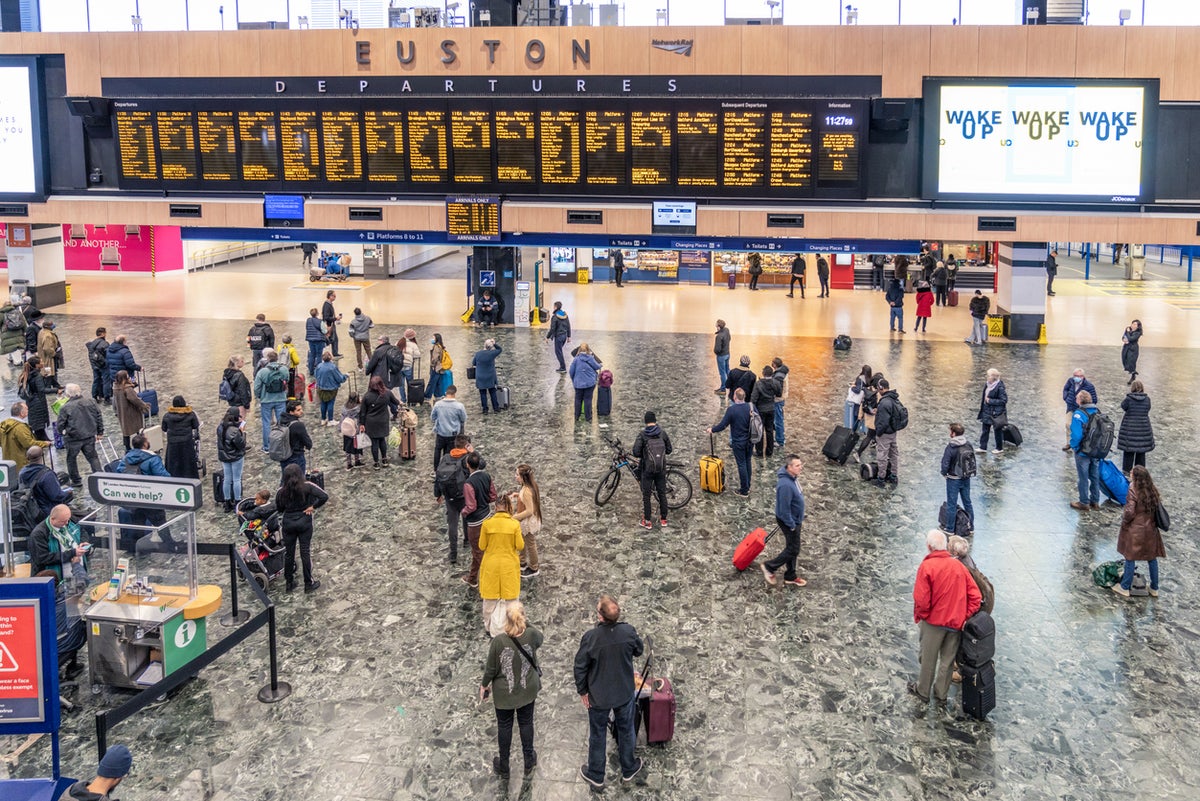
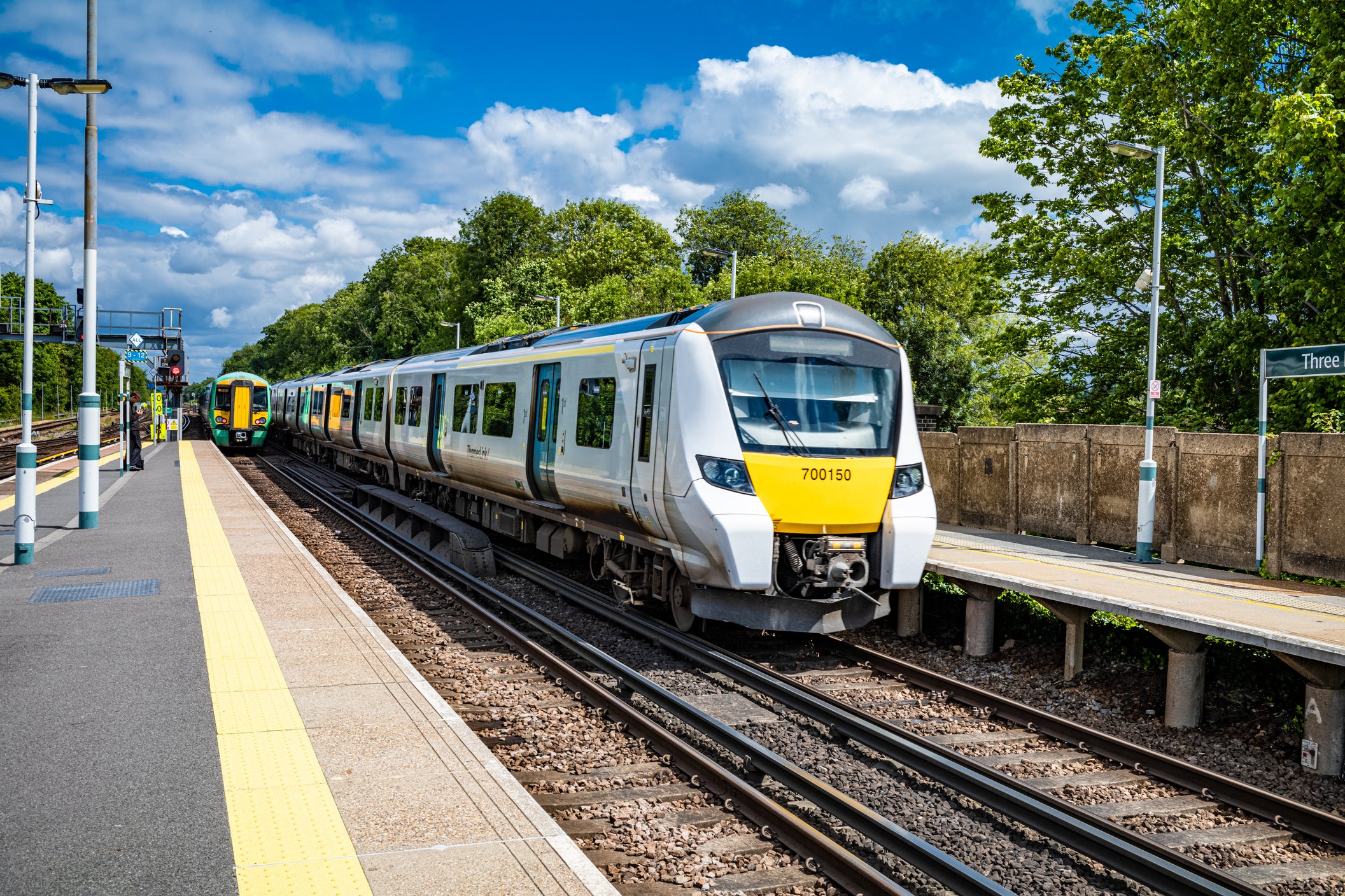
Train journeys are often disrupted, as we can see from today’s travel chaos with South Western Railway. Passengers who are caught up with long delays and cancellations are entitled to a partial refund – or the full cost of the ticket for a really long delay.
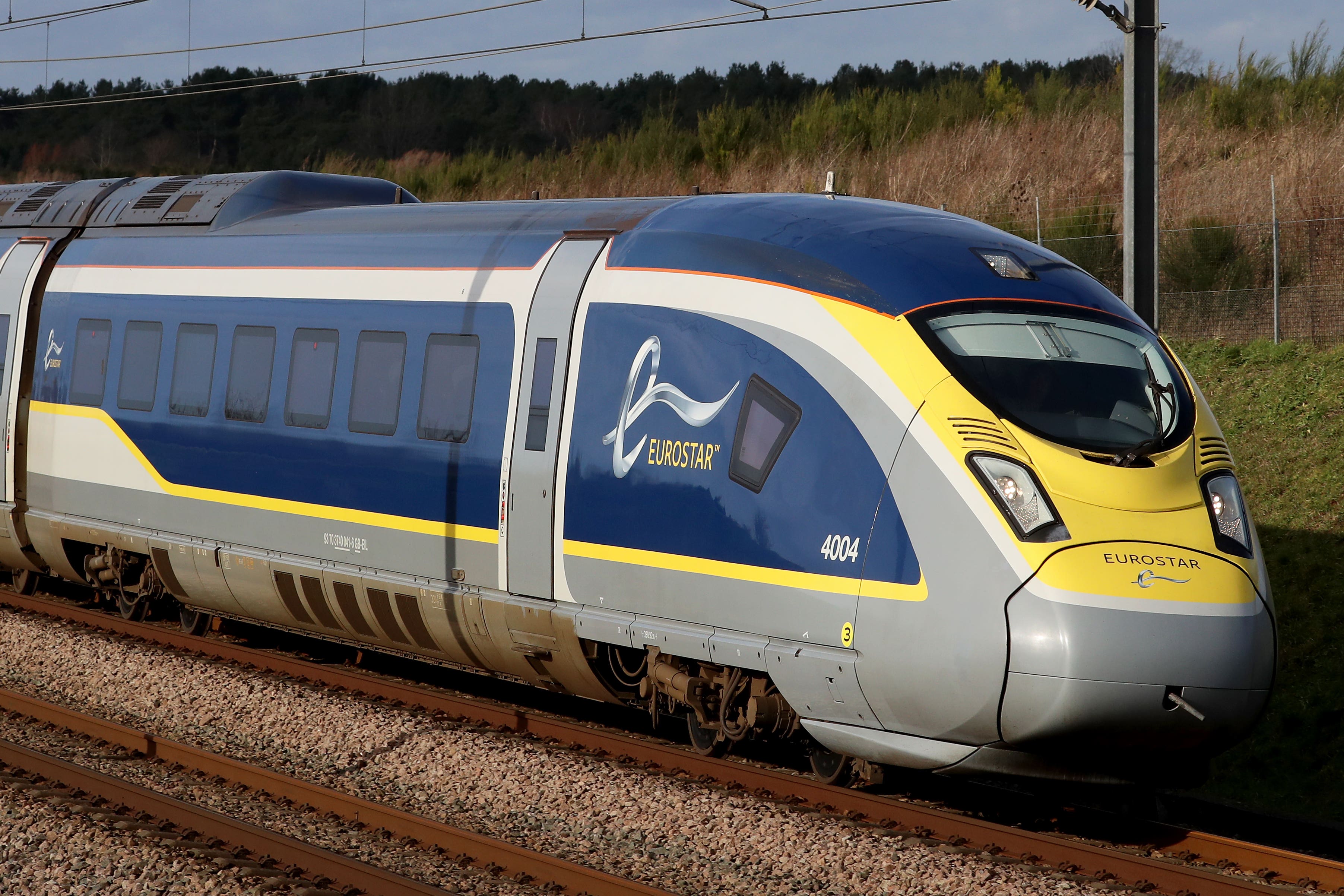
But the rules are complex and change from one train operator to another. And Eurostar, which runs trains from London to Paris, Brussels and Amsterdam, has a quite different policy on delays.
These are the key questions and answers.
What does the law say?
If you arrive 60 minutes or more later than you should have done, you are entitled to half the fare back (or a quarter, if it’s a return ticket). It doesn't matter what caused the delay.
I thought “delay repay” was more generous?
It is, with the exception of Grand Central and Eurostar. Your delay does not have to be very long at all to qualify for at least a modest refund of part of your fare under the delay repay scheme.
Most train companies offer a partial refund for as little as 15 minutes of delay: this is known as “DR15”.
How much money do I get back with “delay repay”?
Most rail firms offer:
- 25 per cent of the single fare for delays of 15 to 29 minutes
- 50 per cent of the single fare for delays of 30 to 59 minutes
- 100 per cent of the single fare for delays of 60 minutes or more
- 100 per cent of the return fare for delays of 2 hours or more
These include Avanti West Coast, Govia Thameslink Railway, East Midlands Railway, West Midlands Trains, Southeastern, Greater Anglia, c2c, Transport for Wales, Chiltern, Great Western Railway, Northern Trains, South Western Railway and TransPennine Express.
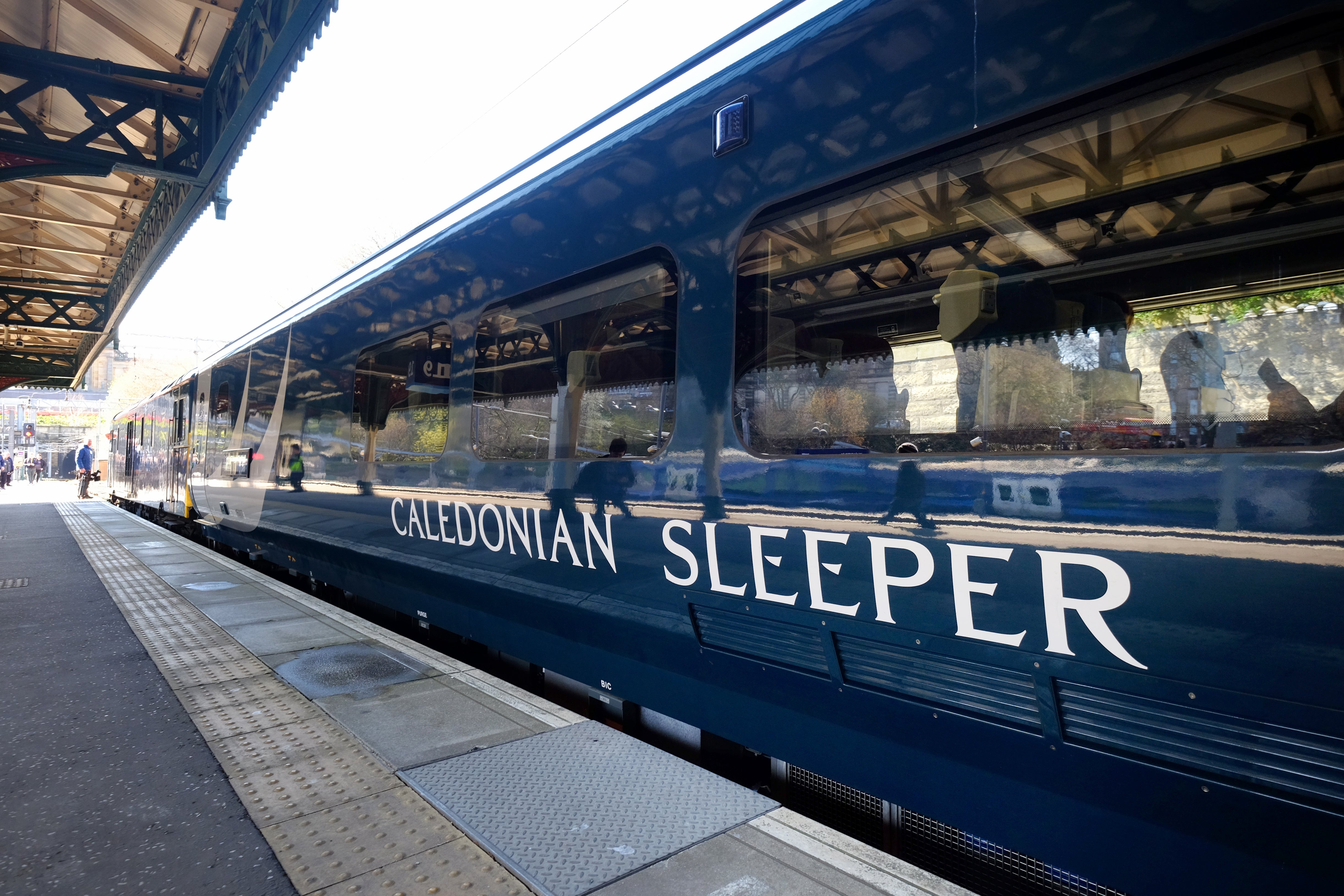
Notable outliers include Caledonian Sleeper, Hull Trains, LNER, Lumo and ScotRail, which require your train to be half-an-hour late before paying out – but then follow the same basic pattern.
If your Edinburgh-London train arrives 20 minutes late, you get a quarter of the single fare back on Avanti West Coast. But state-run LNER and Lumo, the “open-access” operator, will give you nothing until the delay reaches half-an-hour, when it’s half the ticket price. When the delay reaches an hour, you get your fare back on all of them.
Grand Central, which runs “open access” services connecting London King's Cross with Bradford and Sunderland, has the least generous policy of any domestic train operator.
- 50 per cent for delays of one to two hours
- 75 per cent for delays of two to three hours
- 100 per cent for delays of over three hours
How complicated is claiming a refund on a delayed or cancelled train?
That depends how you booked your ticket and the rail firm’s policy.
Auto delay repay is the easiest; it is notably provided by the intercity operators Avanti West Coast, GWR, LNER, Lumo and TransPennine Express. Assuming you have opted in, you get an automatic partial refund when the train operator knows you have been delayed. In practice, this is most of use to passengers with advance tickets for a specific train. If you have, for example, used an off-peak ticket valid on any train and you get delayed, you will need to go through the normal online claims procedure.
Next best is “one-click” delay repay, which enables you to say, “yes, I would like to claim some compensation” and wait for the money to arrive. Again, it is most appropriate for advance tickets.
The Department for Transport (DfT) says more than half of the train operators it contracts offer automated or one-click delay repay. But at present independent rail retailers – of which Trainline is by far the most significant – say passengers who do not buy direct from train operators are disadvantaged.
At present, passengers who buy through third parties must apply to the train operator that caused the delay.
The DfT said in March 2026 that delay repay will be available from the retailer when Great British Railways takes control of the rail network and train operations – due to take effect in the first half of 2027.
In my experience a manual claim takes about 10 minutes assuming you have all the information to hand: details of the train(s) you travelled on, the length of delay, the amount you paid, the ticket or booking reference number and either a photo of a paper ticket or the QR code for an e-ticket. You also provide personal details.
Season ticket holders have different arrangements; contact your rail firm.
All claims must be made within four weeks of the delayed journey.
How is the money paid?
You can normally choose between a Bacs payment into your bank account, a refund to your credit card or an e-voucher – or to donate the money to charity. The payment is normally made within a few days.
My journey normally takes an hour, but engineering work made it twice as long. Can I claim?
No. Entitlement is calculated according to the timetable in place on the day that you travel. Network Rail projects can greatly extend journey times. For example, during work to replace a bridge over the M6, the Preston-Carlisle journey is taking 2 hours 20 minutes – more than twice as long as usual. But the presumption is that you knew when you bought the ticket how long it would take.
If, though, the extended trip is further delayed, you will be able to claim in the normal way.

My train was cancelled. Does that count as a delay?
It depends. Generally when a rail firm cancels a train, you can use an Advance ticket on one of the two preceding trains or the two following trains. A delay is only incurred if you go for the latter option.
What if I used more than one train operator?
Your claim can be made to any of the train operators involved – who will, if necessary, forward your claim to the rail firm deemed to be responsible under rail industry rules.
Can I just give up and travel on another day?
Yes, if the expected delay is an hour or more. National Rail says: “Where your train is likely to be delayed for more than 60 minutes, you may use your ticket to make your journey at a later date subject to comparable restrictions on your ticket.”
In the event of large-scale disruption, many train operators will in any case announce that tickets can be used on subsequent days.

Will I get snacks and drinks, as airlines are obliged to provide?
You might. According to National Rail: “If your train is delayed for more than 60 minutes, your train company may, in certain circumstances, provide you with meals and refreshments if they are available on the train or in the station, or can reasonably be supplied, and in reasonable relation to the waiting time.” So, no promises.
What if I get halfway to my destination but can’t complete it and head home?
Yes: “You are also entitled to a refund under these conditions if you begin your journey but are unable to complete it due to a delay to, or cancellation of your service and you return to your point of origin.”
I missed a football match/theatre performance/weekend away and have lost money
In theory you can claim no more than the price of your ticket for a delay. This is in sharp contrast to air passengers’ rights rules, which require hundreds of pounds to be paid for three-hour delays if the airline is responsible.
National Rail says: “In exceptional circumstances, a train company may consider claims for other losses. This will be for the train company to decide in its sole discretion.”
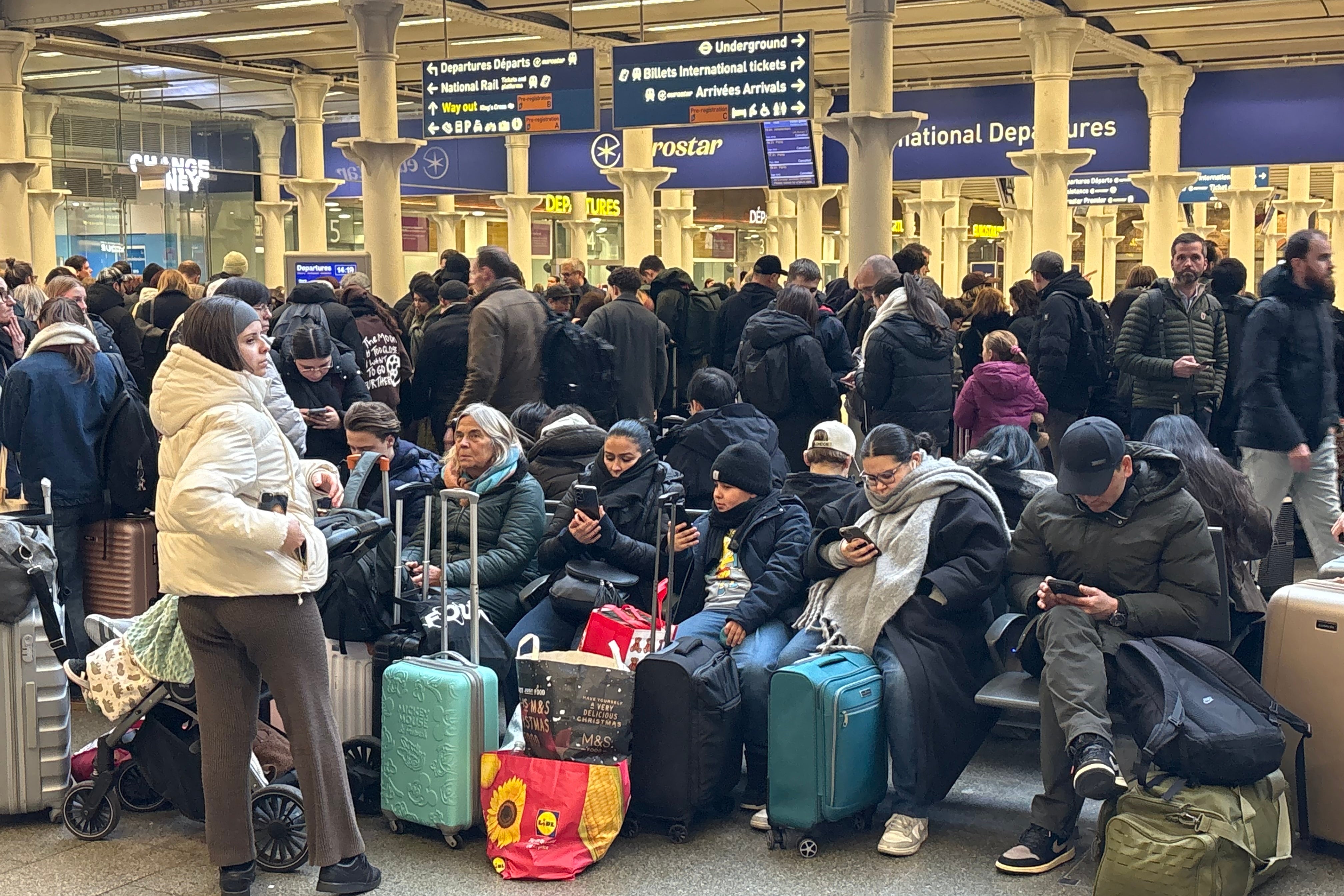
How does Eurostar handle passengers’ rights?
Differently, with meagre payouts.
- 60-119 minutes: 25 per cent of the cost of the affected leg as a cash refund or 30 per cent of the cost of the affected leg as a Eurostar e-voucher
- 120+ minutes: 50 per cent of the cost as a cash refund. The voucher alternative is 60 per cent up to 179 minutes, 75 per cent for three hours
In addition, Eurostar may pay for accommodation and meals if you are stranded overnight at one of its stations.
After the pre-New Year mayhem caused by a power issue in the Channel Tunnel, Eurostar was more generous – with full cash refunds and vouchers for some passengers who were particularly messed around.
Is the UK system as fair as it should be?
A proportionate refund is better than the mad air passengers’ rights rules, according to which you may have paid only £15 but “win” £220 when you arrive three hours late because of the airline. Rail operators generally have a “no-fault” attitude, paying out regardless of the cause of the delay.
Even so, I have a couple of concerns about the fairness of the system. The people who get the highest refunds are often business travellers whose fares are paid by their employer; do first-class travellers deserve (say) five times as much as those in standard on the same train?
And a half-hour delay on the UK’s longest rail run, the 12-hour-plus Caledonian Sleeper trip from Fort William to London is probably less significant and stressful than a 30-minute hold up on your journey to work. But the payout for the former could easily be 20 times more than the latter.
Unifying the rules would at least make the system clearer for passengers. A Department for Transport spokesperson said: “We are overhauling our railways and building back public trust so that passengers can rely on trains that run on time. But where there are delays, millions of passengers do successfully receive delay repay, with most publicly-owned operators offering a one-click service.
“Our reforms are also making ticketing simpler throughout your journey – from rolling out more contactless tech at stations and trialling pay-as-you-go fares, to making it simpler to claim delay repay, including through our upcoming GBR [Great British Railways] app.”
We shall see if Great British Railways, when it is finally running the whole show, makes delay repay a priority. Personally, I would rather the organisation focused on improving punctuality rather than fixing the compensation system.
This piece is kept updated with the latest advice
May bank holiday misery for millions of rail passengers as lines close
Train disruption warning across England for rest of day due to ‘major’ issue - latest
Wetherspoon boss slams Ryanair bid for airport alcohol limit
The best affordable sleeper train journeys to take in 2026
New European Sleeper night train delayed until September
Discovering budget high-speed train tickets in France and Germany
Will the tourism industry in Asia survive Trump’s conflict?
Profiteering or providing a service? Air fares from Asia to the UK are soaring