Online businesses attract entrepreneurs with their easy start-up, minimal costs and flexibility. However, the reality is much more complicated: behind the attractive cover hides a whole range of risks that can destroy the idea at the launch stage. To avoid fatal mistakes, it is worth knowing about the potential dangers in advance and preparing for them. In this article, web development experts from Merehead will discuss the main risks that accompany creating an online business from scratch and ways to minimize them.
Lack of a clear business plan
Many beginners start a business with the thought “it will work out someday”. But the online environment is just as competitive as the offline one, and sometimes even tougher. Without a clear plan, it is easy to lose focus, resources and time. Without a properly drafted business plan, an entrepreneur can lose their entire budget on ineffective promotion channels that are not tailored to a specific target audience. In addition, this can lead to a lack of chances and opportunities to scale the business.
To avoid such troubles you need to:
- Create a business plan: mission, product, target audience, sales channels, financial forecast.
- Define clear KPIs – indicators by which you will evaluate performance.
- Research competitors: their prices, positioning, strategies.
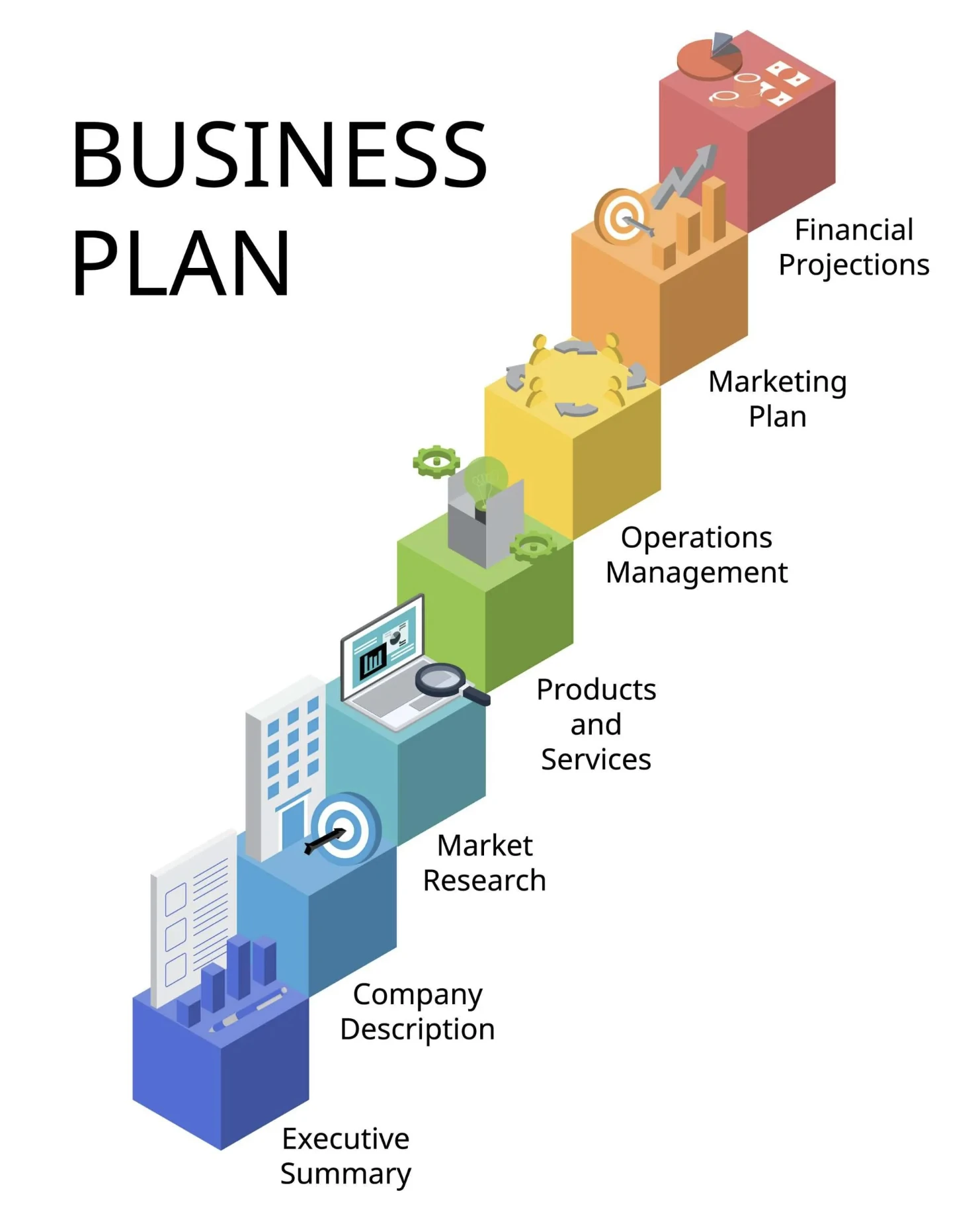
A business plan is not just a document for investors. In the case of an online business, it acts as a navigator: it helps to avoid chaotic decisions, rationally allocate resources, and see a clear path to profit. But in the digital environment, planning has its own specifics, and let's consider it in more detail.
Emphasis on online infrastructure
In traditional business, it’s about rent, equipment, and staff. In digital, the most important things are the website platform (CMS), payment and delivery services, hosting, security, technical support, and subscriptions to services (analytics, email marketing, CRM). Your business plan should clearly state which tools you will use and what portion of your budget they will make up.
Marketing section is mandatory
Without online advertising, no one will know about your business. The plan should outline which promotion channels will be used (Google Ads, social media, SEO), what budget will be set for the start and monthly advertising, as well as methods for evaluating effectiveness (CPC, CAC, ROI).
Rapid hypothesis testing
Online business allows you to test business ideas without high costs. Therefore, the business plan should include an MVP (minimum viable product) stage, a mechanism for collecting feedback from customers or visitors, and criteria for assessing the feasibility of scaling.
Flexibility and adaptability
The Internet is changing rapidly. New platforms, algorithms, customer behavior – all of this can affect business. Therefore, the business plan of an online project should not be static, but adaptive: with the possibility of quarterly updates.
A well-written business plan is not just about numbers. It's a clear vision that takes into account the dynamics of the online environment, marketing, and technology. This approach helps you take your first steps confidently and with an understanding of where you're going.
Mistakes in choosing a niche
Online business allows you to work in any field: from selling goods to training courses. But precisely because of the huge number of options, entrepreneurs often choose a niche intuitively, without analytics. As a result, there is a lack of demand or excessive competition.
Common mistakes made by novice entrepreneurs include:
- choosing a niche that is too narrow without sufficient demand;
- too broad a niche where it is difficult to stand out;
- Focusing only on personal preferences, not market needs.
To minimize these risks and possible problems with the development of an online business, you need to conduct preliminary testing. To do this, you can use Google Trends or conduct a survey of the target audience, analyze social networks and forums. It is imperative to check the level of competition and assess the marginality of the product.
Underestimation of costs and improper financial planning
Online business is not “free.” Even if you don’t pay rent, you will have to pay for hosting, advertising, production or purchase of goods, logistics, subscriptions to services, design, etc. Common mistakes in online business include:
- the illusion of a "cheap start" without taking into account marketing costs;
- lack of financial cushion for the launch period;
- ignoring hidden costs (taxes, bank fees, product certification, etc.).
To minimize all risks related to expenses and financial planning, a careful approach is needed. It should include creating a 6-month expense table, budgeting for unforeseen expenses (approximately 10-20%) and determining the break-even point, the time it takes for the business to break even.
Incorrectly selected technical base
Online business is always about platforms, services, and tools. An incorrectly chosen CMS, a poorly designed website, slow hosting, or an outdated interface can ruin the entire user experience and scare away customers. An incorrectly chosen technical base can lead to slow website loading, problems with payment and order processing, and a lack of adaptation to mobile devices.
To avoid these problems, you need to choose proven platforms, for example, Tilda, WordPress. In addition, it is worth checking the functionality of the site on all devices: from a personal computer to smartphones. We recommend testing the entire customer journey: product selection, order placement, payment, status tracking, etc.
Ineffective or absent marketing
Even the best product won't sell if no one knows about it. Online promotion is a complex process that requires time, budget, and knowledge. Often, beginners try to save on marketing, which leads to a complete halt in sales.
Marketing mistakes:
- lack of a target audience-oriented strategy;
- waste of budget on broad targeting;
- overly aggressive advertising that arouses distrust.
You can avoid such mistakes by studying your target audience, ordering content creation, SEO, and working with social networks. We recommend starting with a small budget, and be sure to test advertising campaigns before launching and scaling.
Lack of customer service
Poor customer service is a major cause of customer churn, even at competitive prices. This is especially critical online, where there is only text or chat instead of live communication. If there is no quick response, the customer will go to a competitor. This leads to poor reviews and reputation, reduced chances of repeat sales, and loss of trust right from the start.
In order to avoid such mistakes, it is imperative to establish clear communication channels (messengers, email, chatbot), respond promptly to requests, and add an FAQ section to the site.
Online business is not as easy as it seems at first glance.
An online business is not just a way to work from home or earn money “while you sleep.” It’s a real business with real risks. Without a strategy, market research, clear finances, and technical preparation, a startup is doomed to failure.
A successful online business is the result of systematic work, readiness for challenges, and the ability to learn from mistakes. But if you approach the matter consciously, risks can not only be reduced, but also turned into experience, which will become the foundation for long-term growth.