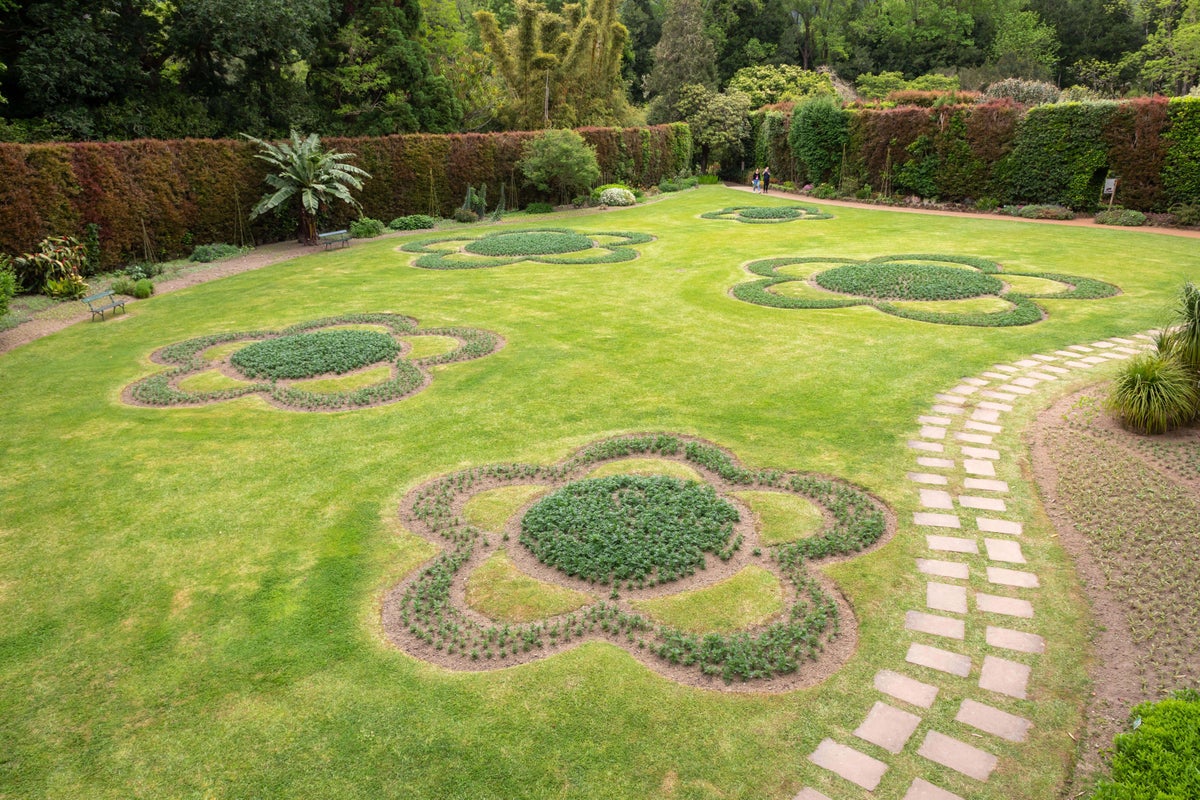
As summer heat turns many British lawns to a parched, straw-like expanse, gardeners might consider a vibrant alternative: the tapestry lawn.
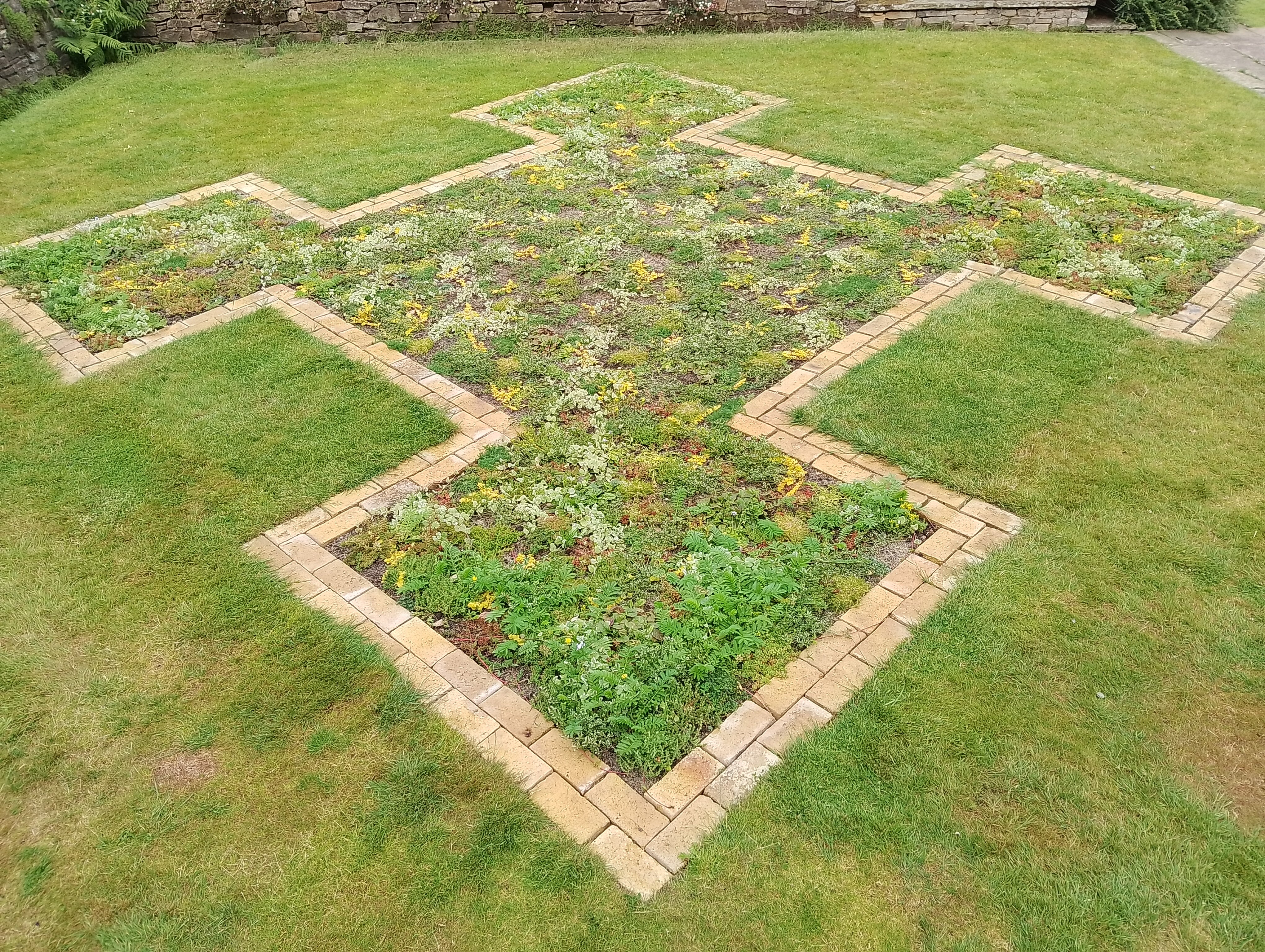
This innovative approach to ground cover, championed by Alex Hankey, garden manager at RHS Garden Wisley in Surrey, offers a resilient and visually rich solution to traditional grass. Wisley itself showcases a tapestry lawn, neatly edged with bricks, featuring a diverse array of plants that thrive despite frequent mowing.
But what exactly constitutes a tapestry lawn?
Essentially, it’s a lawn that eschews conventional grass. Mr Hankey explains: "At Wisley, we emphasise that you can have this nice dense mat that you can cut and treat like a lawn that isn’t grass. Our tapestry refers to the multitude of different plant species you have in the mix."
He describes the Wisley example: "We have a square piece of lawn in front of our laboratory and we’ve basically cut this interesting shape into it. It’s one large square with squared corners. We’ve used bricks to edge it, to make it distinct from the lawn space, so it’s a bit of an art installation in an otherwise square lawn."
The plant palette for a tapestry lawn is broad, encompassing species such as chamomile, thyme, and leaf clovers. These are chosen for their ability to flower, tolerate short cutting, and form a dense, mat-like cover. Gardeners can cultivate a spectrum of colours, from purple hues to varied foliage forms, incorporating plants like oregano or miniature violas that flower close to the ground. Thyme, for instance, offers a delightful scent.
Creating such a feature in your own garden involves a few key steps. Mr Hankey suggests: "Almost delete a section of your lawn and replace it with this sort of style. Strip the turf away and replace it with traditional plants like chamomile."
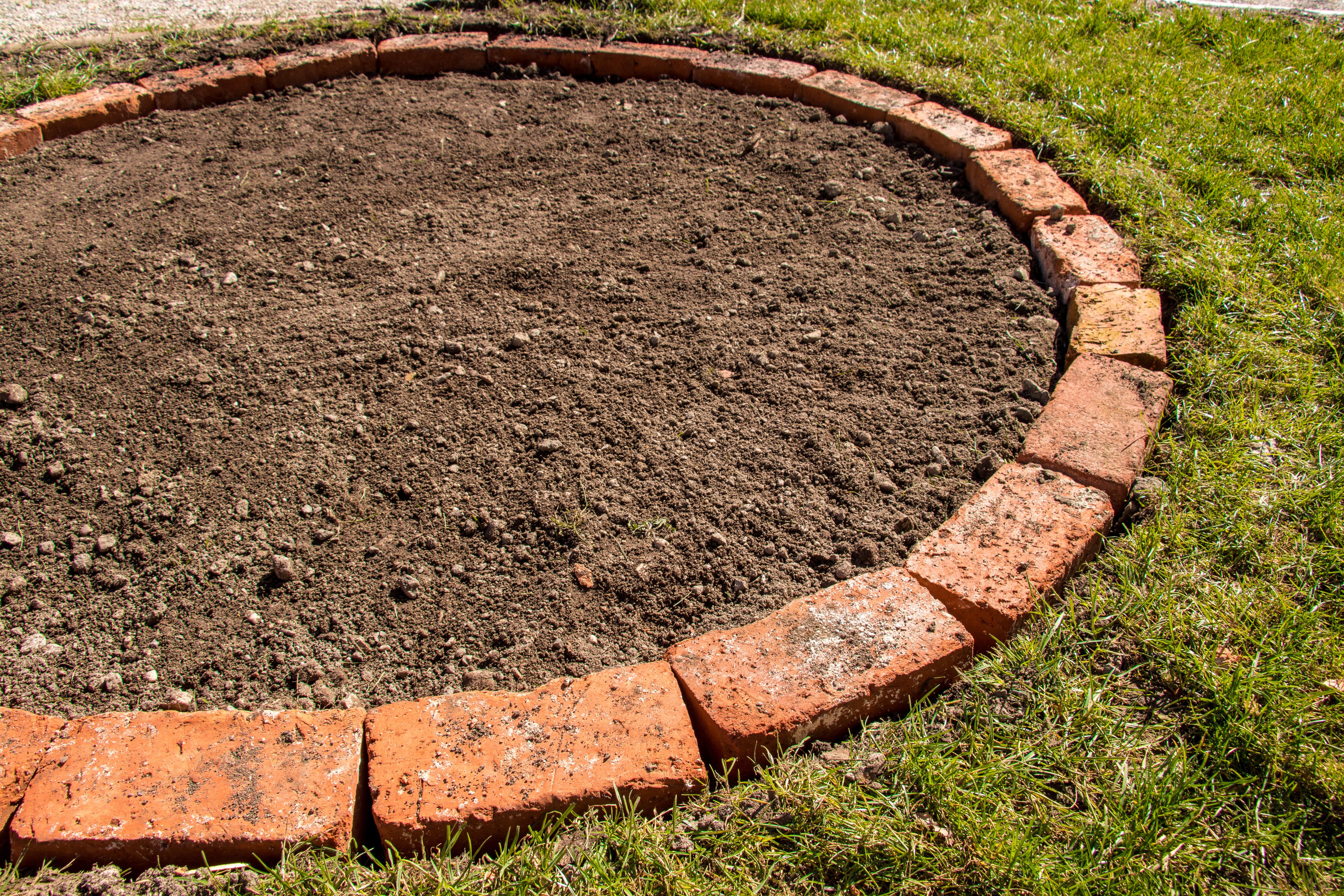
For direct sowing, clover, achillea, and native bird’s foot trefoil are ideal. This method requires preparing a seedbed by removing stones and cultivating the soil to a fine tilth.
Crucially, select a sunny location. "Select a sunny site, something that’s not cast in dense shade, because often moss wins in a shady setting," Mr Hankey advises.
Once the turf is removed, the bare ground can be replanted with mat-forming species like thyme, chamomile, and clover. If opting for cultivated plants in pots, the preparation is less demanding, though clearing stones and debris remains necessary for proper mowing.
To truly elevate a tapestry lawn, consider framing it. "It’s quite bold if you were to commit your entire lawn space to a tapestry, so my suggestion would be to use bricks to frame it, because it gives that real showpiece in your lawn space and that painting-like feel," Mr Hankey notes.
These bricks also serve a practical purpose, preventing the surrounding lawn from encroaching. The design of the tapestry itself is a matter of personal preference. Mr Hankey offers an example: "In horticulture, purple and silver is an old age textbook contrast. We have a silver-leaved potentilla (Potentilla anserina/silverweed) and Ajuga reptans, a purple-leaved plant, next to each other. They find their balance within the mix."
While a tapestry lawn can be mowed, it requires less frequent attention than a traditional grass lawn. It typically won't need cutting throughout the winter, allowing plants to grow and flower in spring. A shorter cut can be applied in summer, with mowing ceasing in October.
Mr Hankey highlights the need for summer cutting: "You get to a point in July where the clover gets so dominant and the leaves start to rise up, that you need to keep those plants from being over-dominant. Even in the first year you would cut it during the summer to keep everything under control."
However, it’s important not to cut a tapestry lawn as close to the ground as grass; a slightly higher setting is always recommended.
Watering is essential during the initial planting phase and regularly throughout the first year to ensure establishment, as well as during any subsequent dry spells. Once the roots are well-established, these plants often demonstrate a remarkable ability to survive droughts.
Beyond aesthetics, tapestry lawns offer several practical advantages. They frequently tolerate extreme hot weather better than grass, maintaining a green appearance through summer. Furthermore, they are low-maintenance in terms of feeding, as suitable species thrive in poorer soils.

Mr Hankey suggests: "Choose certain species which can tolerate more dry conditions than grass, to create an area that would remain in growth when a lawn has gone brown." An added ecological benefit is that low-growing flowering plants provide a valuable food source for pollinators, supporting local wildlife.
Maintenance is straightforward once established. "You don’t need to plant things super-dense, because the plants are carpet-forming and mat-forming," Mr Hankey explains. The primary task is to prevent re-invasion by grass and weed seedlings. In subsequent years, the tapestry plants will knit together, creating a dense cover that naturally suppresses unwanted growth.
Vigilance against weeds like dandelions and wind-dispersed seeds, as well as any encroaching grass, is key to preserving the tapestry’s integrity.