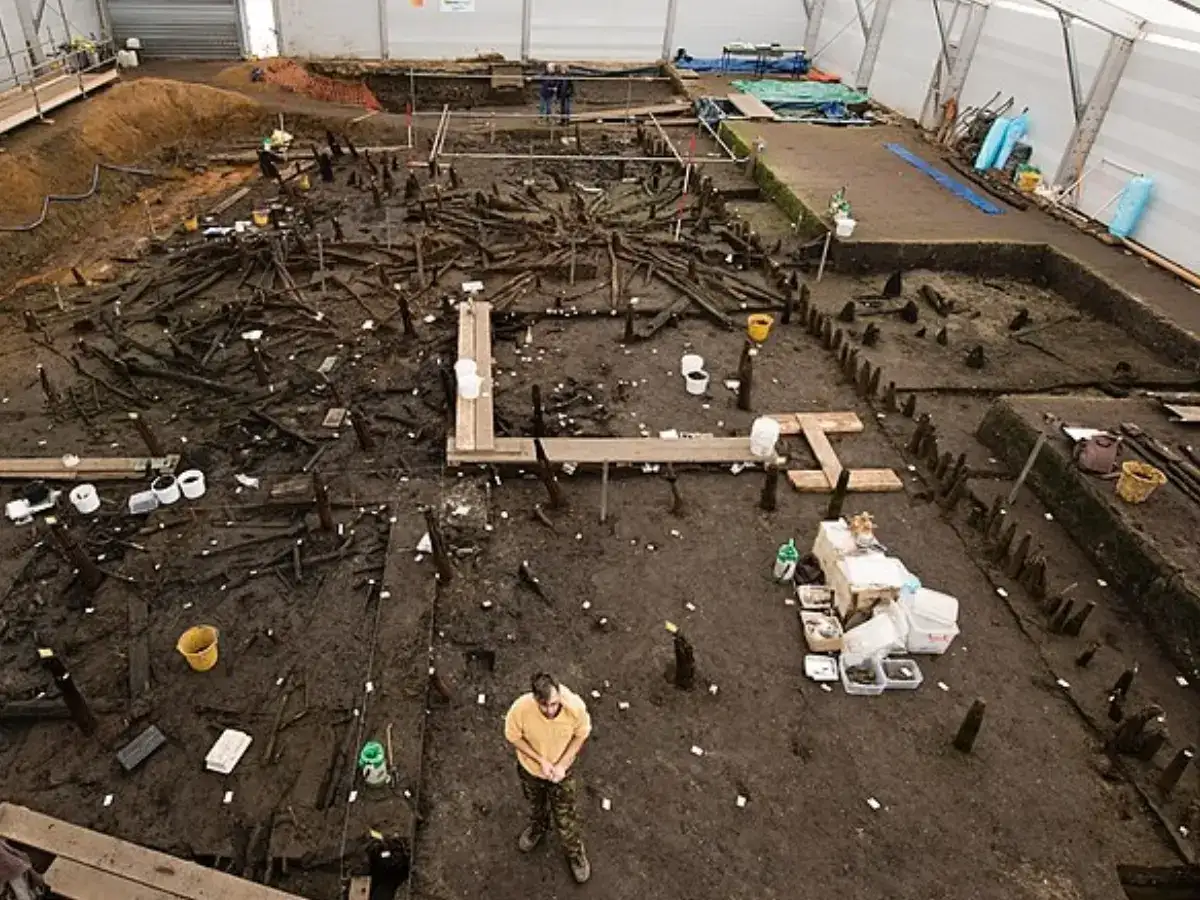
One of the most spectacular prehistoric settlements discovered in the UK was unearthed during excavations in the east of England at Must Farm in the Cambridgeshire Fens. As stated by the Cambridge Archaeological Unit, it featured an incredible amount of preserved artifacts that enabled scientists to get insight into various aspects of everyday life there in great detail.
The reason why scientists refer to it as the "Pompeii of the Fens" is because a sudden fire engulfed the settlement, and then it sank into water about 2,900 years ago. This unusual combination helped preserve the settlement as a snapshot of everyday life in those days. The findings at Must Farm have changed our view on the life of Bronze Age communities forever.
The disaster-preserved village
A small village made up of roundhouses supported by wooden piles was found on the banks of the sluggish river in the Fens of Cambridgeshire. As stated by the Cambridge Archaeological Unit, the roundhouses were joined together via walkways and platforms. It is believed that the entire settlement had been engulfed by the flames and had subsequently fallen into the river.
That way, wood, textiles, food remnants, and tools were preserved in their original state almost up to 3,000 years later. The researchers who conducted excavations at the site called it an amazingly rich domestic time capsule. It is important to note that the conditions were extremely unusual. Usually, there is nothing left of Bronze Age settlements except some pieces of pottery or postholes. However, the Cambridge team found an intact inventory of each household.
There was an orderliness in everyday life
What is remarkable about Must Farm is the fact that researchers found the traces of well-structured domestic life. In other words, pottery dishes, woven cloth, wooden boxes, bronze tools, jewelry, and even wheel parts were found in individual dwellings. As stated in the University of Cambridge repository, it seems like each household had its own set of items which means that people must have practiced some kind of routines such as preparing food, storing goods, creating new things, and fixing existing ones.
The finds refute the stereotypical notion about the disorderliness of Bronze Age settlements. In addition to the signs of skilled craftsmanship, the experts unearthed evidence that indicates highly advanced techniques for manufacturing. For instance, the bronze tools were very precise, the fabrics were well-weaved, and wooden items displayed signs of high carpentry skills.