So long as it’s sustainably caught, I’m fairly indiscriminate about what fish I cook at home: oily, white, fat, flat. I’m as likely to pick up a couple of mackerel fillets or tuna steaks as I am to buy a low-maintenance boneless cod or haddock fillet.
The difference between oily fish and white fish is neatly summed up by Hugh Fearnley-Whittingstall in The River Cottage Fish Book, with his inspired analogy of “the athlete and the layabout”. The athletes are the oily fish – mackerel, tuna and the like – constantly on the move, covering huge distances in their hunt for food. And to fuel all this activity, they need great stores of energy – oil – to power them around. White fish such as cod, on the other hand, along with their layabout cousins coley, pouting and pollack, are far less industrious. Happy to sit around and wait for whatever food passes their way, the cod family just doesn’t need all that fuel, and as a result their flesh is more flaky.
Lacking any dominant oily notes, white fish will happily take on lots of extra flavour, be that in a fishcake, kebab or ceviche. They’re layabouts, maybe, but they are hugely versatile and forgiving ones.
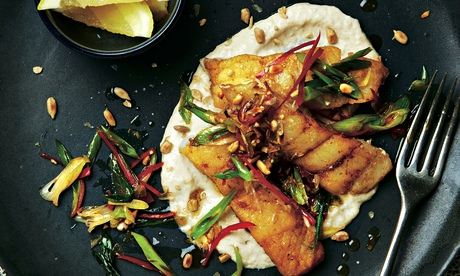
Fried pollack with sunflower seed mayonnaise
Seed “activation” (ie soaking them in water overnight) is having a real moment right now, but the reason I soak the sunflower seeds for this mayo is no nod to food fashion. Rather, it’s to soften them and make them easier to blitz. Serves four.
30g unsalted butter
60ml sunflower oil
7 spring onions, trimmed and sliced finely on an angle
3 small red chillies, julienned
1 large pollack fillet, skinless and boneless, cut into 12 3cm x 7cm pieces
60g plain flour, seasoned with ½ tsp salt and plenty of black pepper
Salt
2 tsp sunflower seeds, toasted and lightly crushed
1 lemon, cut into wedges
For the sunflower seed mayonnaise
125ml sunflower oil
1 clove garlic, peeled
50g sunflower seeds, soaked overnight
1 egg yolk
1 tsp lemon juice
2 tsp cider vinegar
Salt
First make the mayonnaise. Pour the oil into a small saucepan, add the garlic and cook on a low heat for about 15 minutes, until soft and caramelised. Remove from the heat and set aside. Once cool, put the garlic in the small bowl of a food processor. Drain the sunflower seeds and add to the bowl with the egg yolk, lemon juice, vinegar and a third of a teaspoon of salt. Blitz until smooth and then, with the motor running, slowly trickle in the oil from the pan bit by bit. Once all the oil is used and the mayo is nicely emulsified, mix in three tablespoons of water: you should now have a good, thick mayonnaise. Transfer to a bowl, cover and store in the fridge (it will keep for a few days).
Put a large nonstick frying pan on a medium heat with half the butter and half the oil. Once the butter has melted and is starting to foam, add the spring onion and chilli, and fry for three to four minutes, stirring from time to time, until softened and starting to brown. Remove with a slotted spoon, leaving the oil behind.
Toss the fish in the seasoned flour so it’s coated all over. Shake off any excess flour, then cook the fish in two batches. Fry for six to eight minutes, depending on thickness, basting regularly and turning halfway through, so it’s golden brown on both sides. Transfer to a plate, sprinkle with salt and repeat with the remaining butter, oil and fish.
When you’re ready to serve, spoon two or three tablespoons of mayonnaise on to each plate, spreading it out in a circle. Place three pieces of fish on top and spoon over some chilli and onion. If you like, drizzle over any fat from the pan, and serve any excess mayonnaise on the side. Sprinkle over a few sunflower seeds and serve with a wedge of lemon alongside.
Salt cod and green pepper salad
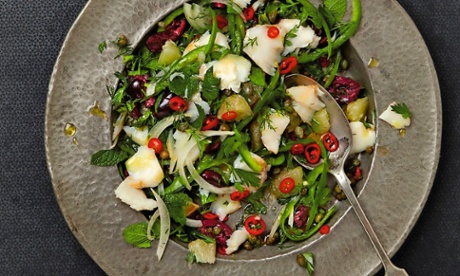
You may find you need to soak and rinse your cod more than three times to reduce the salt levels – it will depend on how salty the fish is to start off with. (If you’re not sure, ask your fishmonger.) This salad needs to be served straight away, as it will not benefit from being left to sit. Serves four as a generous starter.
400g Norwegian salt cod, skinned and deboned, cut into three pieces
1 large lemon
1 green pepper, stalk, seeds and pith removed, flesh cut lengthways into 2mm-wide slices
½ small white onion, peeled and thinly sliced
2 red chillies, deseeded and thinly sliced widthways
35g pitted kalamata olives, roughly torn in half
15g capers, rinsed and patted dry
1 clove garlic, peeled and crushed
2 tbsp olive oil
15g parsley leaves, roughly chopped
5g dill leaves, roughly chopped
10g mint leaves, torn
2 soft- or hard-boiled eggs (depending on how you like them), peeled and quartered
Put the cod in a bowl, cover with water and put in the fridge to soak for 48 hours, changing the water about three times in the two days.
Half-fill a medium saucepan with water and put on a high heat. Bring to a boil, add the drained fish, blanch for two to three minutes, then drain. Once cool enough to handle, flake the fish into 2cm pieces, put in a large bowl and set aside to cool.
Use a small, sharp knife to top and tail the lemon, then stand it upright on a board and, following the natural curves of the fruit, cut down the sides to remove the skin and pith. Holding the lemon over a small bowl, cut in between the membranes to separate the individual segments, breaking them up slightly as you go, collecting all the juices in the bowl and discarding the skin and pips.
Add the lemon segments and juice to the now cold fish, then stir in all the remaining ingredients apart from the eggs. Top with quartered eggs when you serve.
Chard soup with fishcakes and lemon
Chard varieties vary in the proportion of stalk to leaf. For this, you want one with a large leaf and a thin stalk, so the end result is a vibrant green. I add cooked rice to this soup before serving, to make it more substantial, but serve just as it is if you prefer something lighter. Serves six.
600g white fish fillet, skinless and boneless, finely chopped by hand into 1-2mm dice
20g parsley leaves, finely chopped
10g thyme leaves, finely chopped
50g fresh breadcrumbs
1 garlic clove, peeled and crushed
50g pine nuts, toasted and finely chopped
2 large eggs, lightly whisked
Salt and black pepper
75ml olive oil
1 onion, peeled and finely chopped
600g Swiss or rainbow chard, stalks cut 2mm thick, leaves cut into 10cm pieces (keep the two in separate piles)
1½ tsp caraway seeds
200ml white wine
500ml chicken stock
Shaved skin from 1 lemon, plus 60ml lemon juice
2 bay leaves
1 medium preserved lemon, flesh discarded, skin thinly sliced
2 tbsp chopped coriander, to finish
Put the fish in a large bowl with the parsley, thyme, breadcrumbs, garlic, pine nuts, eggs, half a teaspoon of salt and a good grind of pepper. Mix to combine, then shape into 18 round patties 5cm wide x 2cm thick.
Put three tablespoons of oil in a 30cm-wide heavy-based sauté pan and turn on the heat to medium-high. Once the oil is hot, slide in half the patties and sear for five minutes, turning them halfway, until golden brown on both sides. Remove and keep somewhere warm while you repeat with the remaining patties.
Wipe clean the pan and add the remaining oil. Add the onion, chard stalks and caraway seeds, and sauté on a low heat, stirring from time to time, for 15 minutes, until the stalks have softened but haven’t taken on any colour. Turn up the heat to high, add the wine and boil for two minutes until reduced by half. Add the stock, 500ml water, lemon skin, two tablespoons of the lemon juice, the bay leaves, a teaspoon of salt and a good grind of pepper. Gently lower the fishcakes into the soup, bring to a boil, then turn the heat to medium and simmer gently for half an hour.
Meanwhile, bring a large pot of salted water to a boil and add the chard leaves. Blanch for 30 seconds, then drain, refresh under cold water and squeeze dry. Once the broth is ready, add the chard leaves and preserved lemon, simmer for just a minute longer to heat through, then stir in the remaining lemon juice and serve sprinkled with coriander.
• Yotam Ottolenghi is chef/patron of Ottolenghi and Nopi in London.