ISHINOMAKI, Miyagi -- A museum that houses exhibits on whale fishing in Ishinomaki, Miyagi Prefecture, that was completely destroyed by the tsunami following the Great East Japan Earthquake, has reopened after a nine-year-and-four-months' closure mainly for reconstruction work.
The reopening of the Oshika Whale Land was delayed by about three months due to the coronavirus. Many tourists crowded the museum when it reopened on Wednesday.
The museum was built on the same site as Cottu -- a tourist facility where restaurants and souvenir shops are located -- and the Oshika Peninsula Visitor Center, one of the Environment Ministry's facilities that introduces local, natural environments.
In 2011, about 1,000 items displayed at the museum were washed away by tsunami, but some items that escaped severe damage have been restored.
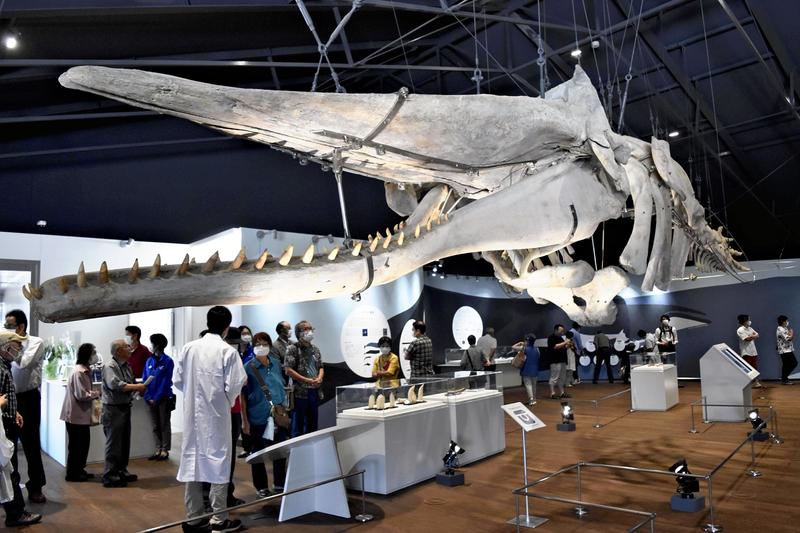
The main attraction in the reopened museum is the 16.9-meter-long complete skeletal specimen of a sperm whale. Tools for whaling such as harpoons, and photographs of the Ayukawa district, which was a whaling base in the golden age, are also on display. There is also a theater where visitors can watch videos of whales swimming.
Ryoetsu Okumi, 79, a local fisherman who had been engaged in whaling for 61 years, works for the museum as a storyteller.
"I want to pass on the work and culture related to whales that our ancestors have taught us," he said.
A 33-year-old local woman who visited the museum with her 2-year-old daughter said: "It has been reborn as a wonderful facility. I was overwhelmed by the powerful whale skeletal specimen."
"The reopening of the facility, which is the symbol of our region, progressed nicely" for the local community, said, Tomiji Saito, 60, a director of a regional promotion organization that operates the museum. "I want to pass on the history and culture of living with whales."
The entrance fee is 400 yen for adults, 300 yen for university and high school students, and 200 yen for elementary and junior high school students. Closed on Wednesdays.
Read more from The Japan News at https://japannews.yomiuri.co.jp/