Whales in the North Atlantic appear to be adjusting their behaviour to coexist and divide food resources among themselves as climate crisis and human pressures reshape ocean ecosystems, according to a new long-term study.
Researchers studying fin, humpback, and minke whales in the Gulf of St Lawrence have found that the animals are eating more fish and less krill than they did in the past. Scientists say the shift could be a result of growing competition for prey as warming waters disrupt marine food supplies.
The findings are based on almost three decades of data published in the journal Frontiers in Marine Science.
Using skin samples collected from more than 1,100 whales between 1992 and 2019, scientists analysed stable nitrogen and carbon isotopes – chemical signatures that reveal what animals eat and where they sit in the food chain. The samples span three distinct periods of environmental change in the North Atlantic, from cooler conditions in the 1990s to warmer waters and reduced sea ice in recent years.
The study found that all three whale species have shifted towards fish-based diets over time, with Arctic krill – the tiny, shrimp-like crustaceans found in oceans – playing a smaller role than it once did.
“A recent increase in resource partitioning among fin, humpback, and minke whales in the study area may reflect an increased competition level in response to limited resource availability,” said Charlotte Tessier-Larivière, the study’s lead author at Canada’s Maurice Lamontagne Institute.
“As Arctic krill is consumed less, we see fin and minke whales relying more on pelagic fish, making it an important prey source for all studied species,” she said. Pelagic fish inhabit the water column of coasts, open oceans, and lakes – being neither close to the bottom nor near the shore.
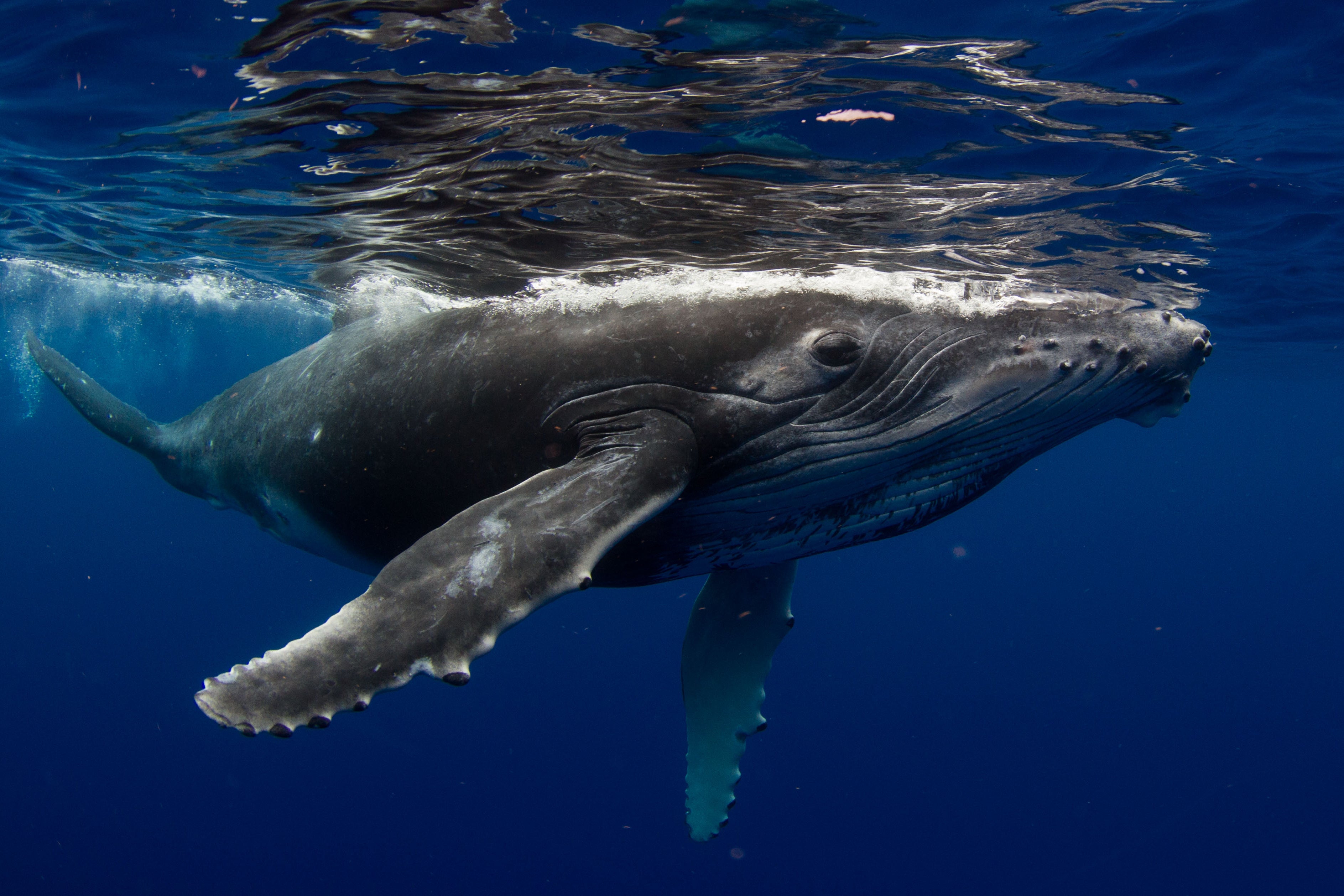
Fin whales, which fed mainly on krill in the 1990s, increasingly switched to fish such as capelin, herring and mackerel in the 2000s, before turning more to the ray-finned fish sand lance and northern krill in the 2010s. Humpback whales relied consistently on a small number of fish species throughout the study, while minke whales fed mostly on pelagic fish but continued to consume krill later into the period.
Scientists say the changes are likely linked to declining availability of Arctic krill, a key prey species affected by warming waters and shifting ocean conditions.
The study also found that while the three whale species still share feeding grounds, they appear to be sticking more closely to their own dietary “niches” than in the past. Over time, the overlap in what each species eats has narrowed – a pattern scientists associate with increased competition when food becomes scarce.
“Niche overlap fluctuates with resource availability,” Ms Tessier-Larivière said. “If resources become scarce, competition tends to intensify and individuals and species may try to reduce competition, for example by diversifying their diet or by specialising on different prey.”
Despite the growing pressure on food supplies, the researchers found no evidence that one species is displacing another. Instead, the whales appear to be adjusting their behaviour to coexist.
“Highly mobile species like baleen whales can use several strategies to reduce competition, for example by shifting their feeding timing or area, or selecting different prey within a feeding area,” Ms Tessier-Larivière said.
“This ecosystem seems sufficiently productive and offers alternative prey that are partitioned across space and time. These conditions promote co-existence rather than one species outcompeting and excluding the others.”
The Gulf of St Lawrence – a major seasonal feeding ground for whales – has experienced rapid environmental change in recent decades, driven by rising ocean temperatures, shrinking sea ice and increasing human activity such as shipping and fishing.
Scientists say the study provides rare insight into how large marine animals respond to long-term ecosystem change, rather than short-term fluctuations.
While the isotope analysis allows researchers to track broad dietary shifts, the authors caution that it cannot pinpoint exact feeding locations or measure the precise contribution of each prey species. Some zooplankton consumption may also be underestimated, they say.
Even so, the findings highlight the importance of protecting not just whales, but the ecosystems and food sources they depend on.
“Rapid environmental changes occurring in the Gulf of St Lawrence seem to have already impacted rorquals (the largest group of baleen whales),” Ms Tessier-Larivière said. “It is crucial to monitor their trophic niche and consider this information for fisheries management and the development of marine protected areas.”
The study adds to a growing body of evidence showing how climate crisis is altering marine food webs – often in subtle ways that only become visible through long-term research.
How climate change is threatening the future of Winter Olympics
Smelly brown seaweed invasions are costing US communities millions of dollars
Farmers in war-torn Yemen fighting the climate crisis against the odds
Companies are coming up with plans to block out the sun
Several missing after landslide rips through popular campsite in New Zealand
Inside world’s largest renewable energy park – proof the green transition isn’t dead