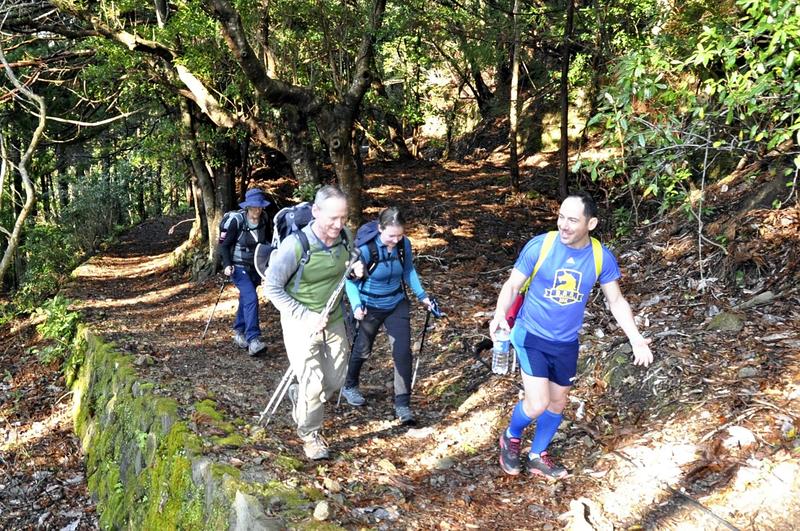
Amid the continued unease stemming from the new coronavirus, the Kumano Kodo Pilgrimage Routes await the spring. The path upon which the Heian nobility once made their pilgrimage is now immensely popular among Australians, Europeans and Americans. But, why in the world is that the case?
The company that runs GaijinPot, a top-tier domestic website aimed specifically at foreigners, chose Kumano last year as its number one "must-visit place for 2020," the result of a poll hosted by the site. The Kumano area surpassed Tokyo, which is preparing to hold the Tokyo Games in summer, for the top spot.
These days, the number of foreign trekkers exploring the Kumano Kodo routes has drastically increased. According to statistics by Wakayama Prefecture, the number of foreign travelers in 2018 who stayed overnight in Tanabe was 43,939 -- 31 times the number in 2004. The city of Shingu also broke its previous records in 2018 with 9,112 travelers.
What stood out the most was the number of travelers from Oceania, Europe and America. After inquiring with organizations such as the Tanabe Tourism Association, it was discovered that in 2018 the highest number of foreign visitors -- 8,351 -- came from either Australia or New Zealand, with 5,631 Americans coming in second. Hong Kong, the U.K. and France were next on the list.
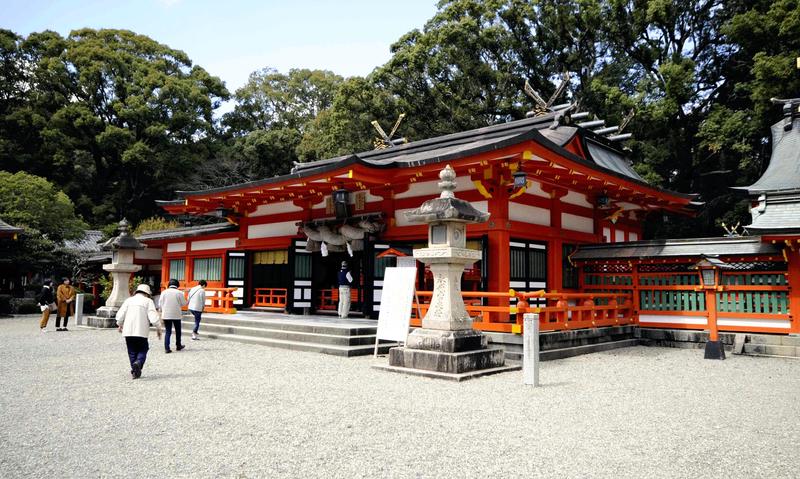
In the Heian period (794-late 12th century), the Emperor Emeritus and cloistered emperors of the capital made many pilgrimages to the three main Kumano Shrines to pray to be reborn in the afterlife. The path they took was Kumano Kodo.
During the Edo period (1603-1867), it was very popular among commoners to visit shrines. The long lines congested with crowds of people on their journey was called the "Ants pilgrimage to Kumano." However, in the Meiji era (1868-1912), this practice went out of fashion. Until recently, there were people who said, "The Kumano Kodo is just an ordinary mountain trail."
The turn of the 20th century was what caused the spotlight to shine on this area once more. In 1999, the road, highlighted by the Japan Expo Nanki-Kumano, saw an increase in the number of people looking to take a healing hike along the trail. In 2004, along with sacred Koyasan area and the three main Kumano shrines, the Kumano Kodo routes were registered as a World Heritage Site under "the Sacred Sites and Pilgrimage Routes in the Kii Mountain." From then on, the area has been slowly but steadily gaining popularity among foreigners.
Masanori Ogawa, executive director of the Tanabe City Kumano Tourism Bureau, an incorporated body that generally deals with foreign tourism, thought: "Trekking, where people enjoy a light hike, is popular in Australia and New Zealand. The Kumano Kodo routes are easy to adapt to and there's no time difference between those countries and Japan."
In Europe and America, pilgrimages are a part of their culture. Those of Christian faith travel along the Camino de Santiago pilgrimage path, which is similar to the pilgrimage to Kumano.
Above all, Kumano is a spiritual place. "I've been to Tokyo and Osaka, but Kumano is like a completely different Japan," said Australian nurse Nicola Steele, who came wanting to see the area. "The large expanse of nature is quiet, relaxing and has a mystical atmosphere."
Jian Shino, owner of an inn along the Nakahechi Road, has a guess as to why there doesn't seem to be many visitors from Asia. "When it comes to people from Asia, the number of those who spend less than a week on vacation is high. With this in mind, they don't have enough time to walk the trails." Kumano may be more suited to those who have a relaxed schedule.
Recently, perhaps due to the outbreak of the new strain of coronavirus, the number of foreign visitors has declined. An official of the routes expects that "once this has all been resolved, people will come and enjoy hiking again."
Read more from The Japan News at https://japannews.yomiuri.co.jp/