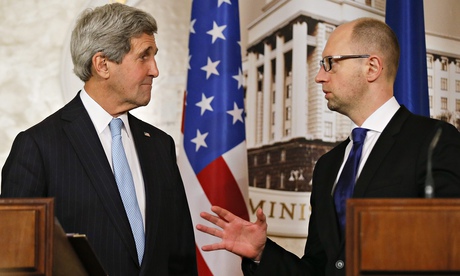
In Kiev, John Kerry had a clear message for Russia and Vladimir Putin: the Kremlin should respect Ukraine’s territory, negotiate constructively and stop funnelling weapons and troops into the east of the country.
The problem is that it is the same message the US secretary of state and other western politicians have been delivering for more than half a year, to pretty much zero effect.
The issue for western negotiators has been how to force Russia to stop doing something that, even in private, it won’t admit it is doing. Washington is now grappling with whether it should back up its messages to Putin with an “or else” and seriously begin negotiations on supplying arms to Kiev.
Some believe Putin is trying to resurrect a version of the Soviet Union and will push his troops as far into Europe as he can until he meets serious resistance. In this reading, those who oppose arming Ukraine are appeasers: today Donetsk, tomorrow Kiev, Riga, Warsaw.
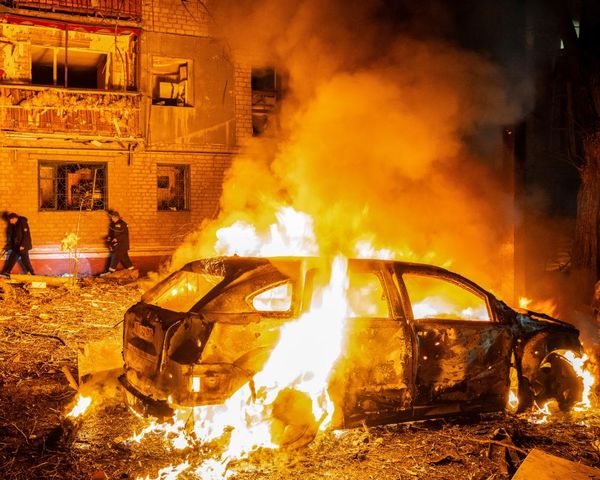
Sending more Russian troops home in body bags, increasing the costs, and stretching Putin’s thread of plausible denials yet thinner, goes the logic, is only way to make the Russian president pause and think.
Others believe Putin is on the defensive; stuck in a cold war mindset, believing he’s surrounded by a hostile Nato, which orchestrated a coup in Kiev and is using Ukraine to reach its ultimate goal of controlling Russia. In previous meetings with western politicians Putin said he “knew” the US state department and CIA were plotting to overthrow him, and smirked knowingly when told this is not the case.
In this reading, it is those wishing to arm Ukraine who are risking serious escalation, pushing a counterproductive strategy likely to make Putin double down; it could lead to what François Hollande on Thursday called “total war”.
Amid these lofty geopolitical deliberations Kiev fears it will be left without a voice over the fate of its own country.
“To get peace you have to defend your country, you have to deter Russia, not allowing Russian troops to move further and further,” said Ukraine’s prime minister, Arseniy Yatsenyuk, in a press conference with Kerry. “We will never consider anything that undermines our independence, territorial integrity and sovereignty.”
If Hollande and Angela Merkel think they have enough concessions from Putin they could press Ukraine to cut a deal that does just that, on the assumption that anything that stops the killing is a good thing, with the offer of a financial package to speed reforms in the rest of Ukraine.
But there are thorny issues unsolved: who pays for east Ukraine if the rebels stay in control, and how is Russia’s border with Ukraine sealed to stop the troops and tanks? As the complete failure of the Minsk accords shows, hammering out a deal even vaguely acceptable to both sides is challenging.